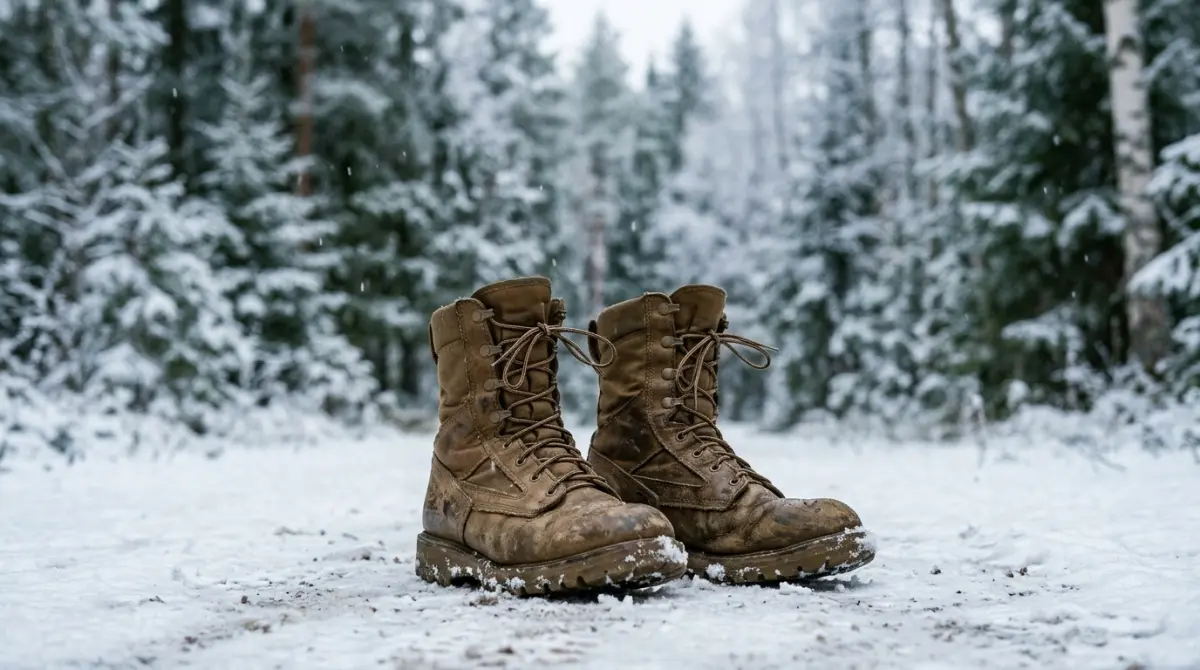
What makes combat boots winter-ready: fur, sheepskin or synthetic insulation
What keeps your feet warm is not thicker leather but the air that the insulation holds between its fibers. The more of that air there is, and the better it is retained when the lining gets damp, the warmer the boot. So start choosing winter boots with what is inside.
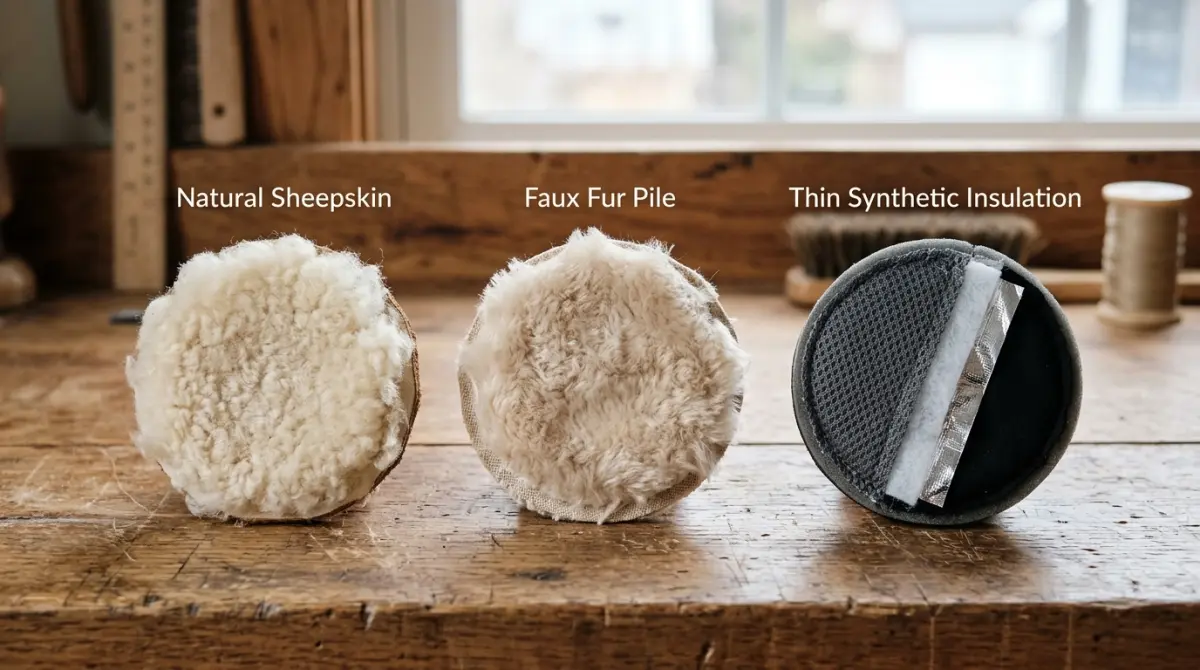
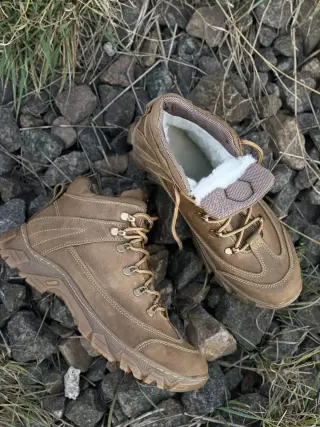
- Sheepskin and Euro-sheepskin are very warm, but bulky and slow to dry. For example, the "Vepr" boots from UKR·TEC have a Euro-sheepskin lining.
- Faux fur is lighter and dries faster. HAMARS boots have this kind of lining.
- Cotton insulation, as in HUST, feels pleasant against the skin, but it absorbs moisture and dries slowly.
- Synthetics such as Thinsulate are thin, take up little room in the boot and keep you warmer when damp.
Don't trust the stated temperature rating unconditionally. Whether your feet get cold also depends on whether you are moving or standing still, on the humidity of the air, and on a properly chosen tactical sock.
Membrane or leather without a membrane: which is better in frost and slush
A membrane keeps water out from the outside and lets some of the vapor escape from the inside. In wet snow, a thaw and puddles with ice, this is a real advantage: the upper may get wet while your foot stays dry. But a membrane only works while you are moving. If you stand still for a long time in severe frost, the vapor doesn't have time to escape, condenses inside, and the sock gradually gets damp. Such footwear needs care: clean off dirt and salt, and dry it at room temperature, not on a radiator.
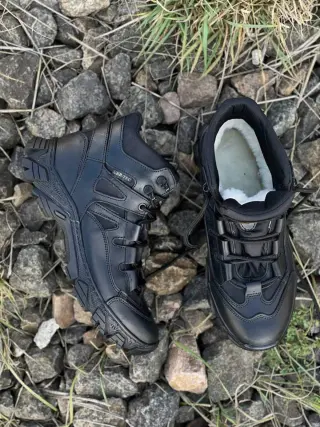
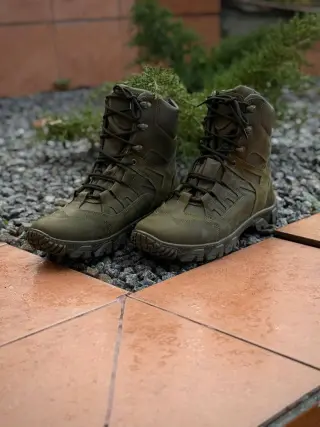
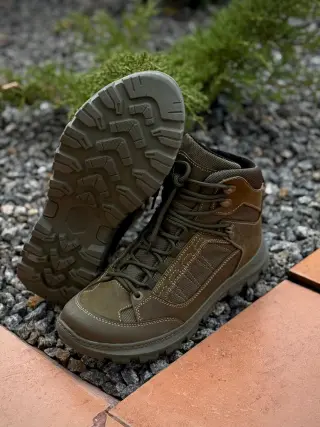
- Wet snow, thaw, mud: Extreme V-TRACK boots with a membrane or leather Power boots with insulation and a Frost800 membrane.
- Dry frost and minimal care: leather NATO-style winter boots, which only need regular waterproofing.
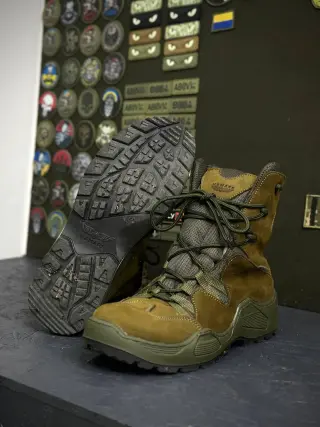
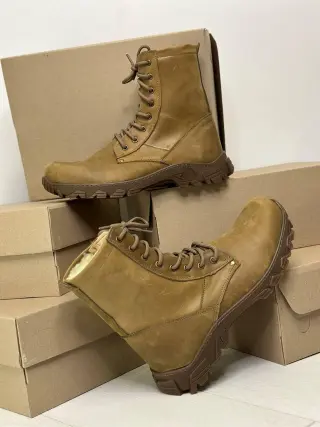
- Coyote-colored nubuck winter boots: Crazy nubuck needs waterproofing, otherwise it takes on moisture faster than smooth leather.
Leather without a membrane is simpler: it breathes, dries faster and has no layer that can be damaged. With good waterproofing it handles snow, but leather without a membrane cannot withstand prolonged slush. General criteria, including height and fit, are covered in the article on how to choose tactical boots.
Sole for ice, height and ankle support: laces or zipper
In winter the sole works on two fronts at once: it grips on slippery ground and separates your foot from the frozen earth. Pay attention to three things:
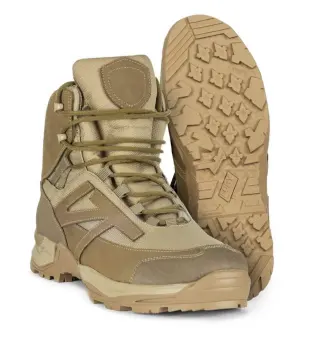
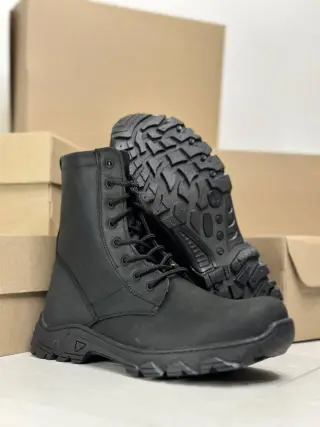
- A deep tread with pronounced lugs that don't clog with snow and bite into the crust. The Combat model from UKR·TEC, for example, has this kind of tread.
- Rubber that doesn't harden in the cold. A hard, "plastic" sole slips on frost like on glass.
- Thickness. The thicker the sole, the better the barrier against cold from below, especially when you stand in one place for a long time.
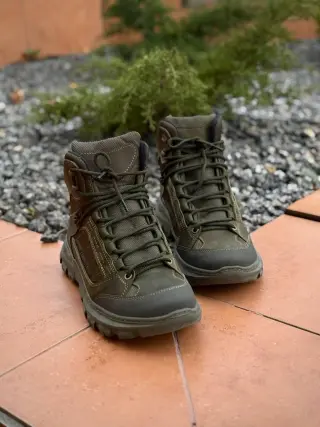
A high shaft keeps snow out, which is why winter tactical boots are usually taller than summer ones. But don't lace the ankle too tightly: restricted blood flow chills the foot faster than any frost.
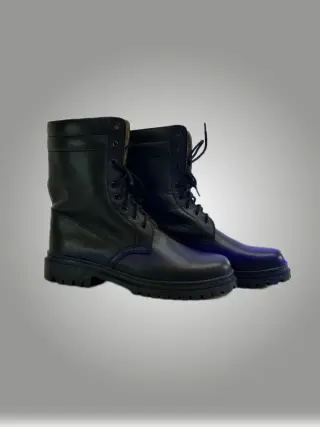
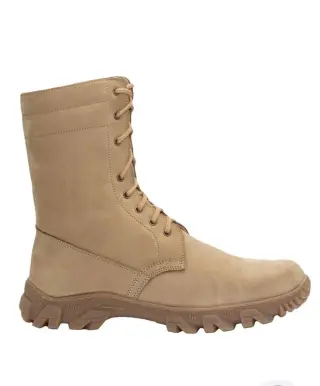
A zipper is convenient when you need to put your boots on quickly on a trip or in a vehicle. Laces, on the other hand, fit the foot more precisely. Examples include NATO-style nubuck boots and black winter boots made of natural Crazy nubuck.
Sizing for a warm sock and wool thermal socks
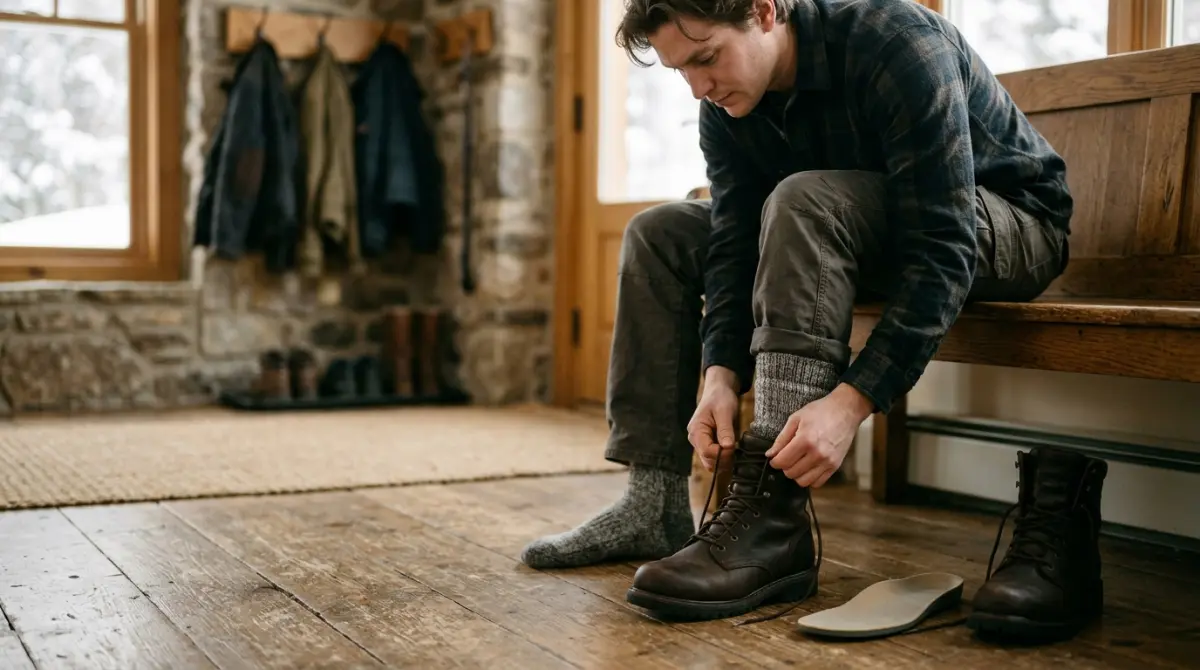
Tight boots get cold even with good insulation: compressed fur or synthetic loses its air layer, and a squeezed foot gets worse blood supply. So choose winter tactical boots with extra room specifically for a thick sock, not "the way you would summer ones".
- Try them on in the evening, when your foot swells slightly.
- Try them on with the sock and insole you will actually wear.
- Your toes should move freely, and your heel should not slip when you walk.
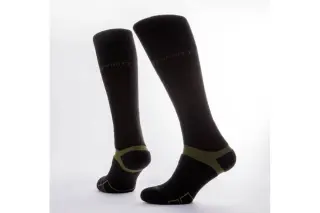
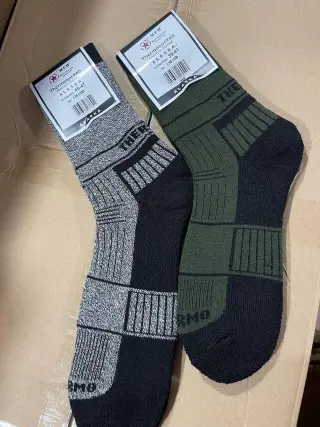
The sock itself matters too: wool and merino keep you warm even when wet, unlike cotton. Viva thermal socks are 32% wool, 48% acrylic, with a polyamide-reinforced heel and toe. MFH Alaska contain 45% merino wool and a ventilation mesh in the toe area. For how to combine socks with thermal underwear and other layers, read the piece on winter tactical gear.
Common mistakes: from a tight fit to drying on a radiator
Most stories about insulated boots that "don't keep you warm" begin not with the model but with how it was chosen and cared for.
- Buying a snug fit for a summer sock. In winter you will wear a thicker sock, and a tight pair will squeeze the foot, disrupt circulation and push the air out of the insulation. Try boots on with the very sock you plan to wear.
- Two pairs of cotton socks. Cotton absorbs sweat and keeps moisture against the skin, and the second pair adds tightness on top.
- Over-tightened laces. They compress the instep, and toes freeze even in a warm pair of boots.
- Drying on a radiator, by a fire or with a hair dryer. High temperature dries out and deforms the leather and can destroy the glue that holds the membrane in place.
How to dry and care for boots properly:
- Take out the insoles and dry them separately.
- Stuff the boots with paper and change it when it gets wet.
- Leave the pair to dry at room temperature, away from heaters.
- Regularly clean the upper of salt and dirt: salt eats away at leather and seams.
- Waterproof the leather or nubuck with a product designed specifically for your material.
This care is equally needed for fur-lined boots, membrane models and any other tactical boots you wear in winter.
FAQ and summary: how to choose winter boots for your conditions
How much bigger should I go on size?
Try boots on in the evening and with the sock you will wear. Your toes should not press against the front, and your foot should not feel squeezed, because a squeezed foot gets cold even in an insulated model.
Fur or membrane: which is better for a trench and which for trips?
For long standing in frost, a dense lining such as Euro-sheepskin, as in the "Vepr", is better. For moving through slush and puddles, choose a membrane, as in the Extreme V-TRACK.
Is one pair enough for the whole winter?
A single pair quickly accumulates moisture from the inside. If you can, rotate two pairs or at least change the insoles.
How can I dry boots quickly in the field?
Take out the insoles, stuff the inside with paper or cloth and change it when it gets wet. Don't put boots right up against a fire or stove: the leather cracks and the glue comes apart.
- Choose insulation to match your activity level.
- A membrane is needed where it is wet.
- For ice you need a sole with a deep tread.
- Choose your size for a warm sock.
- Dry boots without direct heat.