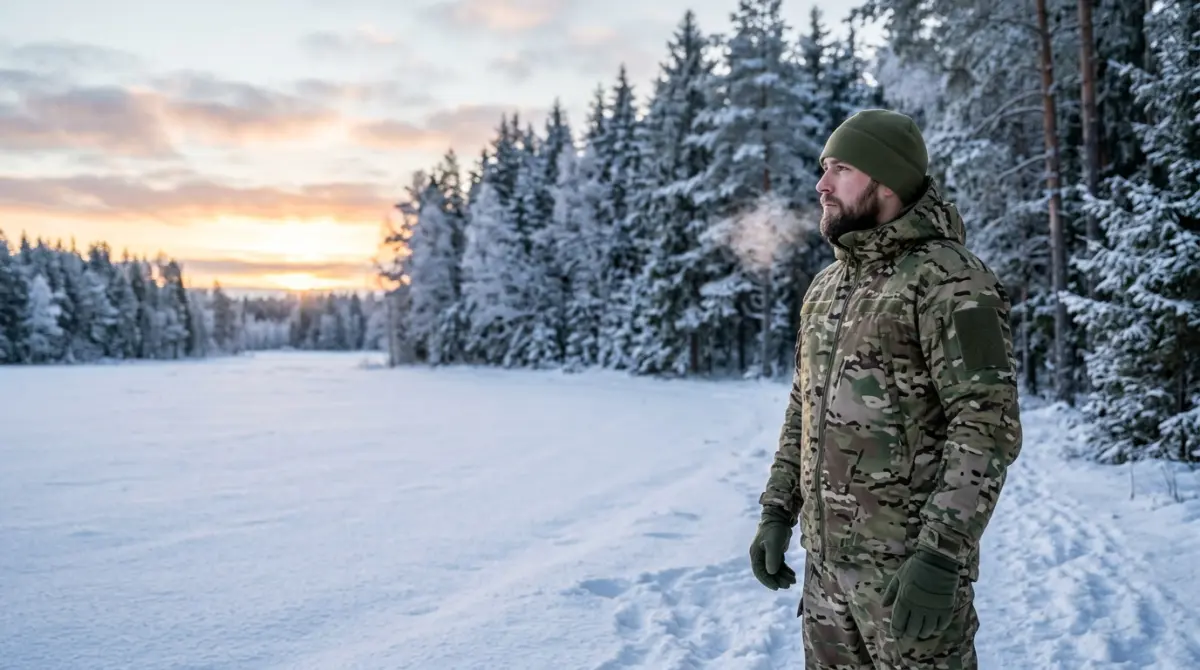
Three Layers in Winter: What Works Under the Jacket
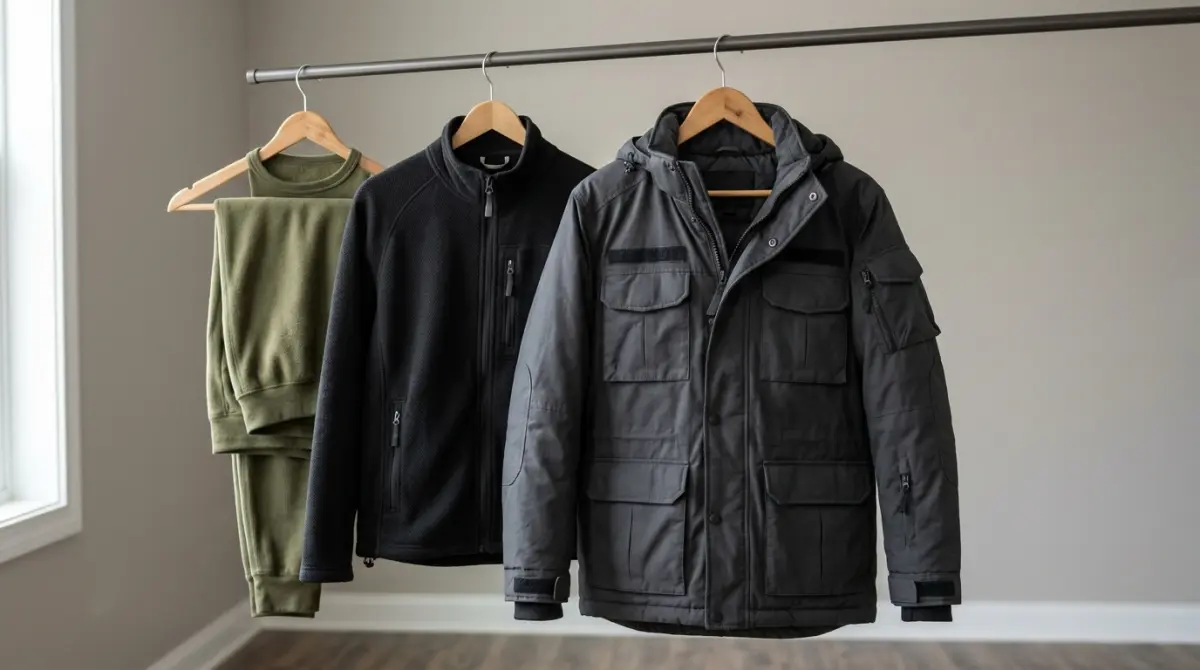
Winter tactical gear relies on each layer doing its own job. Thermal underwear wicks moisture away from the skin, fleece traps warm air, and the outer layer protects from wind and snow. How the layers work together overall is covered in the guide to the basic kit for a field trip. Here we focus only on winter specifics.
How to choose thermal underwear for the cold:
- Density. For winter, go for a fleece-lined or insulated model. For example, the insulation in R Military thermal underwear is made of 65% polyolefin and 35% polyester fiber, and the air gap around each fiber holds in heat.
- Body fit. Underwear should fit snugly, otherwise it won't wick moisture away.
- Full length. Sleeves down to the wrist and legs down to the ankle leave no exposed areas when you move.
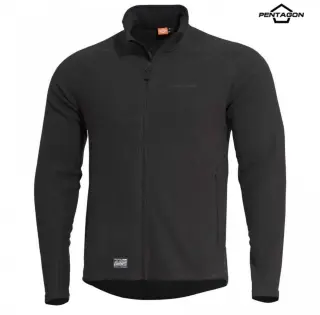
Choose fleece with a high collar that covers your neck from the wind and a cut that doesn't pull across the shoulders when you raise your arms or squat. This is exactly how the Pentagon Arkos is cut.
Winter Jacket, Anorak or Suit: How to Choose the Outer Layer
The outer layer is chosen for the task at hand. Here is how the three main options differ.
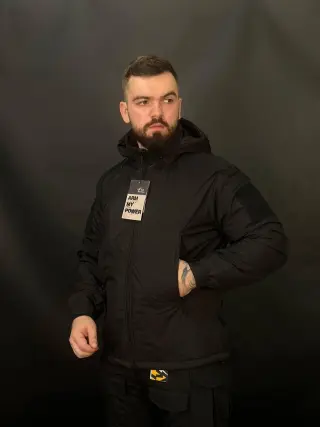
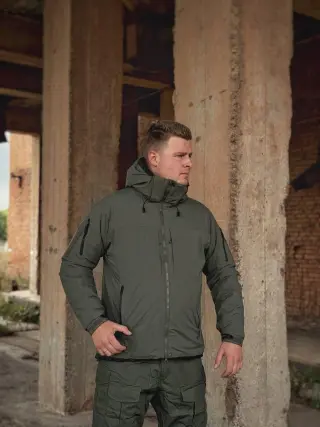
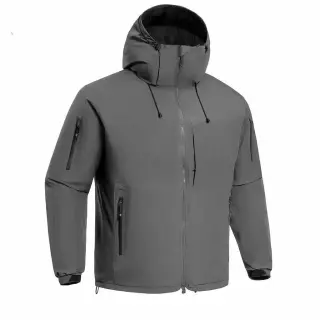
- Jacket or bushlat. A versatile option that goes with any pants. For example, the Call Dragon 10.0 has eco-down insulation and taped seams, while the Level 7 from the same brand is made of membrane fabric with 10,000 mm waterproofing.
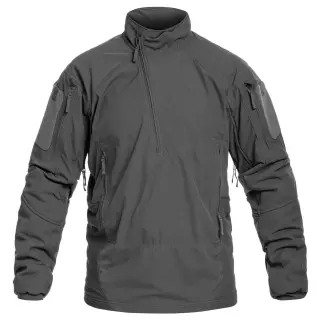
- Anorak. A diagonal zipper shifts pressure points away from the chest and stomach, so there is less excess bulk under a plate carrier and straps. The Yinren Winter Combat Shirt AcE Gen 2 with G-Loft insulation is cut this way.
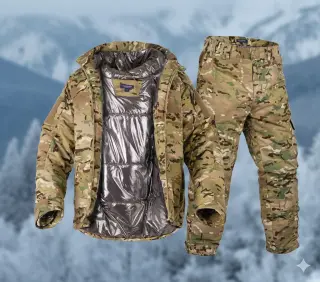
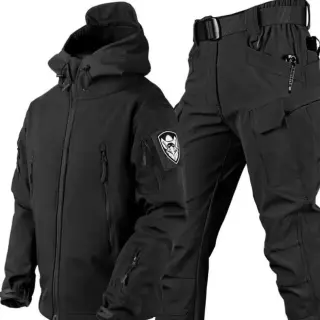
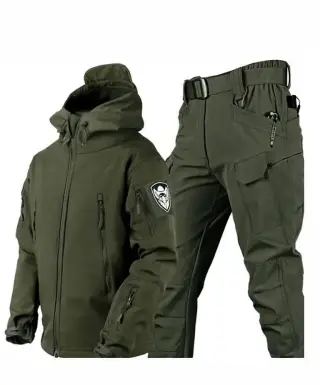
- Suit. A ready-made set with the same protection top and bottom: the Tactical Series Omni-Heat is a jacket with an Omni-Heat lining and relaxed-fit pants. Separate pieces, on the other hand, let you mix and match clothing for different tasks.
When choosing a winter jacket or a set, check the hood and a collar that covers the neck, taped seams, the membrane, and pockets you can reach while wearing gloves.
Don't rely only on the stated temperature rating. How warm you will be depends on how much you move, on air humidity, and on the layers under the jacket.
Sizing for Warm Layers and Insulated Pants
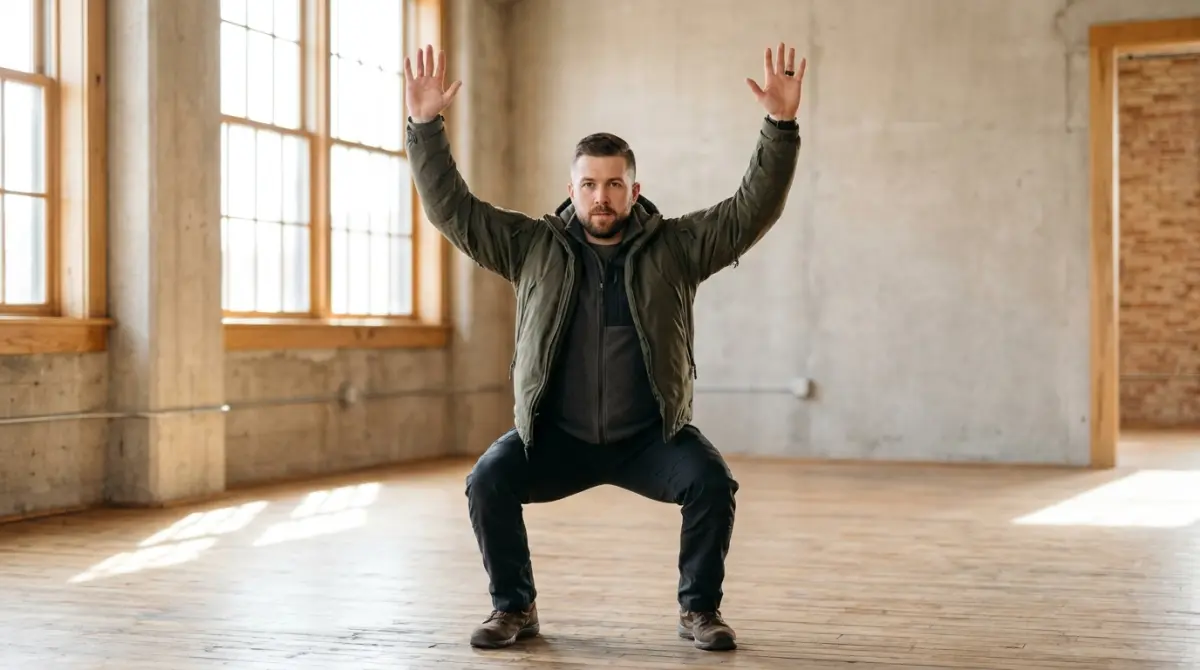
Try the jacket on only over your thermal underwear and fleece, that is, in the same set you will wear it with. A size picked for a T-shirt will constrict your shoulders and chest in winter. During the fitting, do three movements:
- raise your arms overhead: the sleeves should not expose your wrists;
- squat and lean forward: your back should stay covered;
- look at the hem of the jacket: it should not ride up to your waist.
A straight, roomy cut like that of the Call Dragon 10.0 leaves space for warm layers from the start.
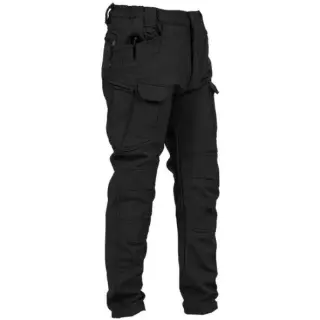
Choose insulated pants based on the load. For walking, fleece-lined softshell works well: the fabric blocks wind, and the stretch material doesn't get in the way when you squat. If you will have to stand or sit still for a long time, go for denser insulated pants. The waistband should sit so that no gap appears when you bend over, and the legs should fall freely over your boots without bunching into folds above them.
Boots, Socks, Hat, Balaclava and Gloves
Try on winter boots in the warm socks you will wear with them. Your toes need some room, because blood circulates worse in tight footwear and your feet get cold even in a well-insulated model. What to look at regarding height, sole and membrane is explained in detail in the article on choosing tactical boots.
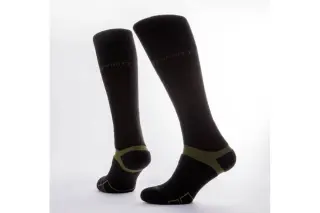
Wool thermal socks will be the foundation under your footwear. For example, the Viva combines 32% wool with acrylic, polyamide and elastane, and the heel and toe are reinforced with polyamide. It's best not to go by the temperature stated by the manufacturer: a lot depends on the footwear and how long you are moving.
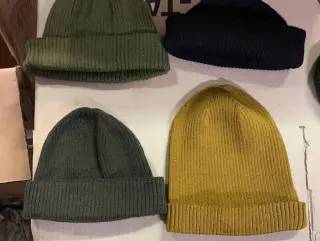
- Hat: fleece or fleece-lined knit. A ribbed knit model with a folded cuff hugs the head snugly.
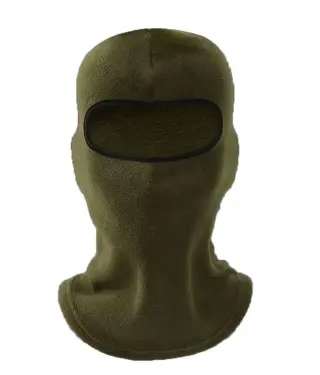
- A balaclava or buff covers the face and neck. A helmet liner made of 250 g/m² polar fleece has stretchy seams and fits any head size.
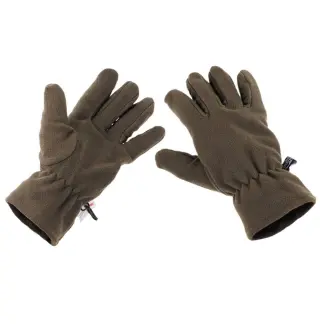
- Gloves: insulated if you need to work with your fingers, like the MFH Fleece with Thinsulate (sizes S–2XL), or fur-lined for static positions.
Common Mistakes When Choosing a Winter Kit
Most problems in the cold come not from the quality of the items but from how they were combined. Here is what to check before you head out.
- A cotton T-shirt instead of thermal underwear. Cotton absorbs sweat and dries slowly, so moisture stays next to the skin and chills the body.
- A jacket that fits "tight." If the fleece doesn't fit under it, the middle layer gets compressed and loses the air gap that actually holds the heat.
- Boots with no extra room. Try on footwear with the socks you will wear in winter: a tight boot squeezes the foot, and your feet get cold faster.
- One thick jacket instead of layers. You can't lighten it while on the move, so you first sweat and then freeze when you stop.
- A warm jacket and summer pants. Your legs need layering just as much as your torso.
- No spares. Spare gloves and tactical socks in a sealed bag are a lifesaver when the main pair gets soaked.
- Choosing only by the number on the label. The stated temperature doesn't account for wind, humidity and your workload, so evaluate the whole kit, not a single item.
FAQ and Quick Summary
What should a soldier wear in winter on a limited budget?
Start with what touches the body: dense fleece-lined or insulated thermal underwear and warm socks. Next comes fleece with a high collar, and the outer layer can be added later.
A suit or a separate jacket and pants?
Separate pieces are easier to combine with what you already have. A winter tactical suit is convenient when you need a matching top and bottom right away, with the same protection from wind and snow.
How much larger a jacket size should you get to fit over layers?
Try the jacket on together with your thermal underwear and fleece. Raise your arms and squat: if your shoulders feel pulled and the hem rides up, take a size larger. Don't go by the stated temperature, the whole layering system is what matters.
How many pairs of thermal socks should you bring on a trip?
At least two: one on your feet, the other dry as a spare. Wet socks lose heat quickly.
Kit checklist:
- Full-length thermal underwear that fits the body
- Fleece with a high collar
- Jacket or suit for wind and snow
- Winter boots and spare socks
- Hat, balaclava, gloves