Winter Neck Gaiters: Fleece Buffs With and Without a Drawcord

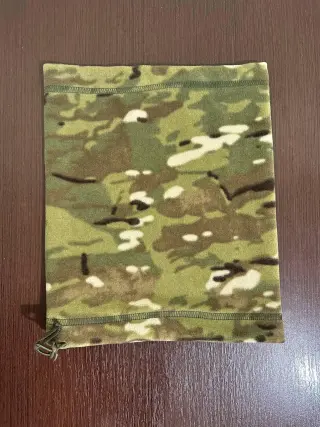
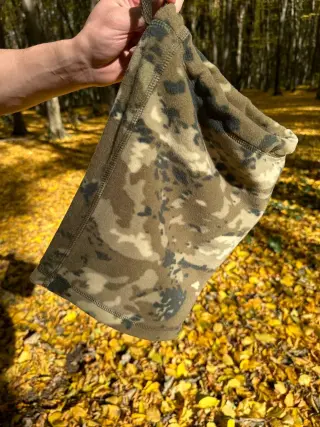
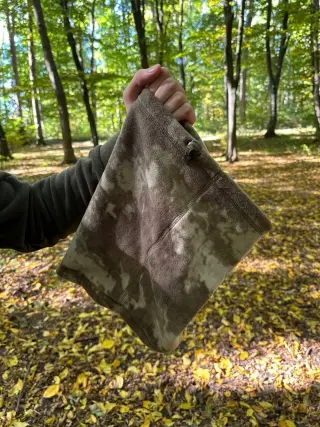




Winter Buff: Fleece Protection for Your Neck and Face
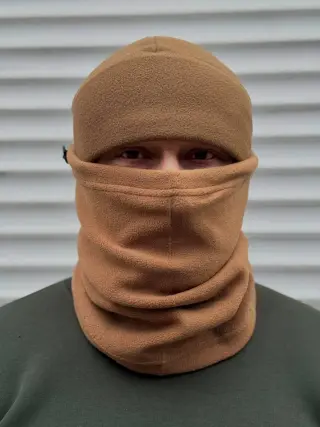
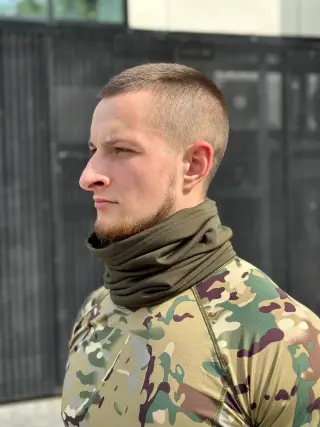
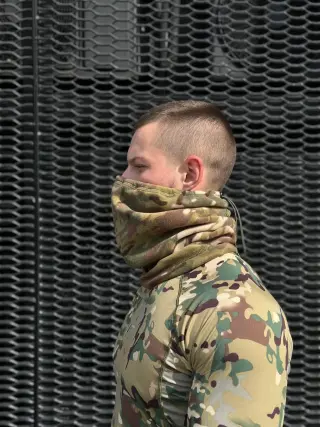
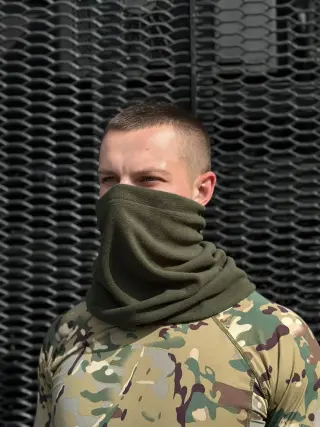
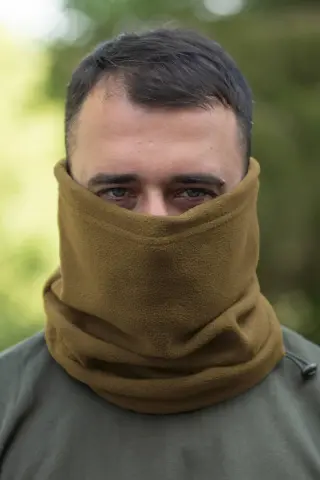
A winter buff is for anyone who spends long hours outdoors in the cold: on guard duty, on the march, hunting, fishing, or traveling. Unlike summer buffs made of thin knit fabric, winter ones are made of fleece. It is a soft-piled knit that feels gentle on the skin and holds heat well. Such a buff covers the neck, chin, nose, and mouth, and if needed it can be pulled over the head like a hat. It is light, takes little room in a pocket, and has no fasteners that could rub the skin or break.
Fleece or Microfleece: Which Is Warmer and Which Is More Comfortable
A regular fleece buff has a thicker fabric with a dense pile. It is warmer and keeps warm air close to the face. It suits low-activity work: standing watch, waiting, long stays in a shelter. The downside is bulk: thick fleece noticeably fills the collar and may press under a snugly fitted helmet.
Microfleece is thinner than regular fleece. It warms less, but it sits easier under a helmet, restricts head movement less, and dries faster. A microfleece buff is right for active movement, when you work hard and sweat, or as a second, spare buff. If you hesitate, go by workload: the more you move, the more comfortable the thinner material is.
Why a Drawcord, and When Going Without Is Simpler
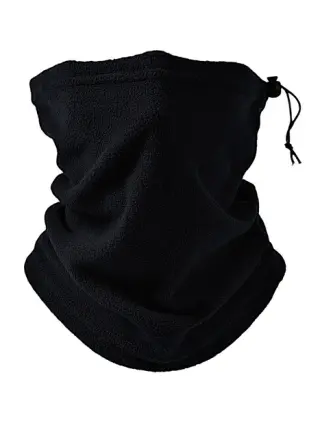
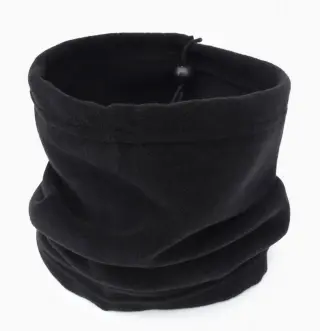
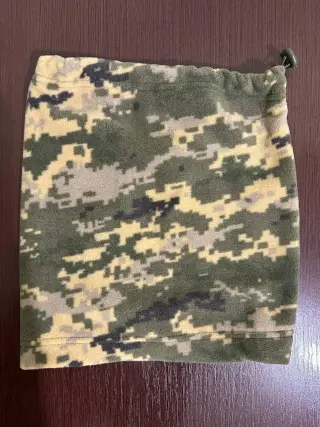
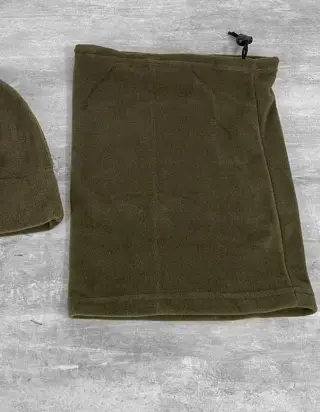
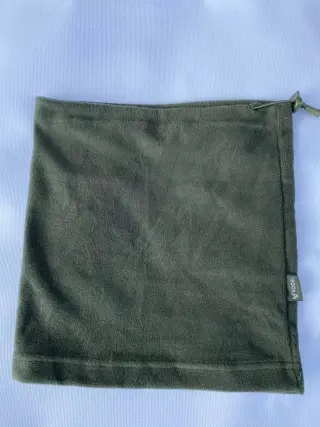
A drawcord is a cord with a toggle along the edge that narrows the top opening. When you pull it tight, the fleece buff turns into a hat with a closed top: heat does not escape through the crown, and the buff stays on the head more firmly. When you loosen the cord, you get a plain tube that can be lowered onto the neck like a scarf or pulled up over the face.
This versatility is handy when you have no separate hat or don't want to wear one: a single item covers both head and neck. However, the toggle and the knot are hard parts. Under a helmet or hood, move the toggle to the side or tuck it inside so it doesn't press. A buff without a drawcord is simpler and is worn mostly on the neck and face. It suits those who already have a warm hat.
How to Wear a Winter Buff and What Mistakes to Avoid
The main problem of any buff in winter is moisture from breathing. Near the mouth the fleece gradually gets wet, and wet fabric doesn't warm, it chills. Don't keep the buff pulled tightly over your nose and mouth longer than necessary. For a long outing take a spare so you can change into a dry one. It helps to have two: a thicker one for stationary periods and a thinner one for movement.
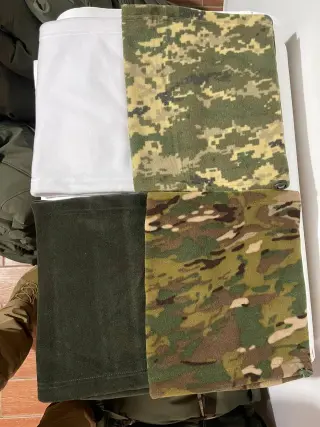
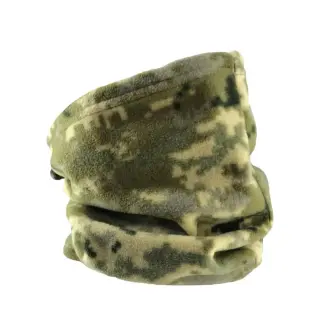
Fleece is not a membrane: it protects from strong wind and wet snow only partially, so in bad weather the buff works together with a jacket with a high collar or a hood. Choose the color to match your outer layer, since the buff is what shows above the collar. Olive, coyote, multicam, and MM-14 pixel go with field uniforms, black with city clothing. Wash fleece on a delicate cycle without fabric softener and dry it away from radiators and open flame: overheating flattens the pile, and synthetics can melt.
Frequently Asked Questions
Can I wear a fleece buff under a helmet?
Yes, but a thin one is more comfortable. A microfleece buff adds almost no bulk, while thick fleece may get in the way of fitting the helmet properly. If the buff has a drawcord, move the toggle to the side so it doesn't press on the head.
How much does a winter buff cost?
Prices for winter fleece buffs range from 150 to 450 UAH. Choose primarily by material thickness, presence of a drawcord, and color. We deliver across Ukraine.
Which is better: a buff with a drawcord or a hat?
A buff with a drawcord covers both head and neck, so it is handy when you don't want to wear several items. A warm hat fits closer to the ears and doesn't get wet from breathing. So in severe cold it is convenient to combine a hat with a buff without a drawcord on the neck. Look for summer and demi-season models among all-season tactical buffs.