Military Headwear for Service and Field Use
Military headwear: what to choose for service and field conditions
Military headwear protects against sun, wind, dust and cold, helps with camouflage and has to work together with your helmet and the rest of your gear. Choose tactical headwear by answering three questions: will you wear it under a helmet, in which season, and with which uniform. These determine the style, fabric and color: MM-14 pixel, Multicam, olive or coyote should match your uniform.
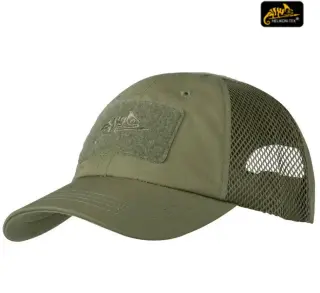
Tactical baseball caps and peaked caps are everyday headwear for the training ground, duty shifts and the city. Rip-stop made from blended fibers is more durable and dries faster, while cotton is more comfortable in the heat; hook-and-loop panels at the front and back let you attach patches, and mesh or vent holes release heat. If you use active ear protection, look for models with cutouts for it, and for formal parades, a mazepynka cap with a cockade.
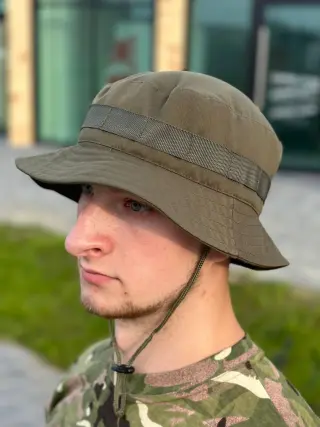
Tactical boonie hats shield from the sun not only the face but also the ears and the back of the neck. Wide brims give better shade, short ones do not obstruct your view; a band or MOLLE straps on the crown hold camouflage elements, and a chin cord keeps the hat from blowing off in the wind.
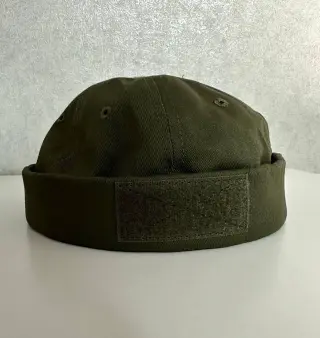
Brimless watch caps (dokerka) are made to be worn under a helmet: they do not press or shift it. In summer choose models with side mesh, in the cold season go for insulated ones with a softshell top.
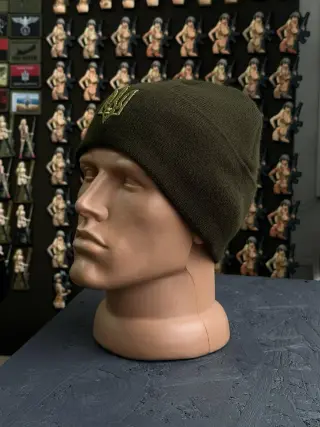
For the cold season there are fleece and knit beanies. Fleece is light, thin and fits well under a helmet, a knit beanie with a cuff covers the ears more snugly, and a thin jersey one suits the transitional season. A hook-and-loop patch on the beanie lets you attach a patch or flag.
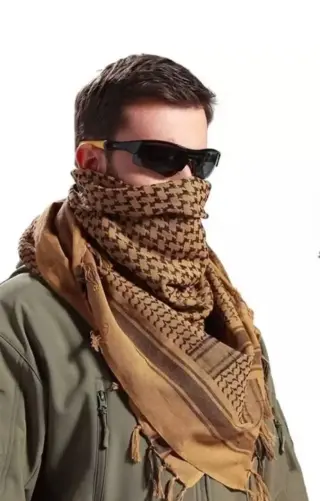
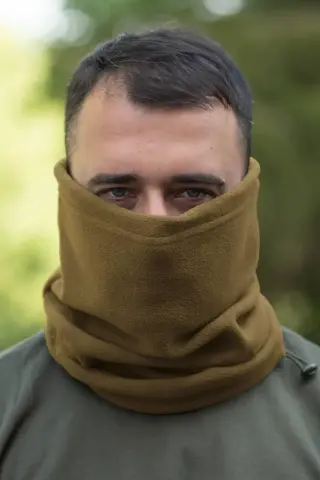
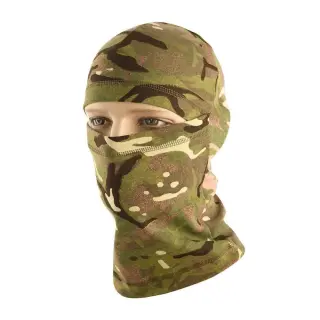
Several types of items protect the face and neck. Tactical balaclavas cover the whole head: fleece and knit ones keep you warm, while thin summer ones made of synthetic fabrics wick sweat away under the helmet. Neck gaiters (buffs) are more versatile: they are worn as a scarf, a dust mask or a helmet liner, and fleece versions with a drawcord easily turn into a beanie. Shemaghs and bandanas made of cotton protect from sun, wind and dust, and a bandana can be tied as a light helmet liner.
How to choose the right size and avoid mistakes
Measure your head circumference with a tape measure along the forehead line and above the ears and compare it with the size chart. Baseball caps, boonie hats and watch caps usually adjust with hook-and-loop or a drawcord, while beanies and balaclavas stay on thanks to their elasticity, so an exact size matters more for them. If you wear a helmet, try the headwear on together with it: seams, hook-and-loop fasteners and thick cuffs under the helmet's suspension system quickly cause chafing. Buy Ukrainian Armed Forces headwear for service in the color of your uniform and have at least two — a light one and a warm one. We deliver across Ukraine.