Tactical Footwear for Duty, Training and Hiking
Tactical Footwear: Where to Start Your Choice
Tactical footwear is designed for long hours on your feet: field exercises, marches with gear, training, duty and hiking over rough terrain. Start your choice not with looks but with the conditions you will be walking in: dirt road or rocks, heavy backpack or light load, heat or damp weather. These determine the shaft height, the stiffness of the construction and the season of the model. Choose the color to match your uniform and terrain: coyote, olive, black or camouflage. If you are buying Armed Forces of Ukraine footwear to replace your standard-issue pair, check which colors are allowed in your unit.
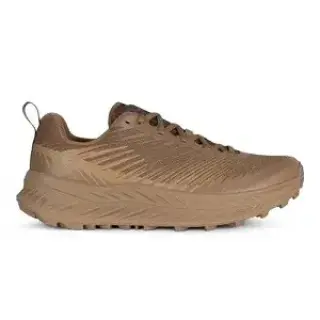
Tactical sneakers are the lightest option. They don't restrict ankle movement, so they are comfortable for training, the city and warm weather, and summer models have mesh or perforated inserts that ventilate the foot better. At the same time, sneakers don't support the ankle, so they are less suitable for hikes with a heavy load over uneven terrain. A practical detail is quick-lace lacing: it tightens in one motion, and the laces don't come undone on the road.
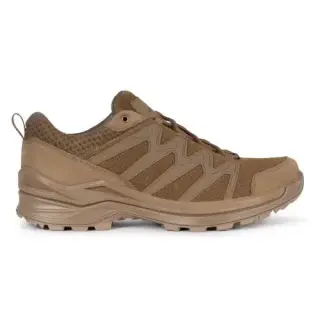
Mid-height tactical boots combine the lightness of sneakers with the support of combat boots. The higher fit shields the ankle from impacts and rolling, while the weight stays moderate, so they are comfortable for a whole day on duty or on a hike. This is universal military footwear for the off-season, when the morning brings wet grass underfoot and the afternoon dry gravel.
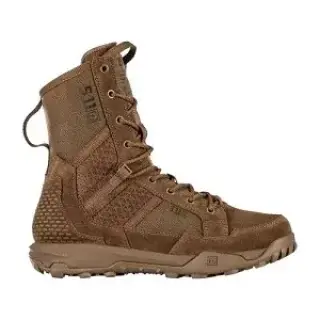
High tactical combat boots wrap snugly around the ankle joint and the lower part of the shin. They are what you need for long marches with a backpack, difficult terrain and daily field duty — this is classic army footwear. Pay attention to the lacing: lacing hooks at the top let you tighten the pair quickly, and a model with a side zipper can be put on and taken off without unlacing. Combat boots come in summer versions with perforated leather, demi-season and insulated winter versions.
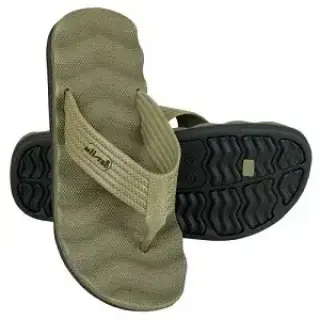
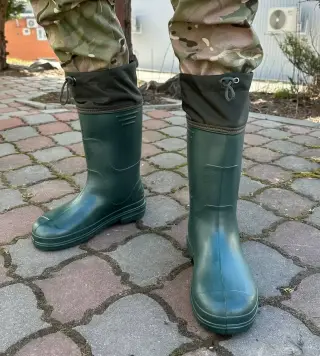
For mud, puddles and long work in dampness you will need rubber boots and shoe covers, some of which come with a warm liner. Tactical sandals will let your feet rest from closed footwear between outings and in the heat.
How to Choose a Pair
Try footwear on with the socks you will wear, and preferably in the evening, when the foot swells slightly: toes should not hit the front even on a descent, and the heel should not slip. If standard lasts are tight in width, look for models with a wide fit. A membrane is not in every model, so check for it in the specifications of the specific pair. Break in new footwear in advance, not on your first march. For more on height, sole and fit, see the article on choosing boots and sneakers. We deliver throughout Ukraine.