Tactical Boots
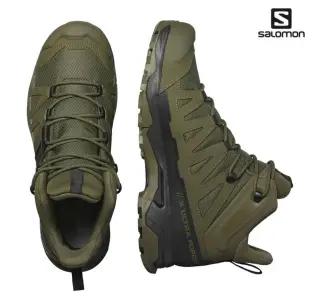
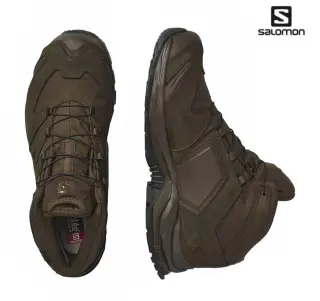
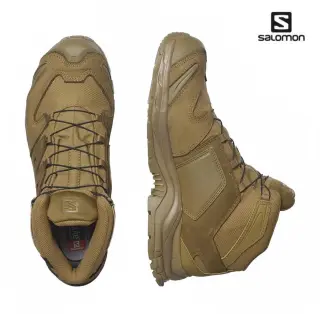
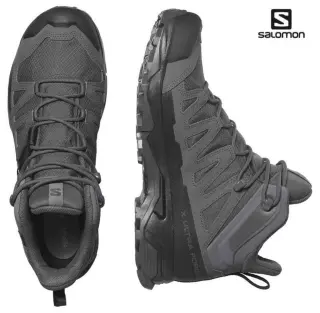
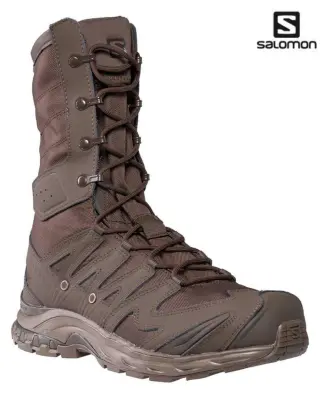
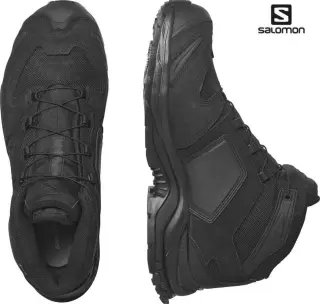
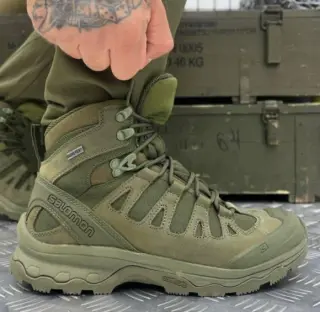
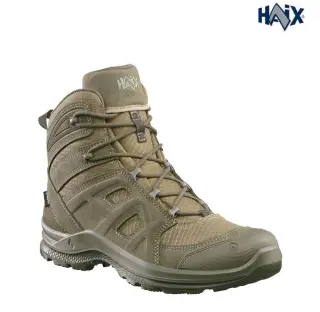


Tactical Boots: How to Choose a Pair for Your Needs
Tactical boots are bought for service, field trips, training and long marches over rough terrain. That's why the choice starts not with the brand but with the conditions: which season you'll wear them in, how much you'll walk per day and whether there will be water underfoot. These factors determine the membrane, insulation, shaft height and fastening type. Prices range from 2 030 to 15 130 UAH. The difference between a budget pair and an expensive one usually isn't in the looks, but in the last, the outsole and the upper materials.
All-Season, Winter or Summer
The most versatile option is all-season tactical boots: leather or suede with Cordura, a membrane, no thick insulation. They are designed for spring and autumn, wet grass, rain and soggy ground. With a warm sock they will also handle light frost. However, if you have to stand motionless in the cold for hours, an all-season pair is not enough.
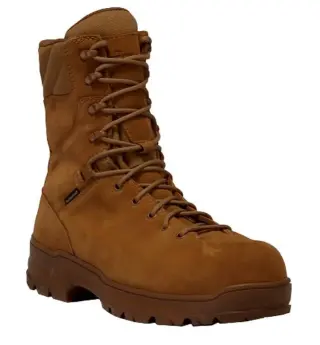
Winter tactical boots have insulation or fur inside, such as the "Vepr" models or AIR fur-lined boots. The manufacturer rates the Fox Outdoor Absolute Zero down to -40 °C. Take a winter pair slightly roomier: a squeezed foot gets cold faster. By contrast, summer tactical boots are mesh and synthetic nubuck without a membrane, like the M-Tac Iva. Your foot doesn't overheat in them, and the tight mesh weave keeps sand out. On the other hand, such boots soak through immediately in a puddle.
Membrane or No Membrane
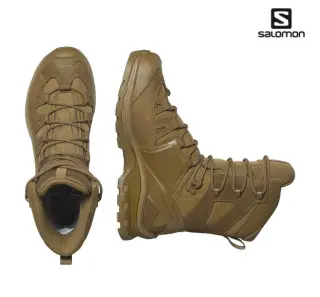
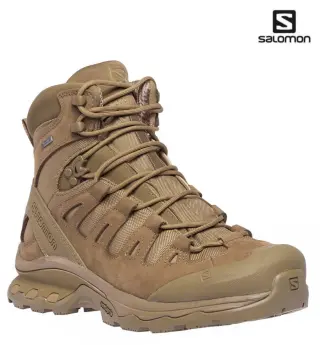
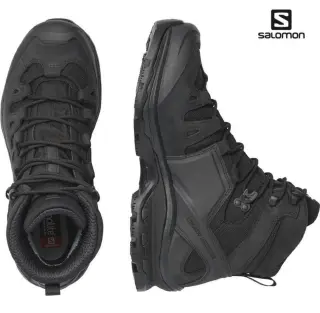
A membrane keeps water out and lets some of the vapor escape from inside. In more expensive models this is Gore-Tex, for example in the Salomon XA Forces MID GTX or Lowa Zephyr GTX Mid MK2. More budget-friendly Ukrainian boots sometimes feature Frost800, which is claimed to be both waterproof and helpful for retaining warmth. For autumn, dew and mud, a membrane is the most useful option.
The downside is that a membrane breathes worse than open mesh. In the heat your foot sweats inside it. And if water pours in over the top of the shaft, the boot dries slowly, because the membrane now keeps the moisture inside. So for summer and dry terrain it makes more sense to choose a model without a membrane. For example, the Salomon X Ultra Forces MID are made of textile and mesh and dry quickly after getting wet.
Shaft Height and Outsole
Most boots have a mid height (MID): they cover the ankle and stabilize the joint without restricting your stride. 5-inch versions, like the MIL-TEC Squad, are closer to low boots and are comfortable for everyday wear. The 8-inch shaft of the 5.11 Tactical A/T also protects the lower part of the shin. If you need an even taller shaft for rough terrain or snow, take a look at tactical combat boots. For running and city use, tactical sneakers will be lighter.
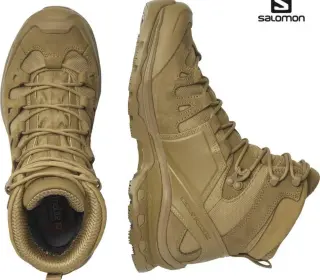
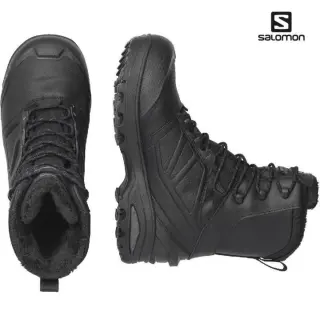
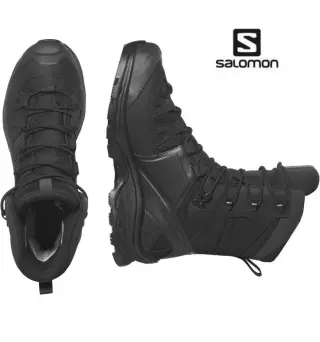
Under load, the outsole matters most. Rubber with a deep tread grips on wet ground, and a soft midsole absorbs impacts on gravel. A stabilizing platform such as the 4D Advanced Chassis in the Salomon Quest 4D Forces 2 is useful for those who walk with a backpack. Mind the weight too: a single Mil-Tec Chimera Mid boot weighs 537 g, while a pair of Esdy weighs 1200 g, and you will feel that difference on a long march. For more on height, outsole and fit, see the article choosing boots and sneakers.
Laces, Quick-Lace or Zipper
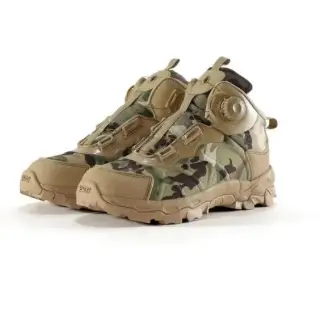
Classic lacing with metal eyelets lets you tighten the instep and shaft with different tension, and a broken lace is easy to replace in the field. Tactical boots with quick-lace go on in seconds: turn the dial and you're done. On Esdy the dial can be on the side or in the center. A central one is easier to adjust on the move, and in some models regular lacing remains alongside for a more precise fit.
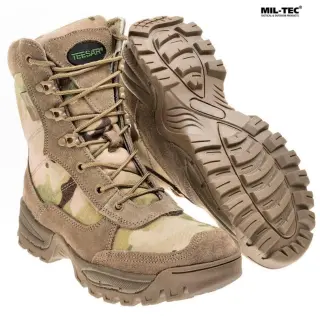
The downside of quick-lace is that tension is distributed evenly, so fine-tuning the fit is harder. In addition, a broken dial can't be repaired in the field. A compromise can be a side zipper next to the lacing, as in the Teesar Tactical Boot: you adjust the laces once and put the boots on via the zipper.
Size, Width and Color
Try boots on in the evening and in the socks you'll wear them with. There should be a gap of about a finger's width between the toe of the boot and your toes, because on descents the foot slides forward. If standard lasts press on the instep, look for wide versions, for example the Garmont T8 Falcon Wide. Leather and suede boots settle slightly around the foot in the first few days, so don't go on a long march in a new pair right away: break them in first at home and on short walks.
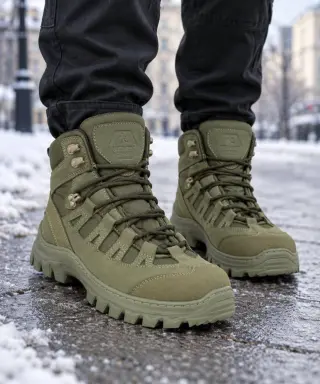
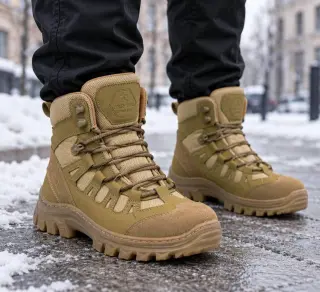
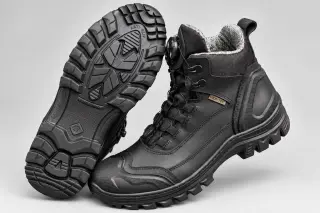
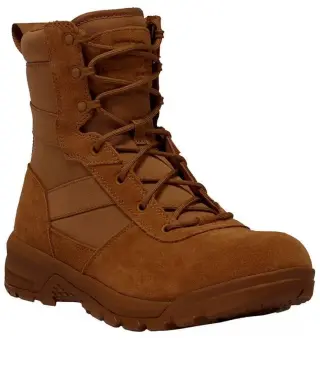
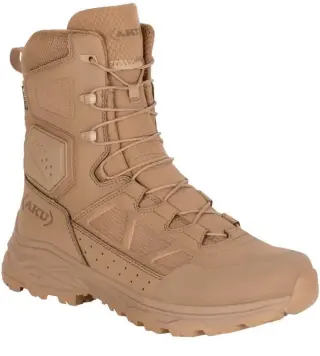
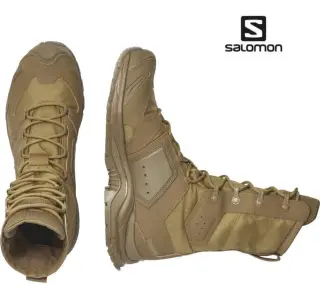
Color is chosen to match the uniform. Coyote boots suit Multicam and sandy shades, olive tactical boots suit green field uniforms. Black tactical boots are appropriate for urban service and law enforcement agencies.
Frequently Asked Questions
Can tactical boots be washed in a washing machine?
No, machine washing destroys glued seams and can damage the membrane. Wash off dirt with a brush and warm water, and dry the boots at room temperature, away from a radiator. After drying, treat suede and nubuck with a protective impregnation.
Which boots are suitable for the Armed Forces of Ukraine?
Those that match your task and the season, and in color, your uniform. Coyote and olive are the most practical, because they blend in with field camouflage. It's best to check the specific color requirements with your unit.
Are there women's tactical boots?
Yes, some models come in women's versions, for example the Lowa Innox Pro GTX MID TF or women's HAIX boots. They are made on a narrower last with a lower instep. Some models, like the 5.11 Tactical A/T, are listed as unisex.
How do tactical boots differ from hiking boots?
Tactical boots have more subdued colors, a tougher upper and reinforced toe and heel for working with gear. Hiking boots are usually lighter and brighter. In terms of outsole and membrane construction they are often similar, so both types will work for hiking.
If these boots don't fit your conditions, compare other tactical footwear. For swamps and prolonged rain, rubber boots are more practical.