Tactical Pants
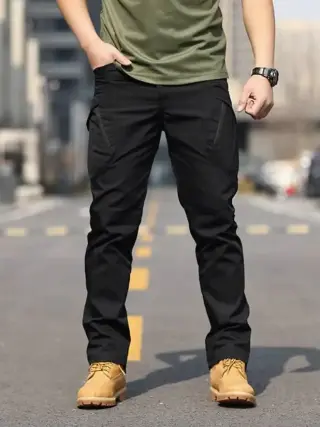
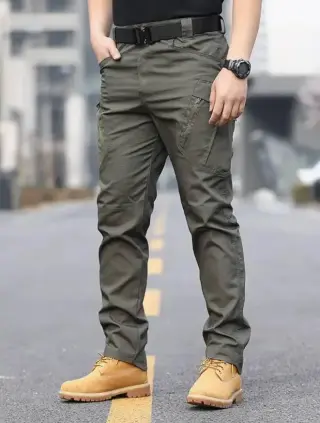
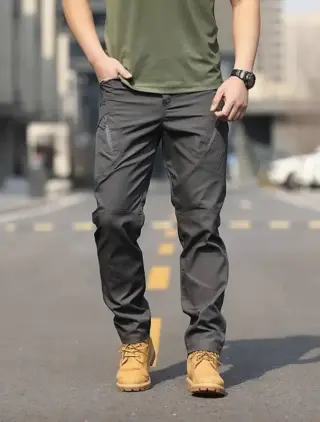
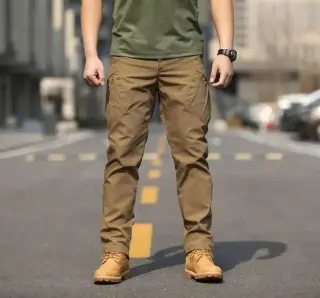
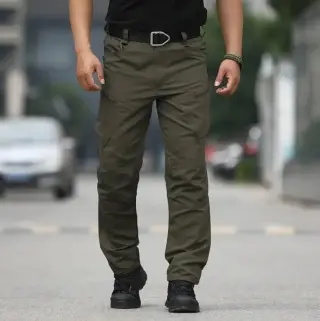
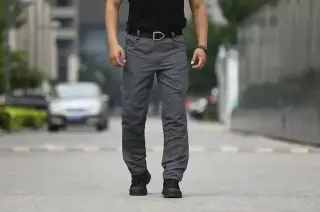
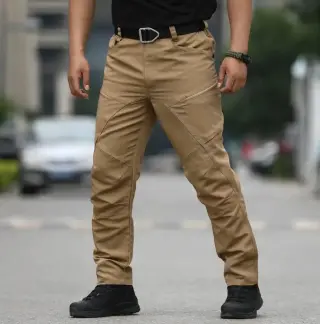
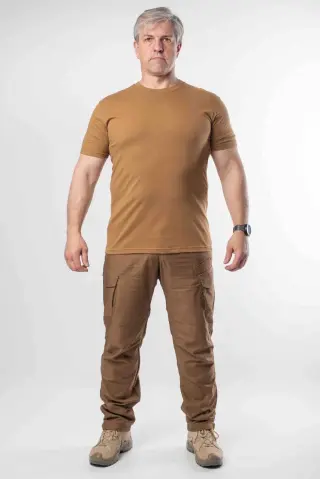
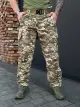
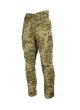
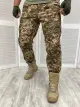
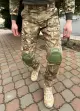


Tactical Pants: How to Choose a Model for Your Needs
Tactical pants are made for loads that ordinary trousers can't handle: crawling, weighted squats, long field outings, daily service. Choosing starts with three questions. Where and when will you wear them? Do you need knee pads? How freely do you need to move? The answers determine the fabric, the knee construction and even the sizing system you should search in.
Ripstop, Twill, Canvas or Stretch
The most common option is ripstop. It is a cotton-polyester blend with a woven grid of stronger threads: a small puncture doesn't tear across the whole leg. Fiber ratios vary. A fabric with 65% cotton and 35% polyester feels better against the skin and breathes better. If polyester dominates, as in Yinren 4.0, it dries faster and wrinkles less. Twill is denser and softer, and it is often coated with a water-repellent finish. This is a good choice for spring and summer, but the finish weakens after washing and has to be restored.
Canvas, as in Helikon-Tex Urban Tactical or Pilgrim, is a tough poly-cotton fabric that holds up well against friction from rocks and concrete. However, it is heavier and a bit stiff at first. Pants made of 100% cotton, such as Urban Force, are pleasant in the city but get wet quickly and dry slowly, so they are a weak choice for the field. Models with elastane, such as M-Tac Aggressor Gen II Flex, stretch with a high step and when squatting. This is convenient for active movement, although regular ripstop resists abrasion better.
| Fabric | Strength | Drawback |
|---|---|---|
| Ripstop | Tears don't spread, breathes | Restricts movement without elastane |
| Twill with water-repellent finish | Dense, holds up in light rain | Finish needs to be renewed |
| Canvas | Abrasion-resistant | Heavier, takes longer to soften |
| Cotton | Pleasant against the skin | Dries slowly |
| Stretch | Freedom of movement | Wears through faster |
In the cold, regular tactical pants are only part of the layering system. If you need wind protection and insulation, as in Carinthia LIG 4.0 with a membrane and G-LOFT, see winter and insulated pants. For transitional seasons with changeable weather, softshell pants will do, and for the heat, summer and lightweight pants made of thin fabric.
Cargo, Joggers or Assault: What to Look for in the Construction
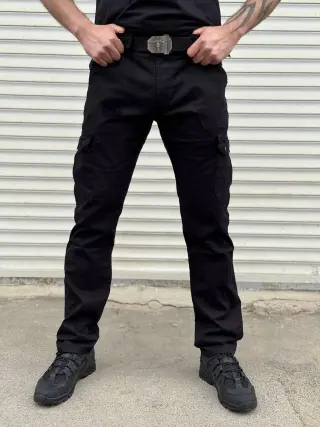
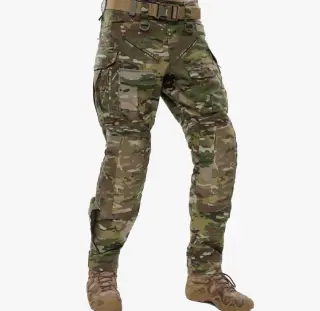
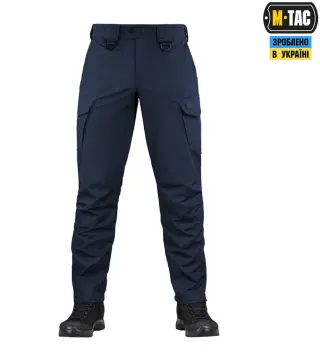
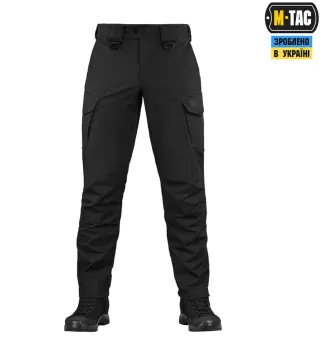
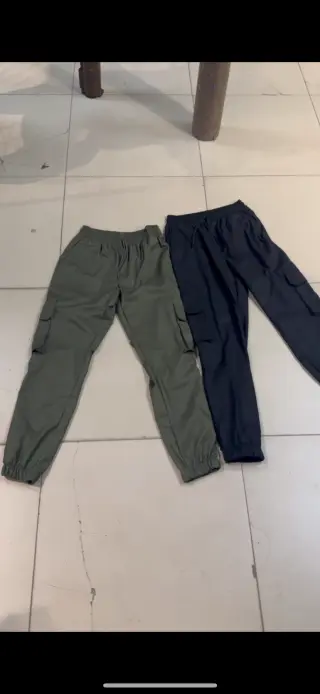
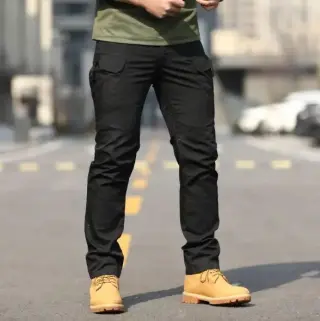
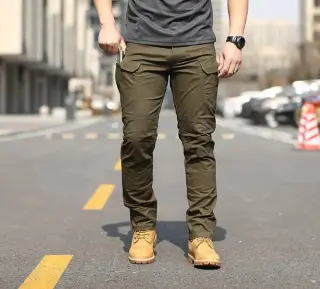
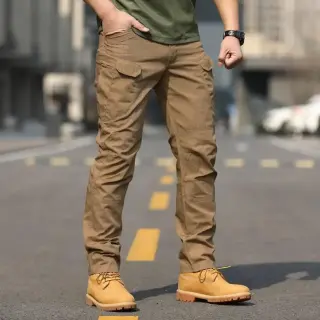
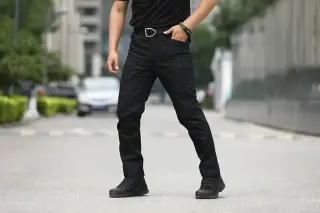
Classic cargo pants have a straight, loose cut and patch pockets on the thighs. They are equally suitable in the city, for hunting and for fishing. Joggers taper toward the bottom and are gathered into a cuff, so the leg doesn't catch on branches, doesn't collect dew and doesn't need to be tucked into high boots. Assault models and pants with knee pad pockets (Call Dragon, Varan, G7 with adjustable knee pad height) are designed for work on your knees. The inserts in them stay in place and don't slide down like separate strap-on knee pads. For work in full gear there is a separate category — combat pants.
Next, the details decide. Reinforced or articulated knees, as in Archon, extend the life of the pants in the area that wears out first. The elastic "tunnel" waistband in M-Tac Aggressor Gen II holds a tactical belt up to 5.5 cm wide. A waistband insert with 2-3 cm of stretch allows you to go without a belt. Velcro tabs or drawcords at the bottom of the leg adjust the width above the footwear, and YKK hardware lets you down with zippers less often. Consider how many pockets you really need: flap patch pockets are handy for a phone or tourniquet, but overstuffed pockets knock against your legs when running.
How to Choose a Size
Tactical pants come in several sizing systems, and they shouldn't be confused. The letter system (from XS to 5XL) is based on waist and hip circumference, and the length in it is standard. The American W/L system, for example 32/34, specifies waist circumference and inseam length separately, in inches. For people taller or shorter than average, it is the easiest way to find pants. The R and L marks next to the letter (2XL/R, 2XL/L) mean regular and long length at the same circumference. Some models have the local 46–60 size chart.
Take measurements from yourself, not from old jeans: waist circumference where the waistband will sit, and length from crotch to floor. If you will wear thermal underwear under the pants or insert knee pads, measure in exactly that setup. Otherwise, in a snug size, the knee will press when squatting. It is better to take the length with a small allowance: when squatting the leg rides up, and a leg that's too short exposes the ankle. Ripstop and canvas barely stretch, so a sizing mistake in non-stretch pants can't be worn out.
Frequently Asked Questions
What color of tactical pants should I choose?
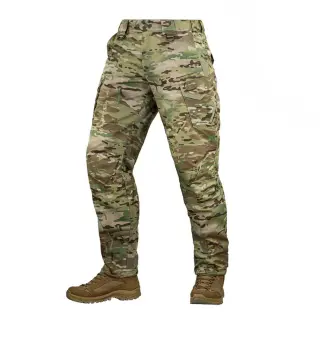
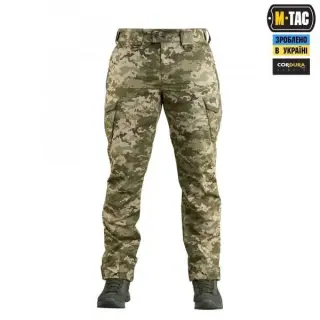
It all depends on where you'll wear them. Multicam and pixel work in the field and forest, predator is worn in the National Guard, blue in the State Emergency Service and police. Olive, coyote, gray and black are the most versatile and don't stand out in the city. For more on camouflage for steppe, forest and winter, see the article on choosing gear color.
How do I wash pants with a water-repellent finish?
Use a delicate cycle, without fabric softener or bleach. Softener clogs the fibers, and water stops beading off the fabric. Dry the pants away from a radiator. When droplets start soaking in, renew the finish with a spray.
Will men's tactical pants fit a woman?
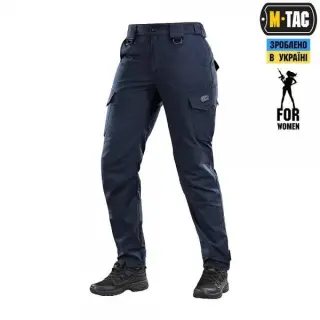
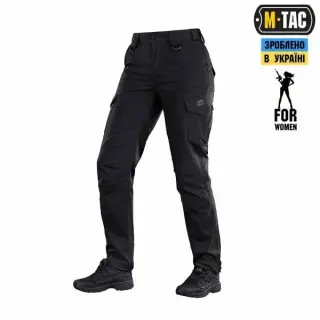
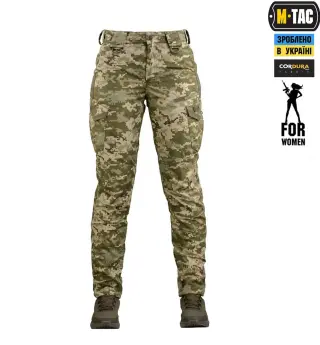
They will, but they will fit worse. The men's pattern is designed for a different waist-to-hip ratio, so the waistband often pinches or gaps. So it's better to look for women's tactical pants, like M-Tac Aggressor Lady, which are made with the female figure in mind.
How much do tactical pants cost?
Prices range from 580 to 9 105 UAH. Cheaper models are cotton and simple ripstop ones. More expensive ones stand out with branded fabric, stretch and well-thought-out hardware. The highest prices are for insulated models with a membrane.
What else should I take along with tactical pants on a field trip?
Thermal underwear, spare socks and a layer against wind and rain. Pants are only the middle of the system, and without the right layers even a good model won't save you in bad weather. The full list is covered in the material about the basic kit for a field trip.
If you are looking for a different type, browse all pants and shorts, and for the heat and training, tactical shorts.