Summer Tactical Pants
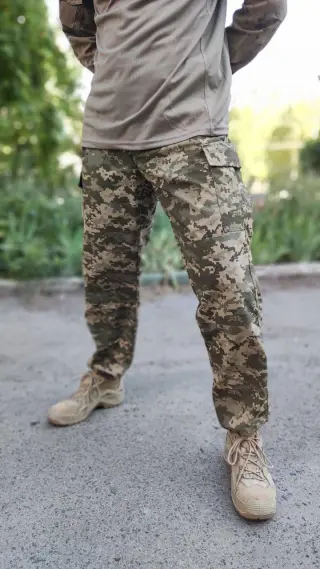
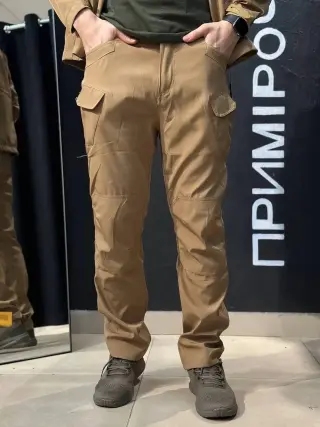
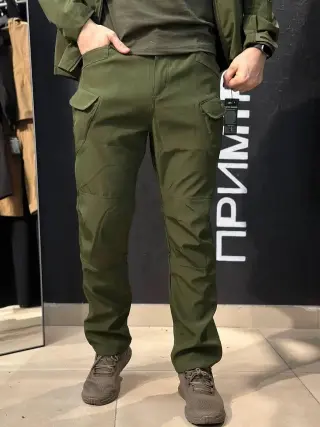
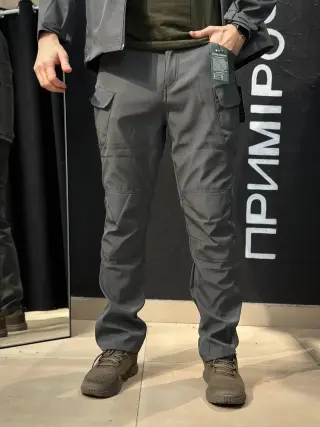
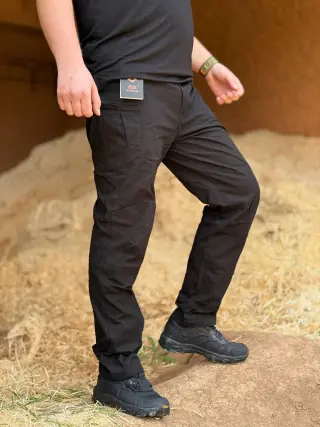
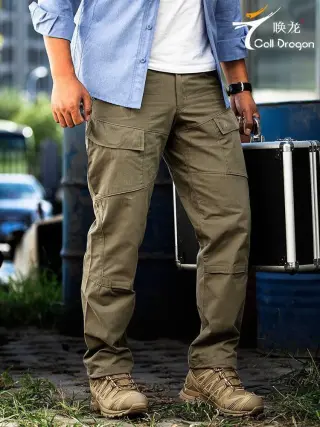
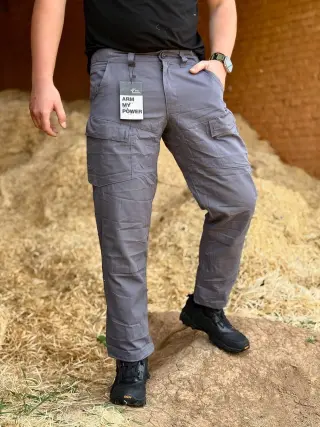
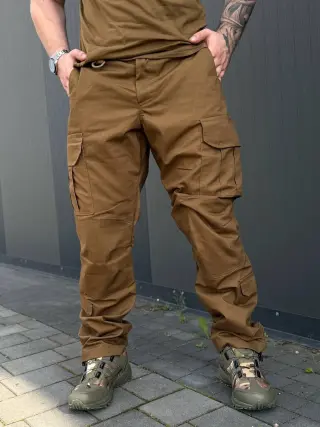




Summer Tactical Pants: What to Consider
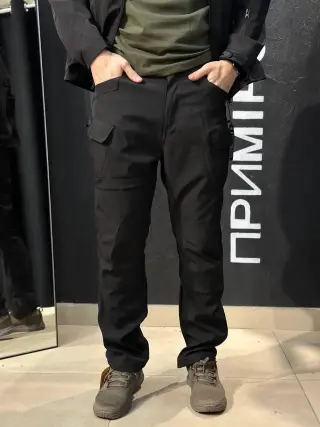
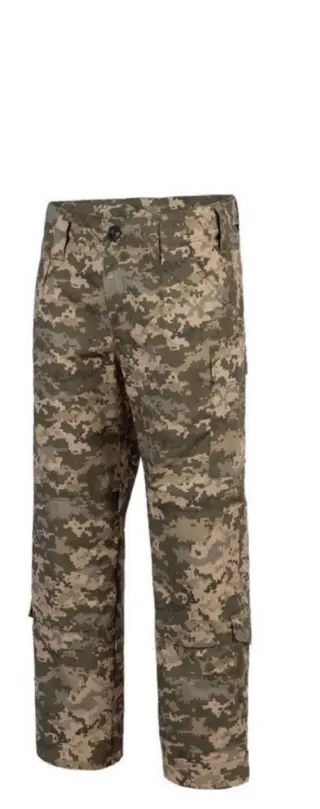
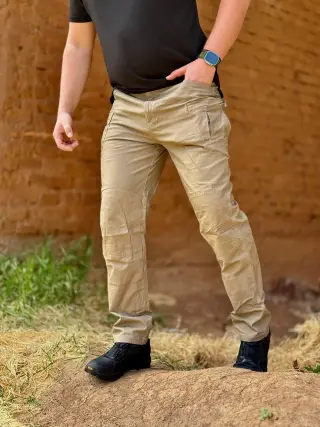
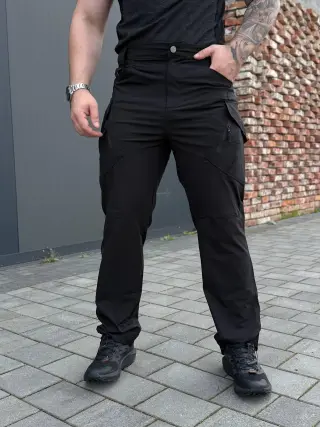
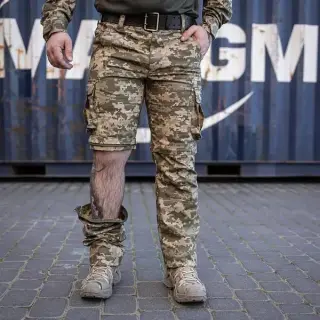
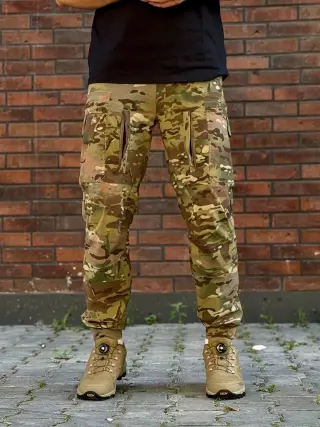
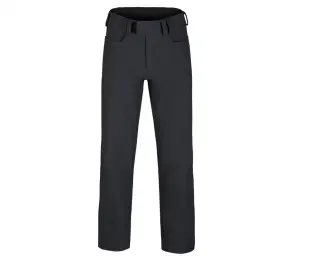
Summer tactical pants are for situations where regular field pants become a burden in the heat: on missions, on duty, at the training ground, on a hike or on a fishing trip. The main thing is that the fabric breathes, dries quickly and doesn't tear on branches. So start your choice with the material, then decide on the cut for your tasks, and only after that pick the color and size.
Ripstop, Cotton or Nylon
Ripstop is not a composition but a weave with a reinforced thread: an accidental puncture or cut doesn't spread any further. Cotton or poly-cotton ripstop feels pleasant against the skin and doesn't melt from a spark by the campfire, but it takes longer to dry and may shrink slightly after washing. It's an option for field conditions and for those who don't like synthetics.
Stretch nylon, as in nylon-balance models or K.S Military with a composition of 90% nylon + 10% elastane, is lighter, stretches in the crotch and knees, and dries very fast. The downside: in extreme heat synthetics feel warmer than cotton, and it's best not to bring them close to an open flame. Dewspo in Vanguard is polyester with a water-repellent finish: it protects from dew and light rain, but breathes worse, so it's better suited for spring and autumn than for July heat.
Classic Cut, Cargo or Joggers
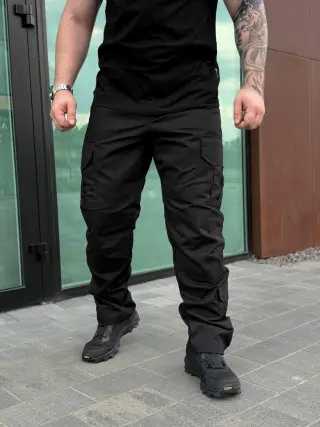
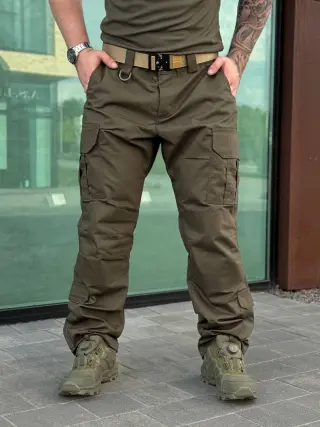
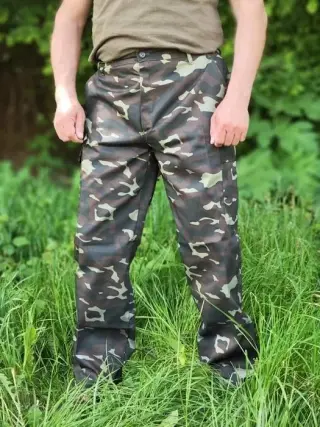
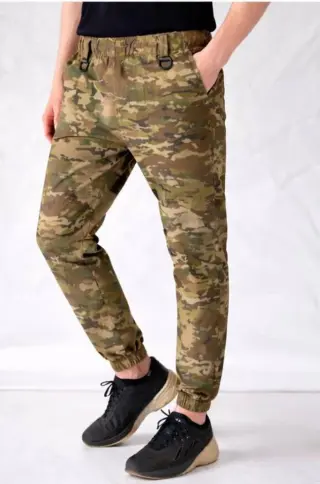
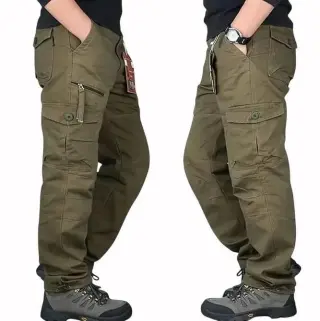
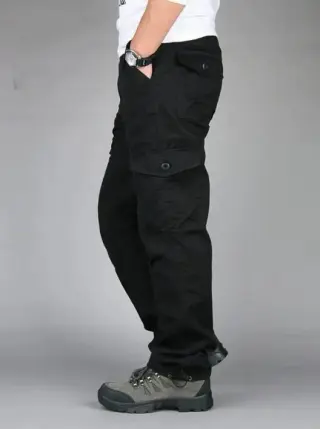
Straight pants with thigh pockets are a universal option for a belt and chest rig. Cargo pants, like Combat X, have a looser cut and roomy pockets: convenient when you carry everything with you, but full pockets swing around while running. Joggers with a cuff or Velcro at the bottom sit snugly at the ankle and don't snag, but they look tight over high boots.
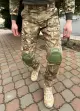
If you work a lot on your knees, look for pants designed for knee pads, like the Call Dragon Brave Fighter: the inserts sit in pockets and don't slide down the way strap-on knee pads do. The inserts themselves are usually bought separately. For intensive work with a higher level of protection, consider combat pants.
How to Choose the Size
Size charts differ: some models are labeled with letters from S to 6XL, others with Ukrainian sizes, and some use a scheme like 32/34, where the first number is the waist circumference in inches and the second is the inseam length. Compare your waist and hip measurements with the chart of the specific model, not with the size of your other pants.
Stretch fabrics forgive an error of half a size, cotton doesn't, especially since it may shrink. Test the fit with a squat and a high step: the fabric shouldn't pull at the knee, and the waistband shouldn't slide down. An elastic waistband holds the pants without pressure, but you still need a belt for heavy gear.
Frequently Asked Questions
Can I wear tactical pants in the city?
Yes, especially black, gray or olive ones. Understated cargo pants or joggers without camouflage don't look "like you're on a mission." Multicam and pixel are more appropriate in the field.
Which camouflage should I choose for service?
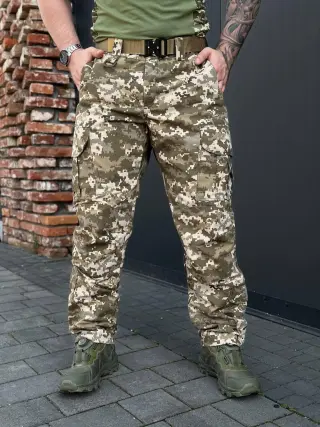
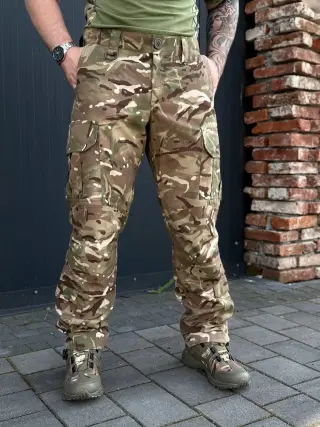
The one required by your unit or terrain. Pixel is the most common pattern in the Armed Forces of Ukraine, Multicam is universal for mixed greenery and dry grass, and coyote works well in dry steppe landscapes.
How do I wash lightweight pants?
On a delicate cycle, without hot water or fabric softener. Softener clogs the fabric's pores and weakens the finish, and high temperature harms elastane. Fasten the Velcro before washing so it doesn't catch on other items.
What should I wear when it gets colder?
For the windy off-season, softshell pants are a better fit. When the temperature drops below zero, switch to winter and insulated pants.
Basic all-season models are in the tactical pants section, all types are in the general pants and shorts section, and for the hottest days pick tactical shorts.