Winter Tactical Pants

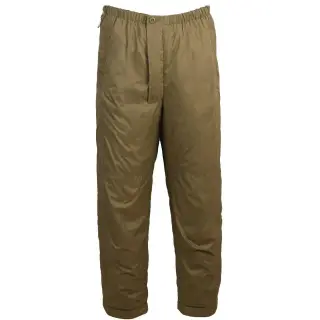
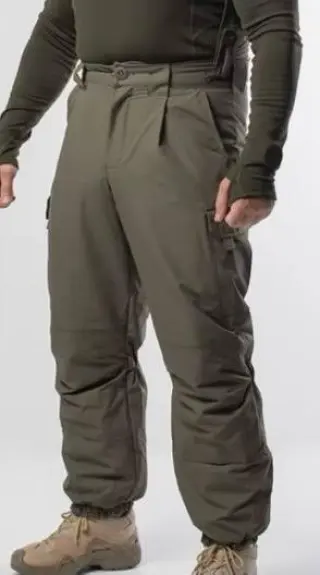
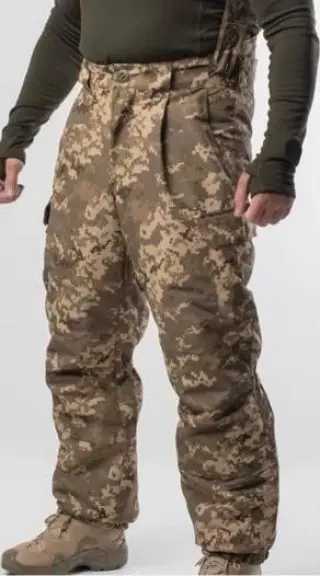
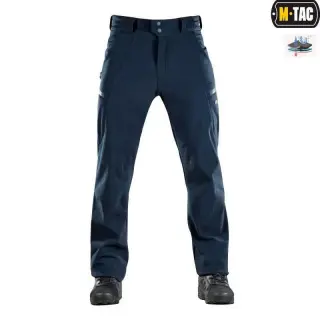
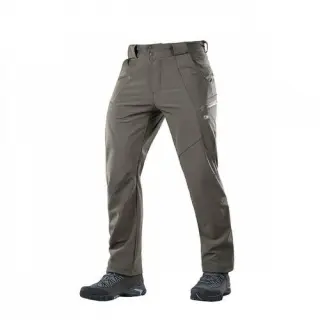
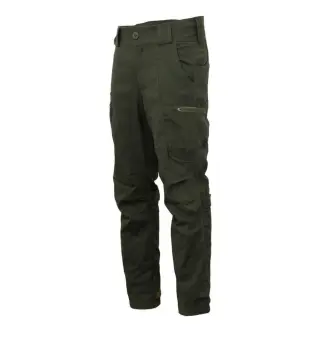
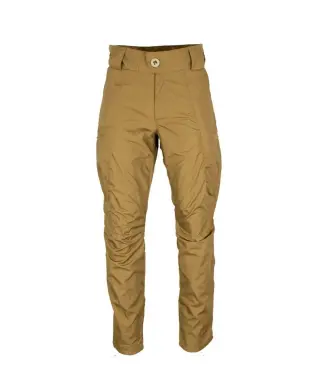
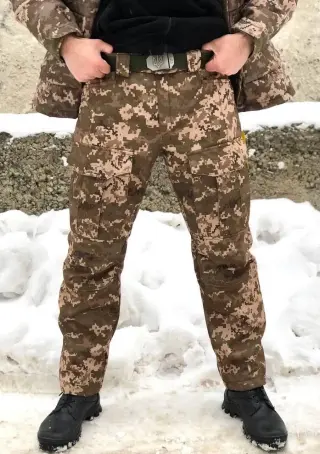
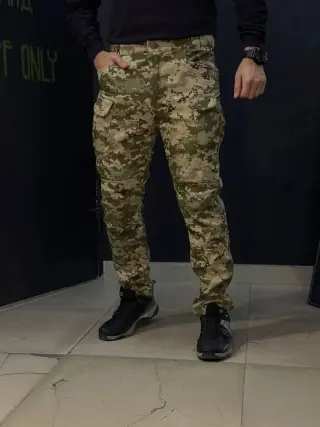
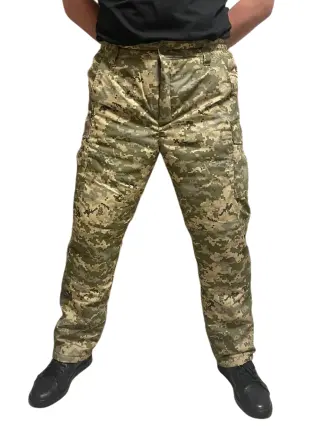
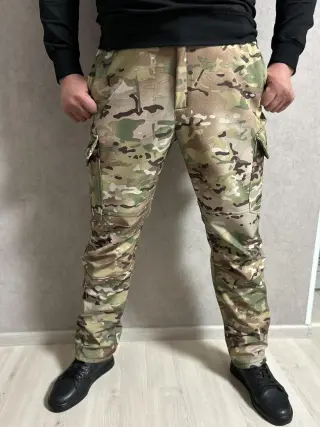
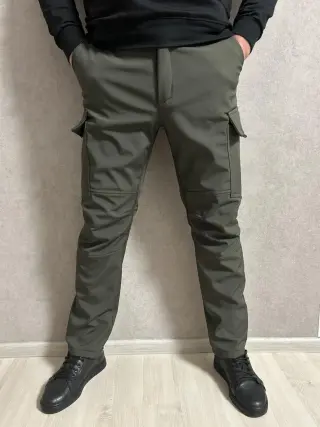
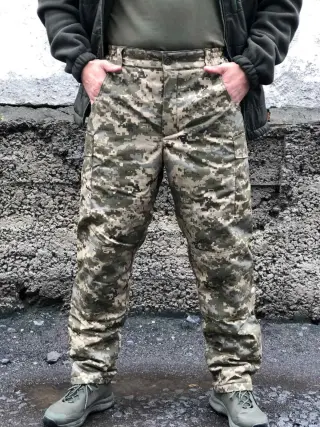





Winter tactical pants: where to start when choosing
Choose winter tactical pants not by the "down to -30" label on the tag, but by what you will be doing in the cold. If you walk, dig or haul loads all day, you will overheat in thick insulation. If you stand at a post for hours, you will freeze in light fleece-lined pants. So start with three questions: how much you move, how damp and windy it is where you'll be, and what you will wear underneath. The answers determine the insulation, the outer fabric and the cut.
Active movement or long hours on watch
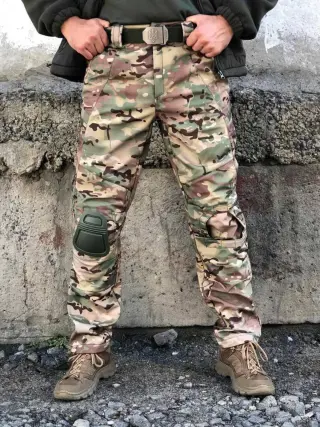
For patrolling, outings and work on the move, insulated pants with a thin warm layer suit best: softshell or ripstop with a fleece lining. They are not bulky and fit like regular tactical pants, with belt loops, thigh pockets and, in many models, knee pad pockets. Excess heat and moisture escape outward. Look for this option among fleece-lined tactical pants. They have one downside: in severe frost without movement, fleece is not enough, and you will have to wear thermal underwear underneath.
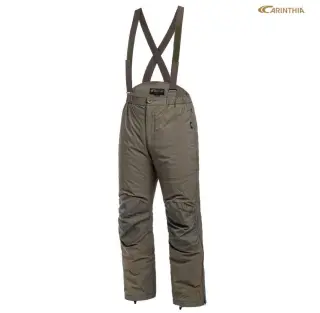
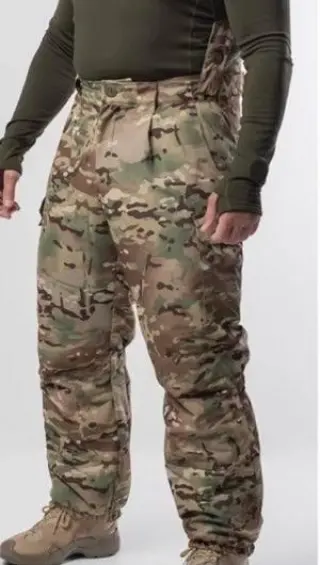
For standing still on watch you need bulky synthetic insulation and a windproof outer layer. This is where winter pants with suspenders come in: the high back covers your lower back, and the pants don't slide down when you sit or squat. In the Nord Storm R Military the insulated back panel is removable: it attaches with a zipper with a draft flap, so you can unfasten it during a thaw. Please note: the temperature on the label is the manufacturer's guideline, not a guarantee. A rating of down to -30 °C is usually given for active movement and layered clothing, so allow a margin for a stationary post.
Which insulation to choose
| Insulation | When it fits | Downside |
|---|---|---|
| Fleece | Movement, between seasons, moderate frost | Lets wind through without a dense outer layer |
| Synthetic batting (sintepon) | Budget winter option | Clumps over time |
| Hollowfiber, thermoloft | Long exposure to cold | Bulkier, worse under knee pads |
| G-Loft | Severe frost and moisture | High price |
| Omni-Heat with Thinsulate | Cold, changeable weather | A reflective lining doesn't replace thickness |
Hollowfiber and thermoloft are springier than synthetic batting and hold their loft longer after washing. Quilted lining also keeps the insulation from bunching into lumps. Omni-Heat is not a standalone insulation but a lining with reflective dots that returns body heat. That's why it is combined with a Thinsulate layer.
The most expensive segment is Carinthia winter pants with G-Loft. The Carinthia MIG 4.0 has a Gore Windstopper outer, a Gore-Tex membrane and Cordura reinforcement on the knees. Two-way YKK zippers along the full length of the legs let you put the pants on without taking off your boots. The HIG 4.0 is lighter, with G-Loft 125 g/m², and the manufacturer rates it for down to -20 °C.
Level 7: a layer over everything
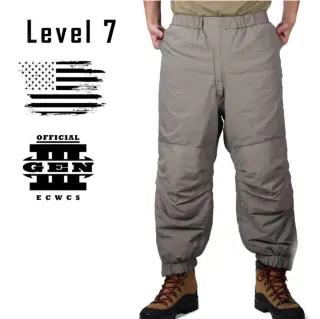
Level 7 pants are an outer insulated layer worn over regular pants. Their cut is deliberately bulky, and the outer fabric is waterproof and windproof. For example, Call Dragon Level 7 are insulated with eco-down and have rubberized side zippers. The same type includes the US Army ECWS Gen III Level 7 and the British Army PCS Softie Level 7. Such pants are convenient to keep in a backpack and throw on at a halt or at a post. Running and crawling in them is awkward: for that, regular insulated pants are better.
Outer fabric and camouflage
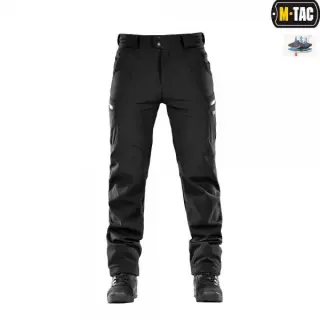
Softshell is stretchy, blocks wind and is almost silent, so it is chosen for movement. If it is only occasionally cold, look separately at softshell pants. Ripstop with a water-repellent finish is more resistant to abrasion and tears, and the reinforced thread keeps a small hole from spreading. Twill and cotton blends feel nicer against the body but take longer to dry.
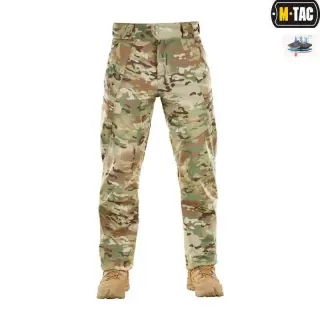
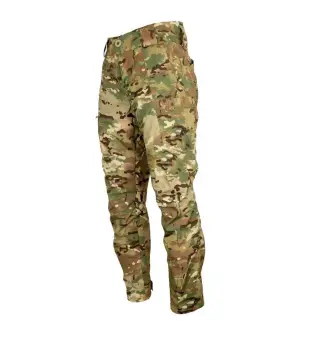
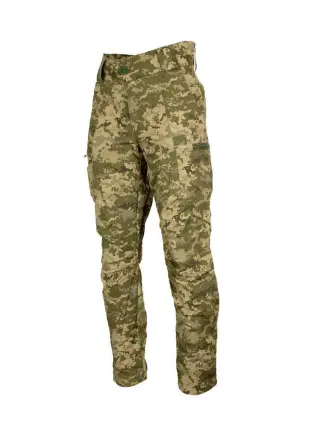
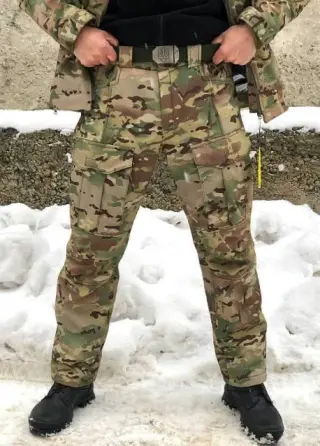
Choose the color to match the rest of your gear. Pixel winter pants go with uniforms in MM-14 pixel. Multicam winter pants are more versatile against varied backgrounds. Olive, coyote and black suit those who don't need camouflage.
How to choose the size
Men's winter pants are chosen allowing for thermal underwear underneath, so measure your waist and hips while wearing it. Size charts come in letter and numeric formats, for example 44-60, and some models are made in big sizes. Before buying, check the size chart of the specific model. At home, squat and raise your knee to your chest: the pants should not pull at the crotch or knees, especially with knee pads. For suspender models, the length of the back panel and the strap adjustment also matter.
Frequently asked questions
Can fleece-lined pants be washed in a washing machine?
Yes, on a delicate cycle at a low temperature and without fabric softener. Softener clogs the fleece pile and worsens the water-repellent finish of the outer fabric. Dry the pants laid flat, not on a radiator.
Which military winter pants should I take to positions?
For positions, the best combination is pants with bulky insulation, a windproof outer layer and suspenders. If you have to both walk and stand for a long time, take fleece-lined pants and keep Level 7 as a removable layer.
How do insulated pants differ from winter pants?
Insulated pants usually have a fleece lining and are designed for autumn and moderate frost. Winter pants have bulky insulation, a dense or membrane outer layer and often a high back.
Do I need thermal underwear under winter pants?
Yes, it wicks sweat away from the skin, and the insulation stays dry. Without it, even warm pants get damp from the inside after movement.
How much do winter tactical pants cost?
Prices range from 750 to 19 060 UAH. Cheaper models use fleece or synthetic batting. The most expensive are Carinthia with a Gore-Tex membrane.
If you are looking for another season or cut, browse all pants and shorts, regular tactical pants, combat pants for knee pads, or summer and lightweight pants for the warm half of the year.