Tactical Backpacks: Assault Packs, Frame Packs and Slings
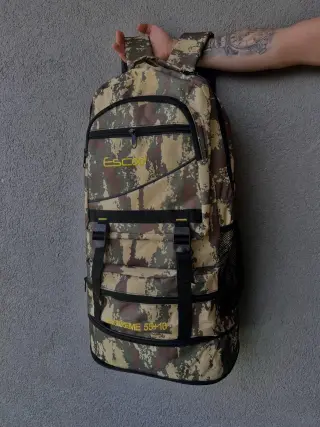
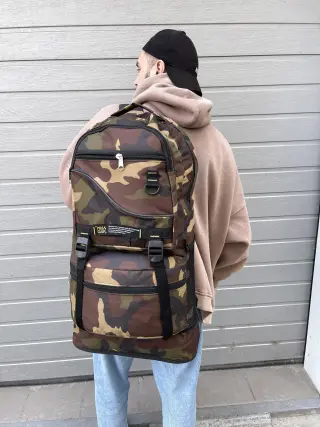
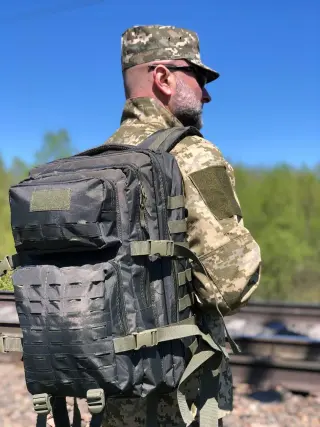
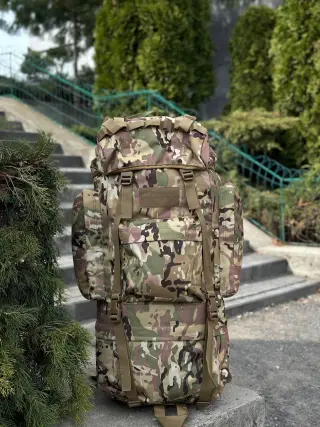





Tactical Backpacks: How to Choose for Your Tasks
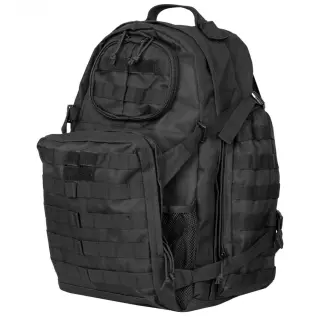
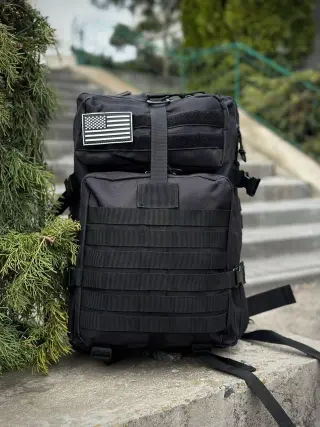
Tactical backpacks differ from city and hiking models with tougher fabric, denser stitching and a MOLLE system for attaching pouches. They are taken to service and training, on hikes, hunting trips or used as a reliable everyday backpack. Start your choice not with the color but with the task: how many hours or days you will carry the load, how much it weighs, and whether you will wear the backpack together with body armor.
Assault Pack, Frame Pack or Sling
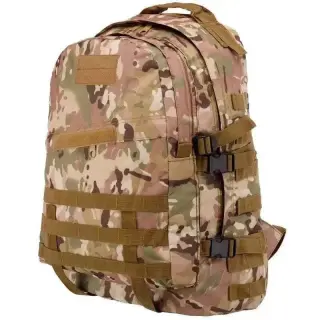
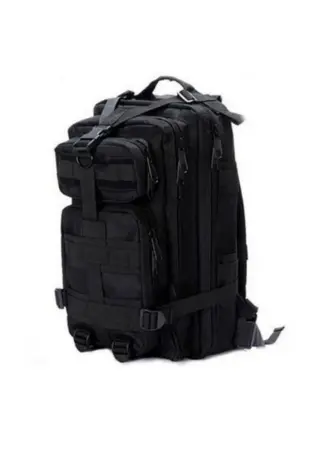
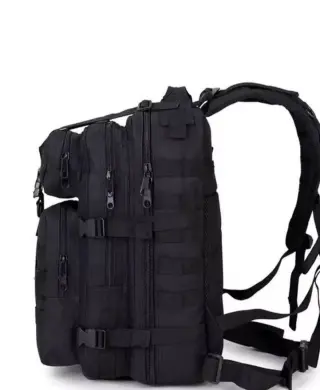
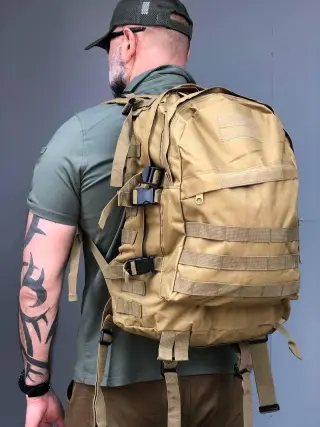
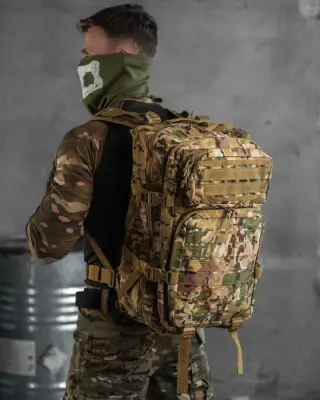
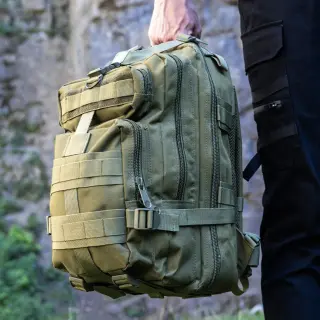
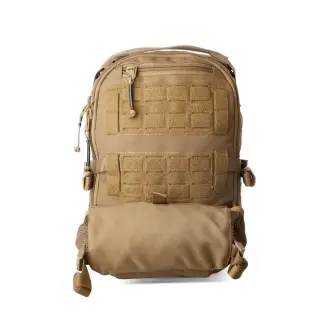
An assault pack is a compact one-day model: water, first aid kit, ammunition, spare socks. It sits close to the back and does not restrict movement, and some models have attachments for a plate carrier, so they can be worn right on the body armor. A classic example is the MIL-TEC US Assault Pack in Small and Large versions.
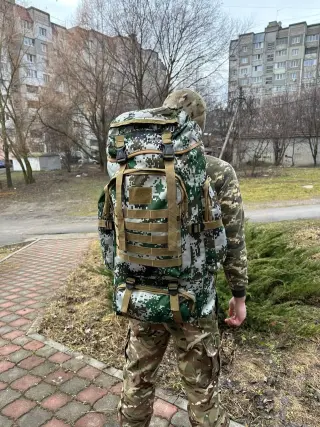
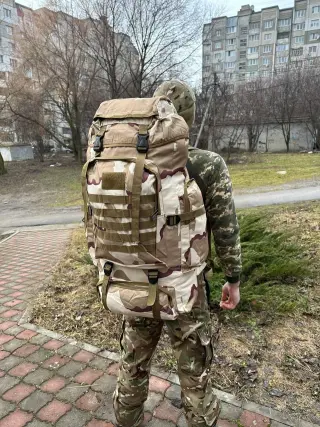
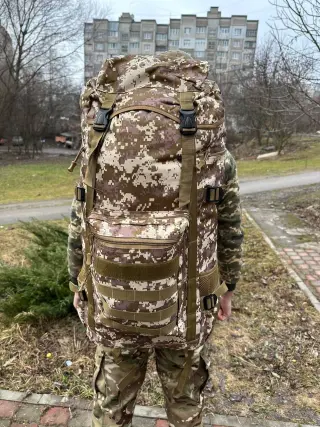
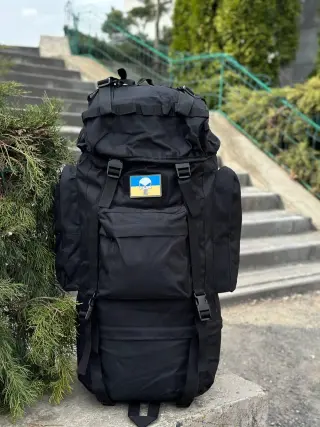
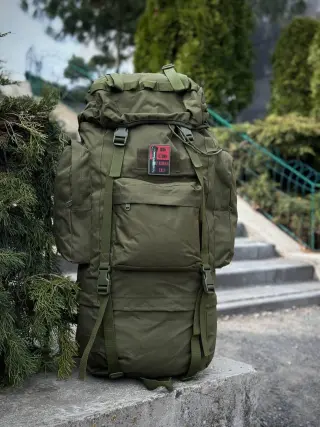
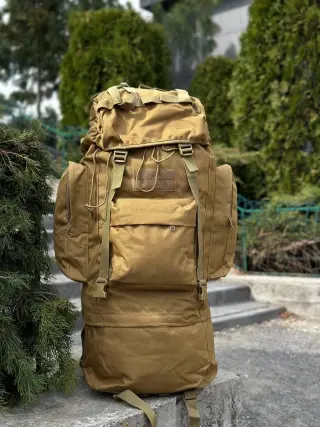
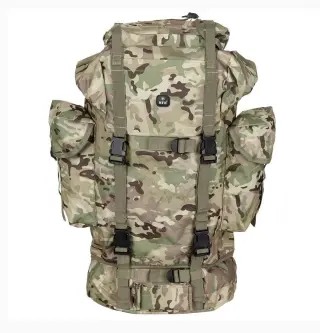
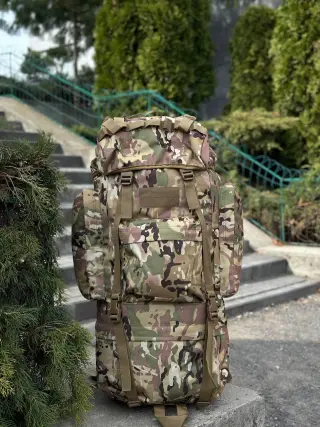
A frame backpack with an aluminum frame or plastic inserts is needed when the load is large and heavy: a multi-day outing, rotation, an expedition. The frame transfers the weight to the hip belt and hips, so the shoulders get less tired. Without a properly fitted belt this advantage disappears, so try the backpack on loaded.
A sling backpack is worn on one shoulder — it is an option for the city, documents, a phone, a power bank and small items. It is easy to swing to the front and take out what you need without taking it off. It is not suitable for long marches: all the weight rests on one shoulder.
Which Capacity to Choose
Capacity depends on the length of the outing and what you take with you. A winter sleeping bag and warm clothes take up much more space than a summer kit, so allow extra room for the cold season.
| Capacity | Use | Type |
|---|---|---|
| 10–30 L | everyday carry, city, short outing | sling, assault, daypack |
| 31–50 L | one- to two-day outing, training, weekend hike | assault, universal tactical |
| 51–80 L | multi-day autonomous outing | tactical or frame |
| 81–120 L | rotation, long expedition | frame |
Do not buy a backpack "to grow into": a half-empty large backpack sways and the items inside shift. If you occasionally need more space, it is better to choose a model with compression straps or attach pouches to MOLLE. A 36 L backpack is the most versatile mid-size option if you do not know where to start.
Materials and Hardware
A common option is polyester with a PVC coating: it does not soak through in rain, is easy to clean and inexpensive, but it is stiffer and loses flexibility in the cold. Ripstop nylon and Cordura are more resistant to abrasion and tearing. In designations such as Cordura 500D or 1000D, a higher number means a thicker yarn: the fabric is stronger but also heavier.
Water-repellent fabric does not make a backpack waterproof: water gets through the seams and zippers. For downpours and river crossings, it is worth packing the contents in a dry bag.
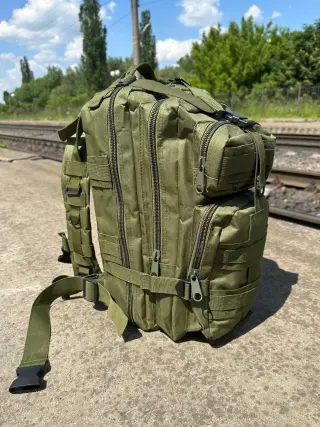
Hardware breaks sooner than fabric, so check the zippers, buckles and stitching where the straps attach. Double-sided zippers let you open a compartment from either side, and the Helikon-Tex Ratel Mk2 is stated to have YKK zippers. The Laser Cut label means that instead of sewn-on webbing, slots for MOLLE are cut into the fabric: the panel is lighter and snags less, but it is better to check compatibility with your pouches.
Fit and Comfort
Comfort is determined by the shoulder straps, back panel and belts. Soft anatomical straps and a back panel with 3D mesh or ventilation channels reduce sweating, while the sternum strap and hip belt keep the backpack from swaying when running. On models of 40 L and above, a hip belt is practically a must.
Adjust the height: the top of the backpack should be at shoulder level and the belt on the hip bones, not on the stomach. If you wear body armor, make sure the hip belt does not press against the lower edge of the plate carrier, or choose a model that attaches to it.
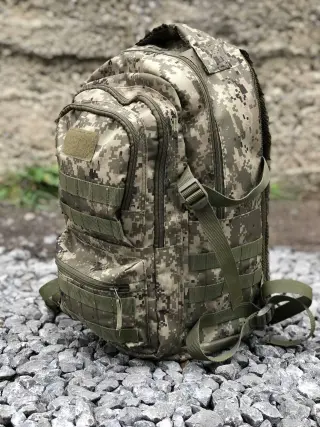
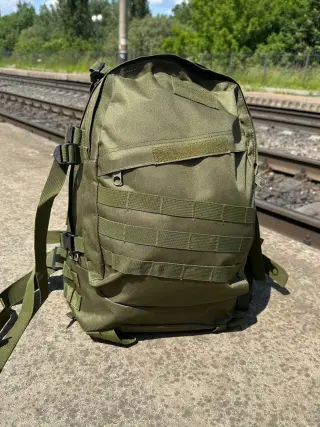
Useful extras include a hydration compartment, as in the Ratel Mk2, a laptop pocket in city models, a carry handle and an organizer in the front pocket. Choose Multicam, olive, coyote or pixel to suit the terrain and your unit's uniform, while black and gray are more appropriate in the city.
Look for other ways to carry gear in the backpacks and bags category; tactical bags are suitable for small items, and duffel and transport bags for moving or rotation.
Frequently Asked Questions
Which tactical backpack to choose for the Armed Forces of Ukraine
For combat outings, people usually take a 25–40 L assault backpack with MOLLE and a hip belt. For rotation and transporting all belongings, a large-capacity frame backpack is needed. Servicemen often have both.
How does an assault pack differ from a regular tactical backpack
An assault pack is more compact and designed for a short outing with a minimum of items. It fits closer to the back, and some models attach to a plate carrier. A regular tactical backpack has more capacity and suits multi-day trips.
How to wash a tactical backpack
It is best to wash it by hand, in warm water with a mild detergent, without bleach and not in a washing machine. Before that, shake out the sand and unzip all the zippers. Dry it in the shade, away from a radiator, especially models with a PVC coating.
Can a tactical backpack be worn in the city
Yes, compact 10–25 L models and slings are convenient for everyday use. For the city, choose black or gray and a model with a laptop compartment. Camouflage in a civilian environment attracts unnecessary attention.