Tactical Assault Backpack: Shoulder-Worn and Plate Carrier Mount
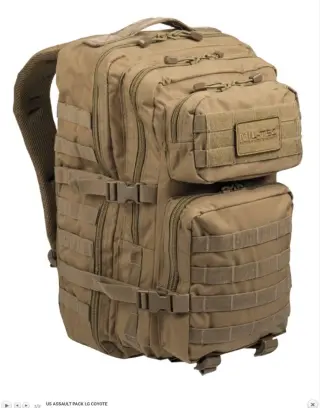
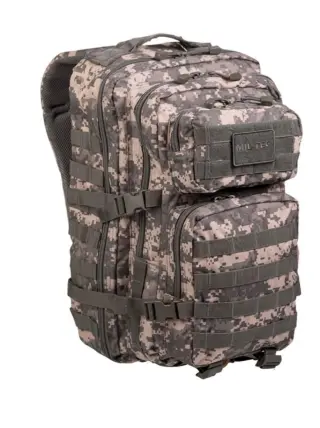
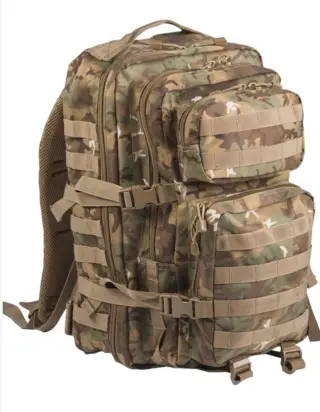
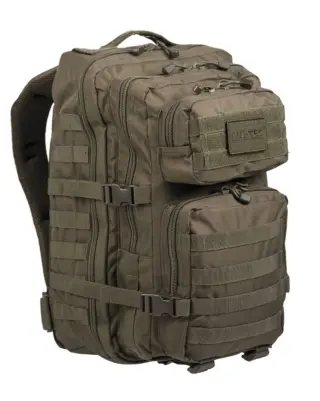
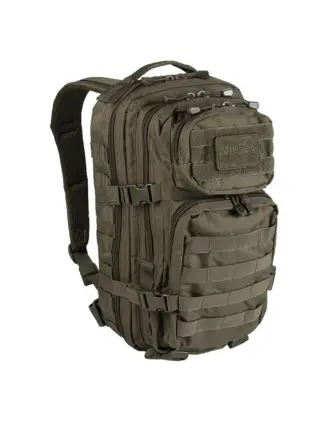
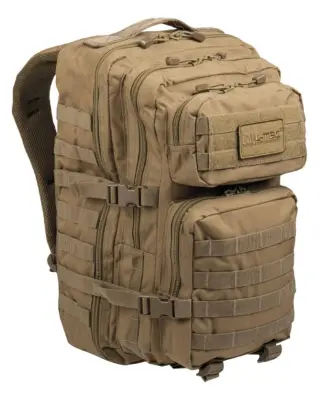
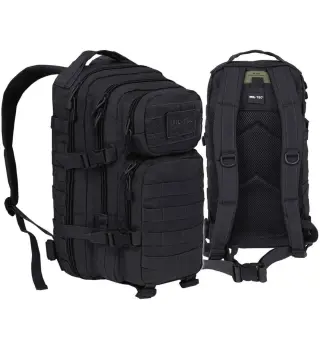
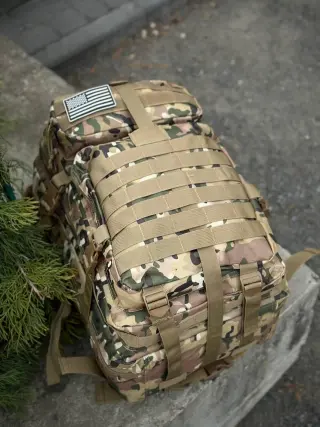
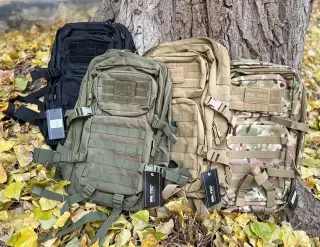
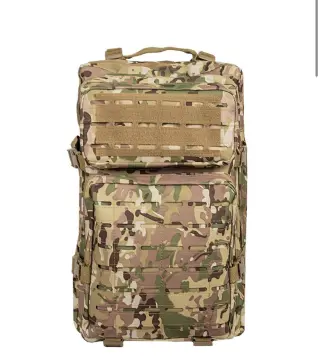
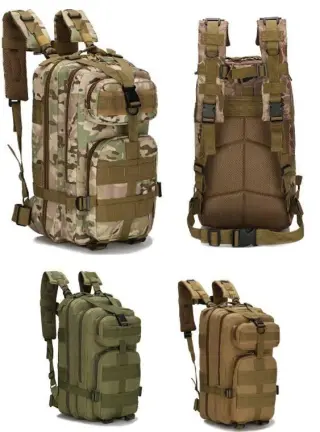





Assault Backpack: What to Carry on a Short Outing
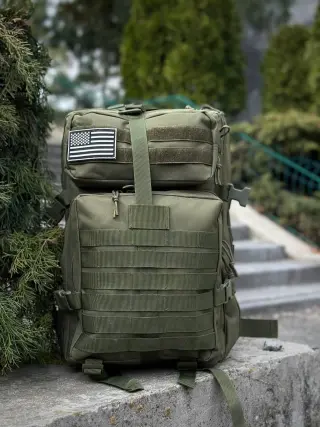
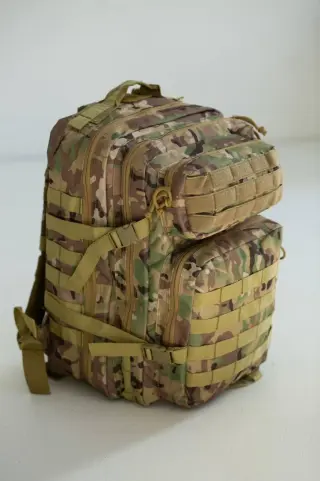
An assault backpack is what you take when you need to carry the bare minimum and still move freely: a combat sortie, a watch shift, training or the shooting range. It holds water, a first aid kit, spare magazines, an insulating layer and rations, while the rest of your gear stays in the main backpack or duffel. Compared with universal tactical models, it is more compact, has no frame and sits close to the back. So the key question when choosing is how you will wear it: on your shoulders or on body armor.
Separate Straps or an Assault Backpack for a Plate Carrier
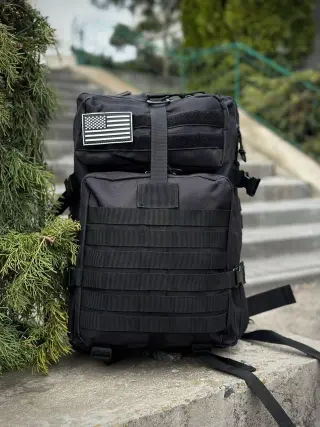
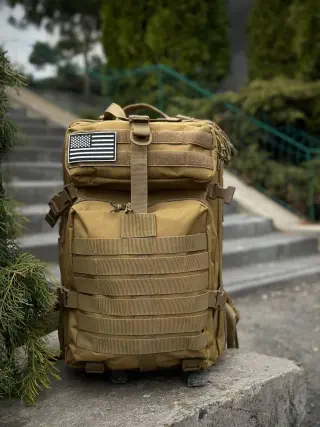
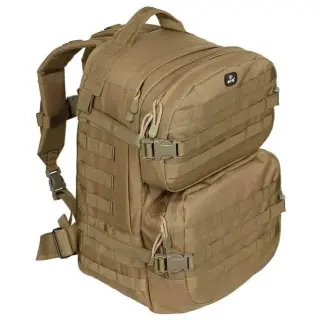
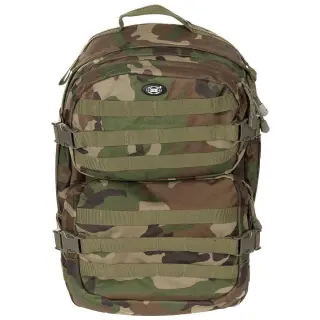
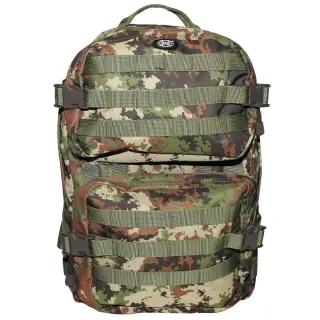
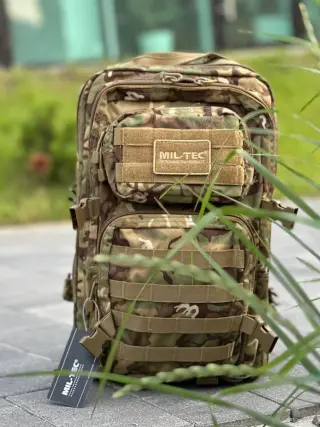
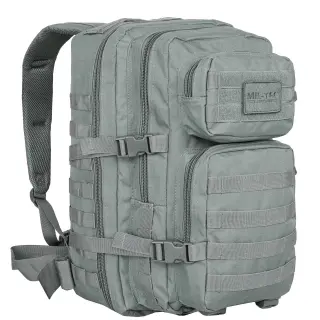
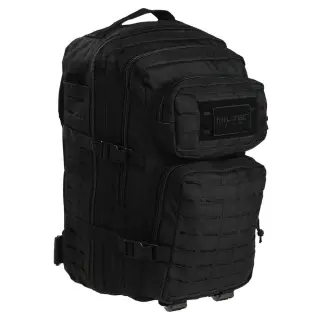
A backpack with straps is the universal option: you can wear it with or without body armor, take it off with one hand and set it down beside you. The MIL-TEC US Assault Pack and MFH Assault II are built this way. The downside shows up in armor: the straps lie over the plate carrier's shoulder pads, pressure on the shoulders grows, and the waist belt often runs into the cummerbund, so it has to be unclipped or tucked away.
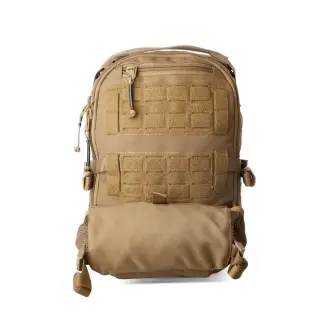
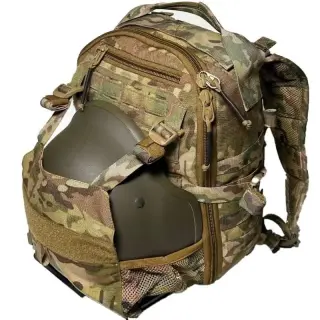
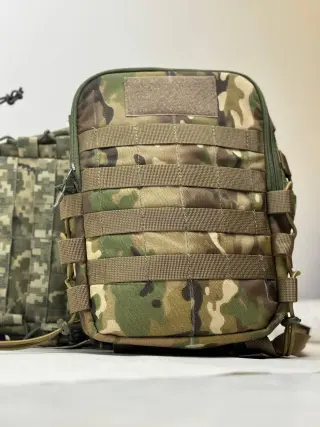
A plate carrier assault backpack attaches directly to the rear panel of the armor, has no separate shoulder straps, and its weight is distributed together with the plates. Such models are usually small, because a heavy backpack pulls the carrier backward and forces you to lean forward. Before buying, check whether your rear panel has MOLLE webbing or another mounting area. Also keep in mind that getting something out of such a backpack without a buddy's help or without taking off the armor is difficult.
If you often work both in armor and without it, a backpack with straps is more convenient. If you wear body armor almost constantly, a plate carrier backpack saves you extra straps.
What Capacity You Really Need
The difference is clear from the MIL-TEC US Assault Pack Small 20 L and Large 36 L. The smaller one holds water, a first aid kit, ammunition and a rain poncho, which is enough for several hours of work. The larger one adds room for a warm jacket, food, a power bank and spare socks, that is, a full day with a return to base. The MFH Assault II 40 L and the 45 L models give even more room.
There is no frame, so all the weight presses on your shoulders, and the waist belt only stabilizes the backpack without taking load off your back. A large backpack stuffed to the brim tires you faster than a well-packed smaller one. Put heavy items, water and ammunition, closer to your back and higher up, and light, bulky ones toward the outer wall.
Keep a tourniquet and anything you might need at a critical moment on yourself, on your armor or belt, not in the backpack. The backpack is for what you need at a rest stop, not under fire.
What to Look for Before Buying
A front pocket with an organizer and a separate zippered compartment, as on the MIL-TEC US Assault Pack, let you keep small items apart from the main load and not dig for them at the bottom. A carry handle comes in handy when you need to pull the backpack quickly out of a vehicle or a trench. Choose the color to match the camouflage of your plate carrier and uniform, since the backpack is worn over them and is visible from behind.
Assault backpacks cost from 870 to 4 010 UAH. The difference mostly comes down to capacity, fabric and mounting method, so compare models by these parameters. If you need a different type of backpack, such as a framed one for rotations or a sling for the city, browse all tactical backpacks. We deliver across Ukraine.
Frequently Asked Questions
Can you wear a plate carrier backpack without body armor?
Mostly it is inconvenient. Models designed only for attachment to the panel have no proper straps, so without body armor you have to carry them by hand. If you need both options, look for a backpack that has both straps and plate carrier attachment.
Is an assault backpack suitable for an overnight hike?
Only for a short summer hike with light gear. A sleeping bag, sleeping mat and tent fit poorly in a frameless backpack or hang on the outside. For several days of autonomy, it is better to take a larger tactical or framed backpack.
Should you attach extra pouches to an assault backpack?
You can, but in moderation. Each pouch moves the load away from your back, and the backpack pulls backward harder, which is even more noticeable on a plate carrier. It is better to attach one or two pouches with items you need quickly than to hang the backpack with them on all sides.