Tactical Backpacks 51–80 L: 60, 70 and 80 Liter Models
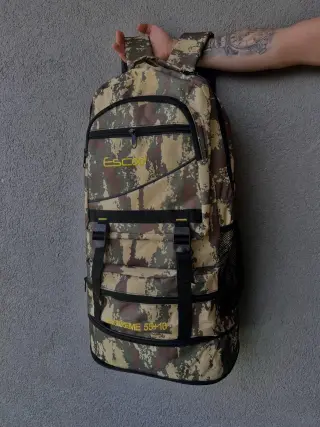
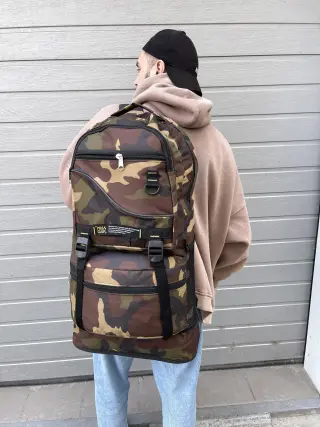
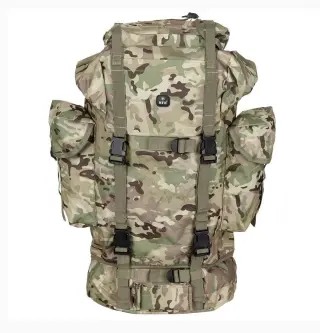
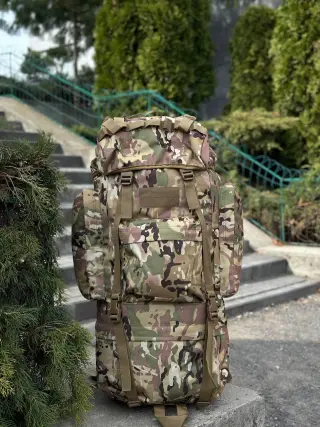
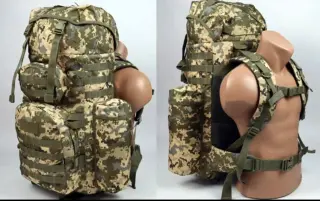
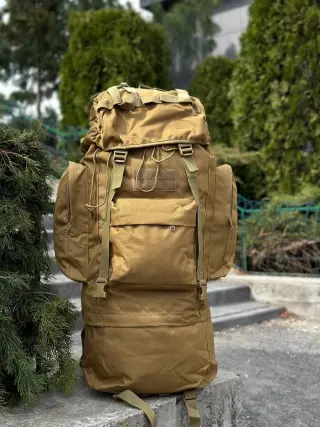
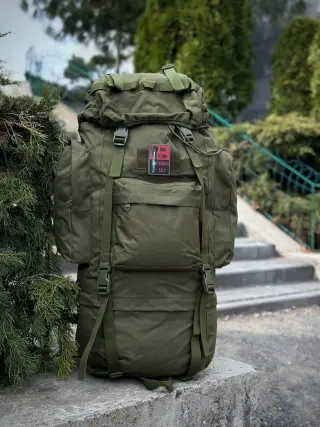
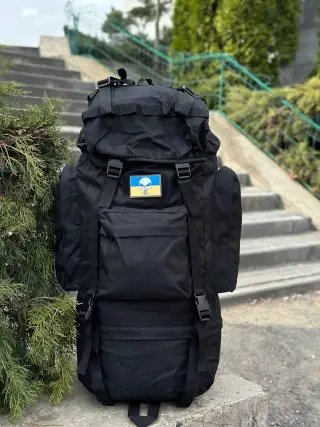
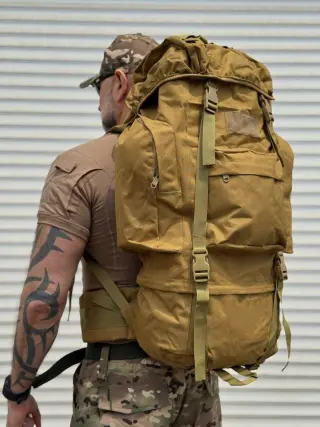
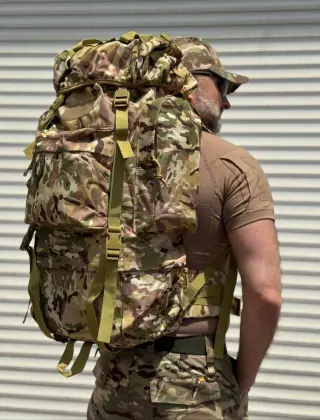
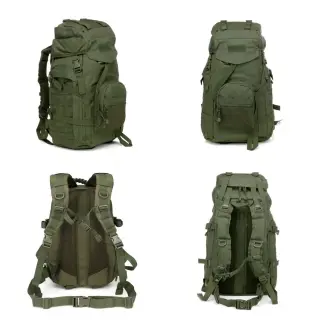
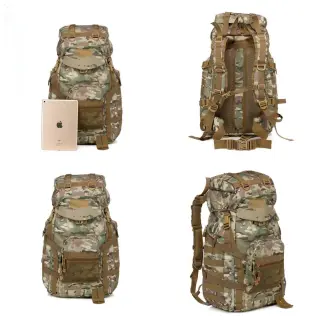
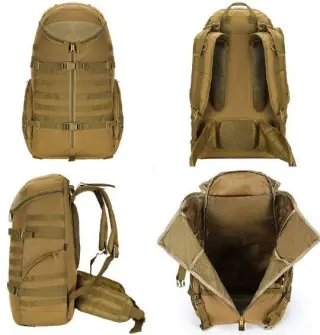
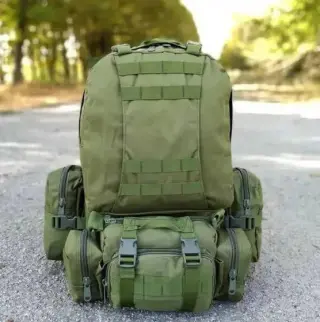
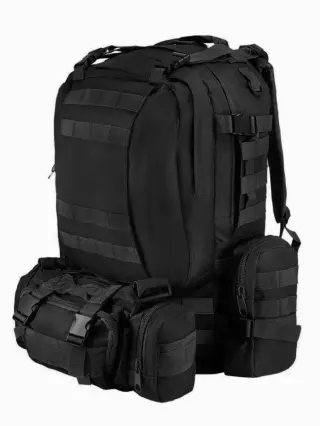
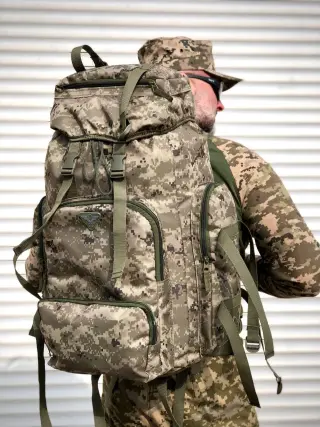
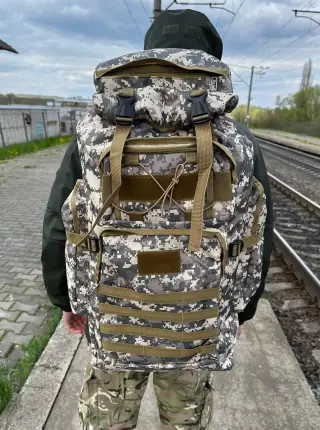
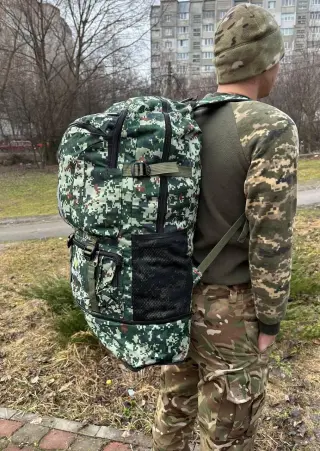
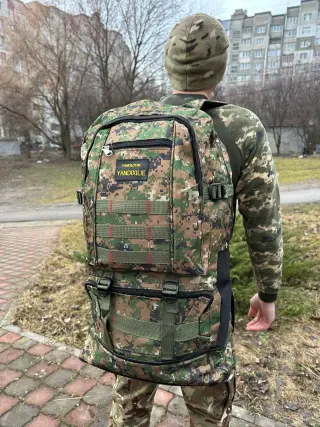
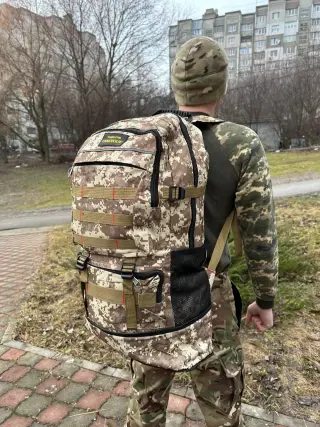




Tactical Backpack 60 L and Larger: For Multi-Day Self-Sufficient Trips
A 51–80 L backpack is what you choose when everything has to be carried with you: sleeping bag, spare clothes, water, food, hygiene items and part of the unit's gear. This is no longer a daily assault pack but the main place for your belongings on a trip or in a field camp. Prices for these models range from 580 to 2 580 UAH. A wrong choice costs more here than with a small pack: more weight lands on your shoulders, and a poor fit shows within a few hours.
60–65 L or 80 L: Which to Choose
A 60 L or 65 L backpack is a sensible option if you pack compactly and the season is warm. It is narrower, sticks out less past your shoulders and fits more easily into a car or a dugout. If your kit includes a winter sleeping bag, a sleeping mat inside, warm clothes and a water supply, a 70 L or 80 L backpack gives you room without cramming.
Plan for the typical scenario, not the heaviest one. Items you rarely need are easier to carry in detachable pouches than to haul a big, half-empty bag all the time. At the same time, don't try to fit a winter kit into a 60 L backpack by hanging half your gear on the outside: the pack becomes wide, snags on branches and pulls you backward.
Frame or Soft Back Panel
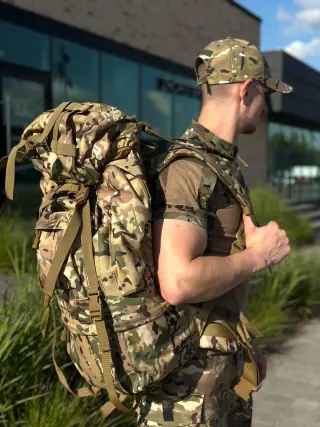
At 80 L the advantage of a rigid structure is already noticeable. A frame backpack with an aluminum frame holds its shape even when not fully loaded and keeps items from pressing into your back. The downside is that it is stiffer and heavier than a frameless one, packs down worse for transport and does not adapt to the curve of your back as you move.
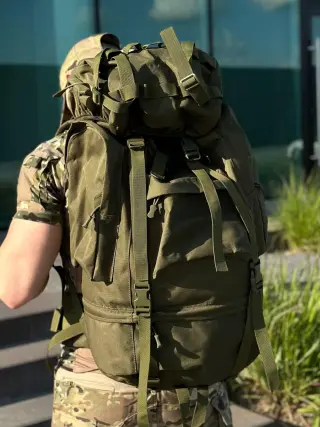
A frameless 60 L tactical backpack is more flexible: you can compress it, toss it into a truck bed and carry it partly loaded. A middle option is models with a reinforced back panel, such as the MFH 65 L Multicam with aluminum stays: the manufacturer states a weight of 1.3 kg. For long treks with a heavy load, a full frame is still more reliable.
How Not to Lose Things in a Large Volume
The bigger the backpack, the more important access becomes. If the main compartment opens only from the top, the item you need will inevitably end up at the bottom. Look for side or front zippers, a separate pocket for small items and a hydration compartment so you don't have to take the pack off for a sip of water.
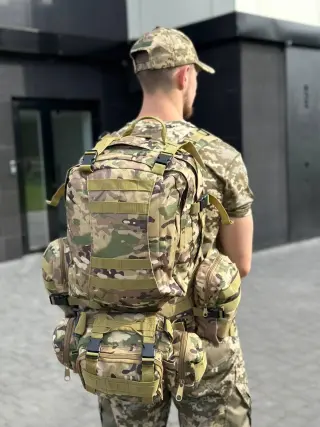
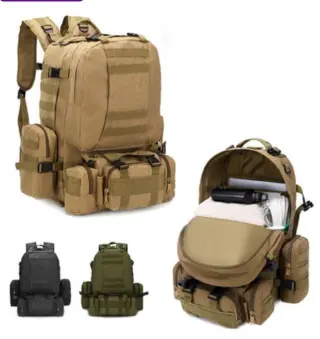
Detachable pouches solve two problems at once: they organize your gear and let you adjust the volume. For example, the 55 L tactical backpack with Multicam pouches comes with three MOLLE pouches: two side ones can be moved to a belt, and the central one can be used as a separate shoulder or waist bag. The stated fabric for this model is Nylon 600D. The 80 L backpack with side pouches in MM-14 pixel follows a similar logic.
If you need a smaller volume, see all tactical backpacks.
Frequently Asked Questions
Can I wear an 80 liter backpack with body armor?
Yes, but with compromises. The plate carrier keeps the hip belt from sitting on your hips, so part of the weight shifts to your shoulders. Try the backpack on with the armor and check whether the strap height is adjustable.
How do I pack a 70 L backpack correctly?
Put the heaviest items close to your back at shoulder-blade level, and the light, bulky ones at the bottom and toward the outer wall. Keep what you'll need on the way in side pockets or pouches. After packing, tighten the compression straps so the load doesn't shift.
What is better for a first rotation: 60 L or 80 L?
For a rotation, an 80 L backpack paired with a duffel for the rest of your gear is often enough. A 60 L backpack is more convenient if you plan to carry it on trips rather than just transport items. If in doubt, estimate the volume of your sleeping kit — it takes up the most space.