Winter Sleeping Bag — Mummy and Blanket Style with Insulation
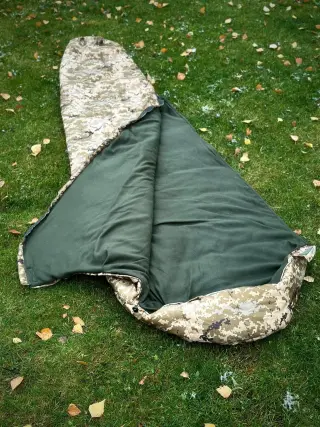
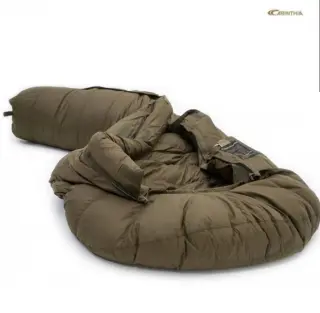
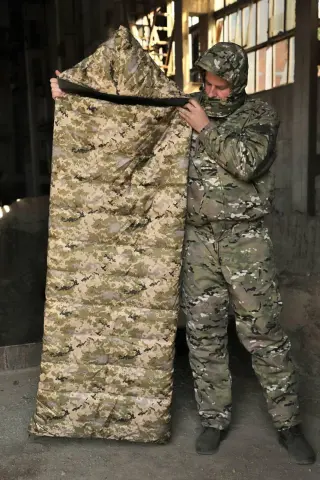
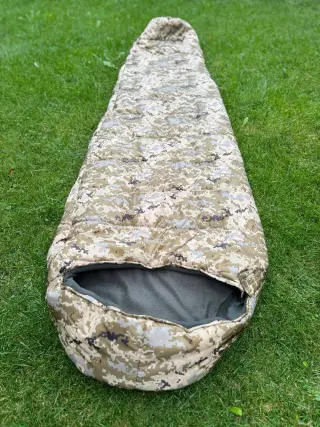




Winter sleeping bag: how to choose for your conditions
A winter sleeping bag is for anyone who spends nights in a cold dugout, a tent, an unheated building or a car. It differs from a regular bag in its denser synthetic insulation, fleece lining inside and greater weight. So the choice comes down not only to shape, but also to how often you will carry the bag on your back and where you will dry it. If you need a lighter three-season option, take a look at all sleeping bags.
Mummy or blanket: which shape to choose for winter
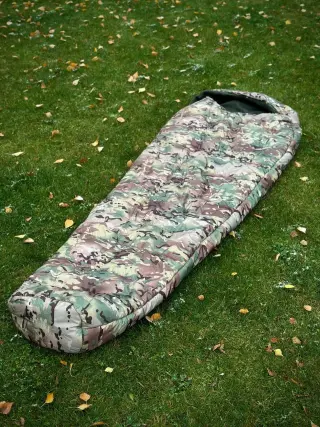
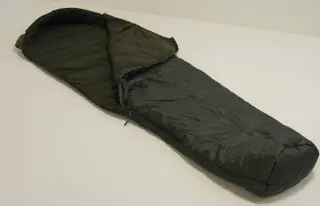
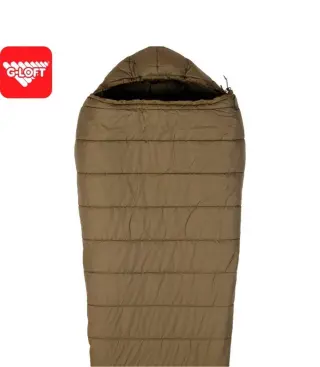
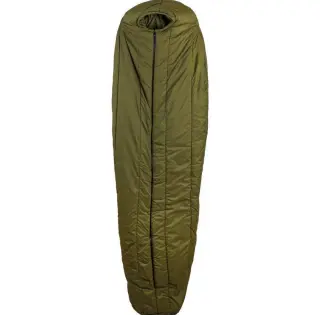
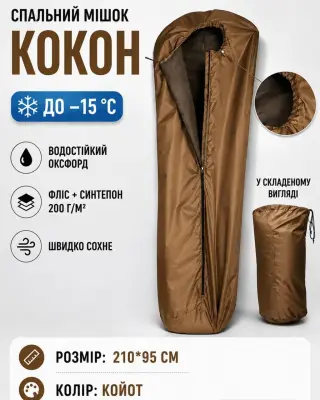
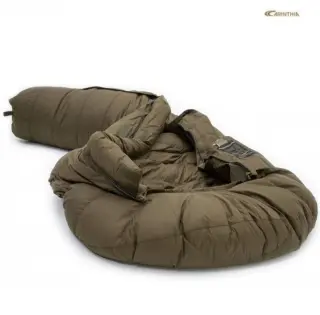
A mummy bag tapers toward the feet and fits closer to the body, so there is less air inside that has to be warmed by your own body heat. This is practical when you sleep in one place for a short time and want to warm up quickly. The downside is the tight fit: it is awkward to turn over in a tapered bag, and bulky clothing makes it cramped.
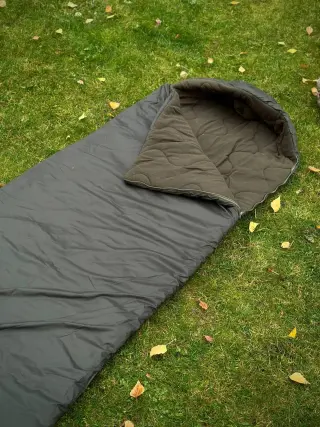
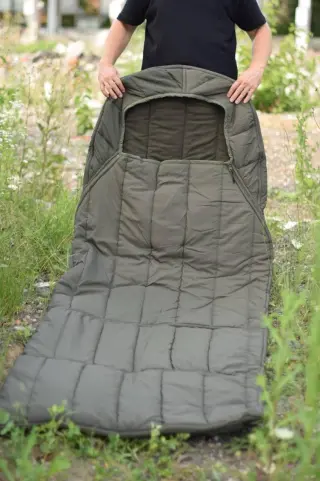
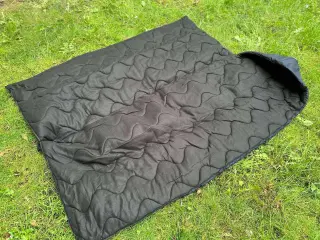
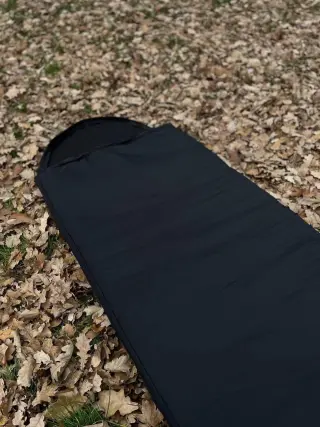
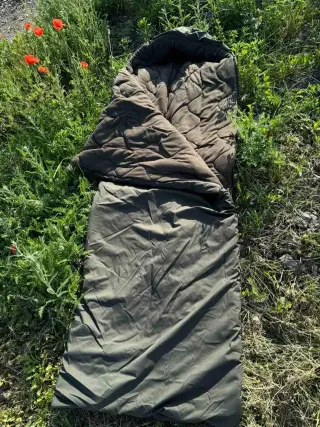
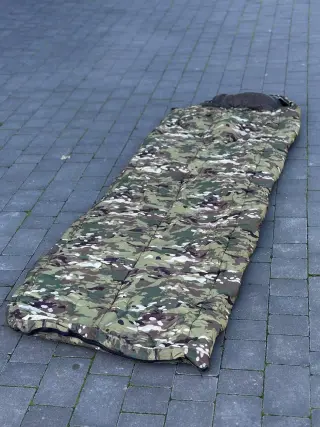
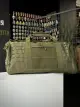
A blanket-style sleeping bag has a straight cut, and in many models the zipper runs along the full length and the bottom, so it can be unzipped and used as a blanket. This shape suits side sleepers, as well as stationary conditions where the bag is aired out often. The flip side is more free space, which takes longer to warm up.
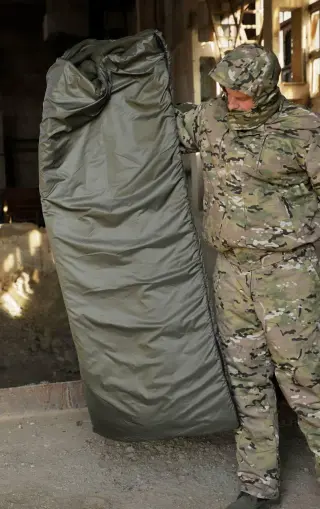
Pay attention to size. The 225×95 cm winter mummy sleeping bag and the 235×95 cm "Gigant" blanket are designed for tall people or for those who want to put some of their gear inside. Blankets 220 cm long and 73 cm wide suit a person of average build.
Insulation and lining: what provides the warmth
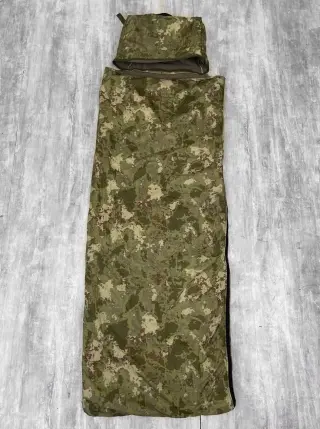
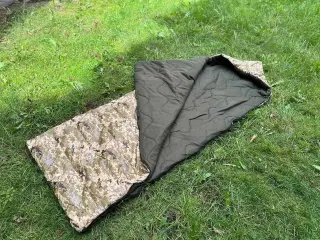
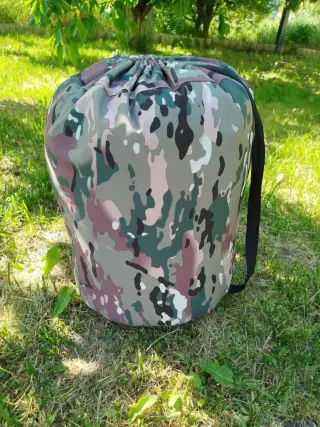
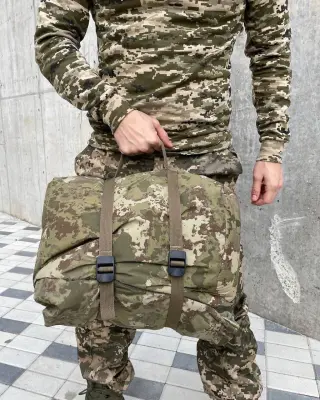
Most winter sleeping bags are based on polyester batting, less often hollow fiber, G-Loft or eco-down. Synthetic insulation retains part of its warmth even when slightly damp and dries faster, which matters more in field conditions than minimal weight. G-Loft is used, for example, in the Carinthia Defence 6. In the eco-down blanket in MM-14 pixel camouflage, the insulation is fully quilted, so it does not clump and lies evenly across the entire area.
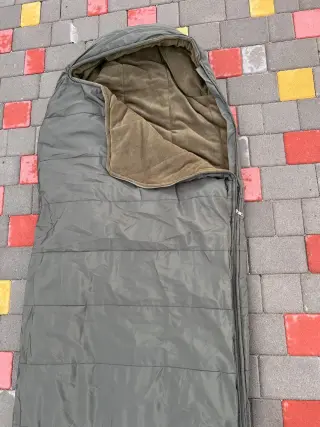
The fleece lining inside is pleasant to the touch and does not give you a chill when you climb into the bag. At the same time, fleece adds weight and takes longer to dry, so a bag with it is best aired out every morning. For example, the "Gigant" model combines 250 g/m² polyester batting with 240 g/m² fleece.
Fabric, weight and packing
The outer shell of a winter sleeping bag protects the insulation from moisture and wind. Options include rubberized oxford, nylon ripstop and membrane fabrics. Ripstop resists tearing, while oxford is a dense fabric that protects well against moisture. For reference, the ripstop "Gigant" weighs 2.3 kg.
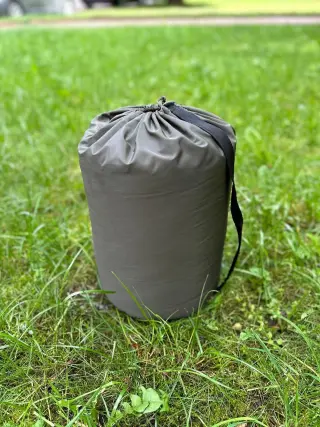
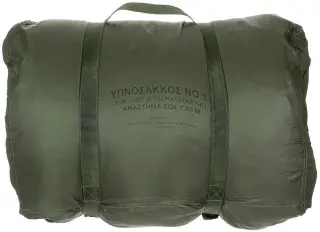
A winter sleeping bag is always bulky, so for a trek on foot every kilogram counts, while for a fixed position or a car weight is less critical. Do not store the bag compressed in a compression sack for long periods: synthetic insulation loses its loft and keeps you less warm. Another common mistake is putting the bag directly on the ground or concrete without a sleeping mat, because the cold from below draws away heat faster than the insulation can retain it.
Frequently asked questions
What makes Carinthia sleeping bags stand out?
These are original Austrian mummy-shaped sleeping bags, including the Carinthia Defence 6 and the Sovsäck 2000B. The Defence 6 uses G-Loft insulation, and a compression stuff sack is included. Another original military option is the mummy sleeping bag of the Dutch army.
How do I care for a winter sleeping bag?
Wash it rarely, on a delicate cycle, with liquid detergent and without hard wringing. Dry it laid out flat until the insulation is completely dry inside. After use, air the bag out and store it unfolded.
How much does a winter sleeping bag cost?
Prices range from 1 710 to 13 110 UAH. The cost depends on the insulation, the outer fabric, the size and the brand. Before comparing prices, decide on the shape and the conditions of use.