Tactical Rain Suits: Rain Jacket and Pants for Downpours
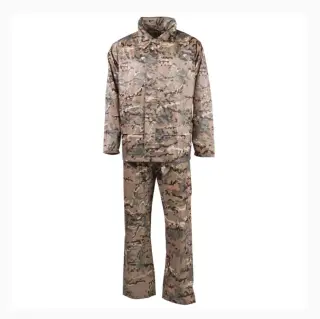
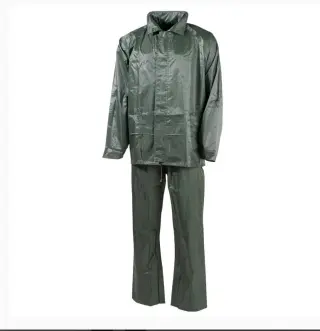
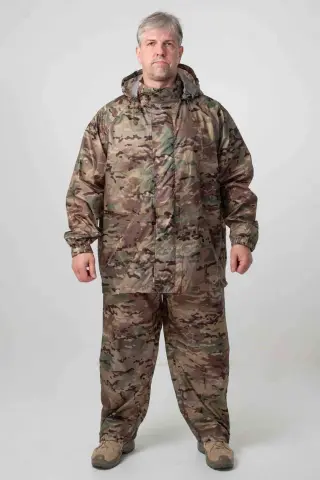
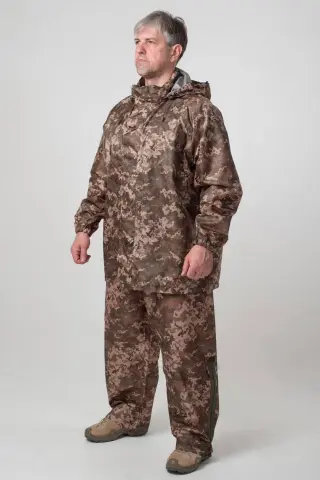
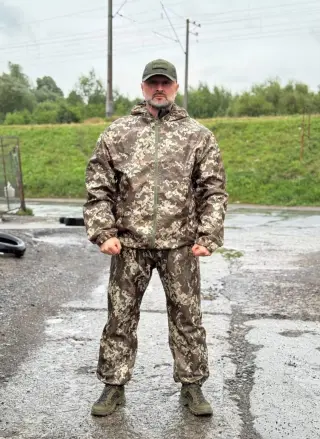
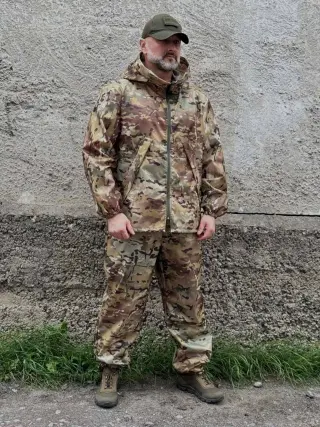
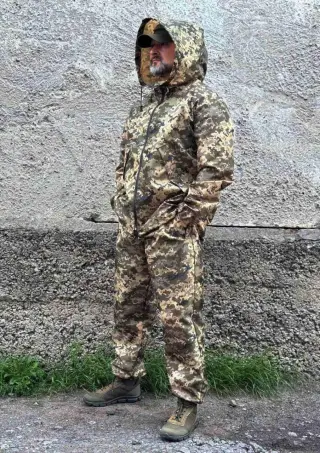
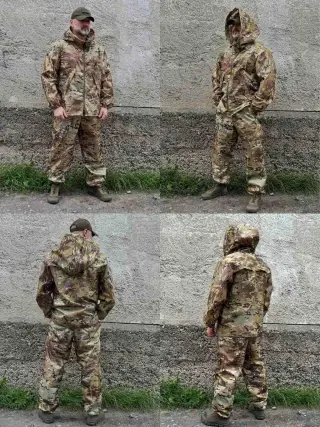
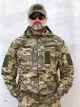
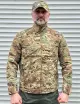
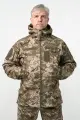

Tactical Rain Suit: Jacket and Pants for Downpours
A rain suit is for people who spend long hours outdoors in bad weather and can't wait out the rain under a roof: on a march, at a post, while hunting or fishing. Unlike a poncho, a jacket-and-pants set covers both the top and the bottom. So water doesn't seep in at the waist, knees and ankles, and your arms and legs move freely. A military rain suit is usually worn over the field uniform, so it needs to be not only waterproof but also cut so that it doesn't restrict movement. Prices range from 970 to 1 850 UAH.
Membrane or Regular Raincoat Fabric: Which Material to Choose
Most of these suits are made of raincoat fabric. A simple raincoat-fabric version holds water well but lets almost no air through. On guard duty or in an ambush that's not a problem, but on a march you quickly get damp from your own sweat under such a rain suit. Membrane models are made of raincoat fabric with ripstop reinforcement and a membrane lining that releases some of the vapor outside, so there's less steaming while you move. Ripstop also stops a small tear from spreading if you snag on a branch or wire.
The second thing to look at is the seams and the zipper. Water most often gets in through needle holes and the zipper, so taped seams are a serious advantage when the rain goes on for hours. In camouflage models with a double storm flap, the jacket zipper is hidden under two flaps, so streams of water don't get through the zip. Two-way chunky zippers are handy because you can unzip the jacket from the bottom when you sit down or need access to your belt.
How to Choose a Size So the Suit Fits Over Your Uniform
A rain suit is worn over several layers, so take a size with some room to spare: base it on yourself in your uniform, and in cold weather also in a warm layer. Sizes run true, with a size range from S to 4XL, and for a broader build there are plus-size membrane models. Some suits are cut as universal — one size or XL for sizes 48–56. This is convenient when you're buying a set as a spare or for several people, but for shorter people the sleeves and pant legs may be too long.
Excess volume is adjusted with drawcords. Well-designed models have drawstrings on the waist, hood and pant hems, and elastic on the sleeves, elbows, below the knees and at the back of the hood. Thanks to this, the suit doesn't balloon in the wind or snag on things. Pants with an extended zipper at the bottom of the legs go on right over boots without taking them off — useful if you often have to get dressed in a hurry.
Multicam, Pixel, Olive or White Multicam
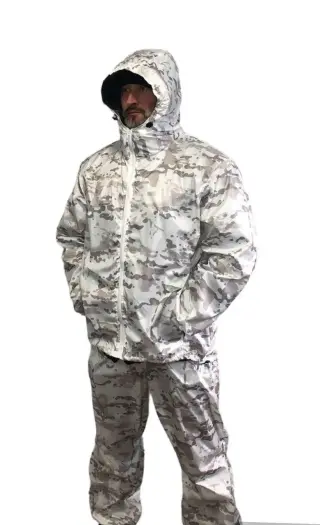
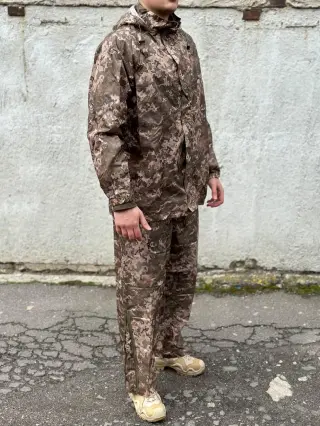
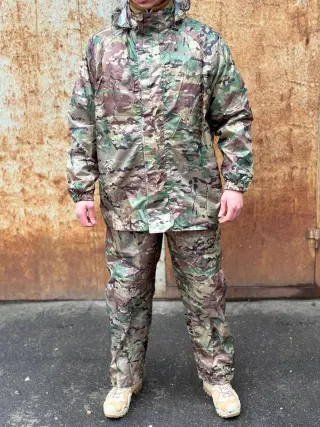
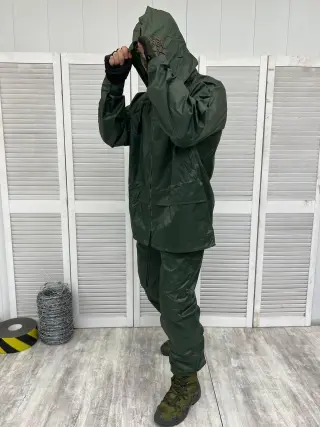
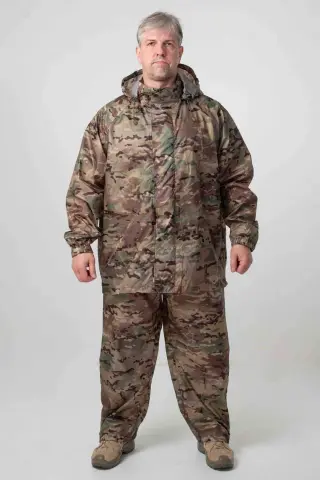
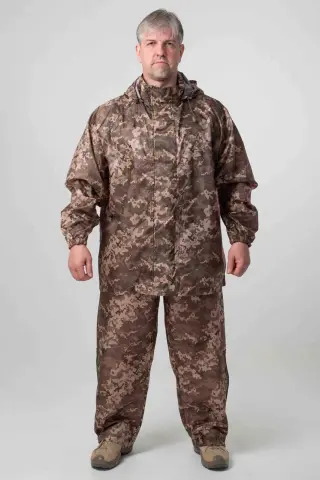
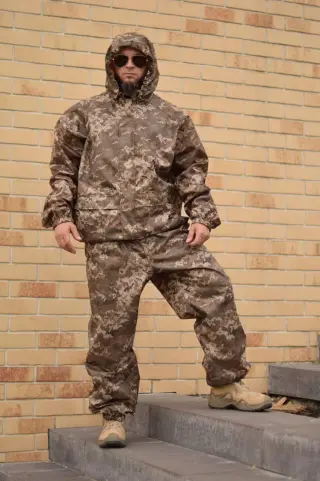
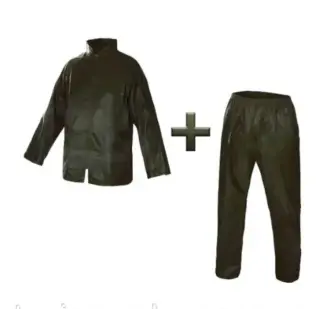
It's best to choose the rain suit's camouflage to match your uniform and terrain, since in bad weather it becomes the outer layer and is the one that's seen from afar. A Multicam or pixel rain suit is a field option for forest, tree lines and the green season; there are also models that combine both camouflages. Plain olive is less conspicuous in the city and fits fishing, hunting or outdoor work. White Multicam is a camouflage suit for snow, where regular camouflage stands out against a white background.
Also pay attention to the small details that matter in the field no less than color. Pass-through pockets give access to the pockets of your uniform without taking off the rain suit, and external pockets with a hook-and-loop flap don't fill with water. A stuff sack or carry bag often comes with the set, and on camouflage models it attaches to the belt, so the suit is always at hand. If protection from above is enough for you, take a look at other tactical rain gear — ponchos and jackets.
Frequently Asked Questions
How is a membrane rain suit better than a regular one?
It steams less while you move. The membrane lining releases some of the vapor, whereas plain raincoat fabric traps it. For long marches this is a noticeable difference, while for static guard duty a regular model will do.
What size should I take if I'll wear the suit over my uniform?
Take the size you can fit into freely in your uniform, and if you're torn between two, choose the larger one. Excess volume will be taken up by the drawcords on the waist, hood and pant legs. A tight rain suit pulls across the knees and shoulders and wears through faster.
How do I dry and store a rain suit?
Dry it spread out in a ventilated place, away from fire and heaters. High temperature damages the coating and the membrane. Pack it into the stuff sack only when dry, otherwise the fabric will go musty and start to mildew.