Military Poncho Raincoat
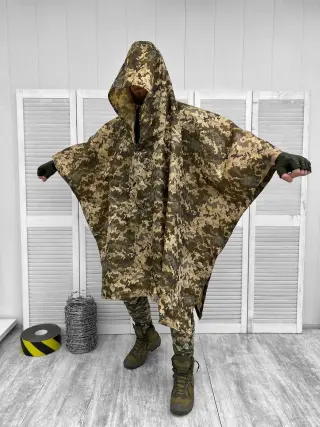
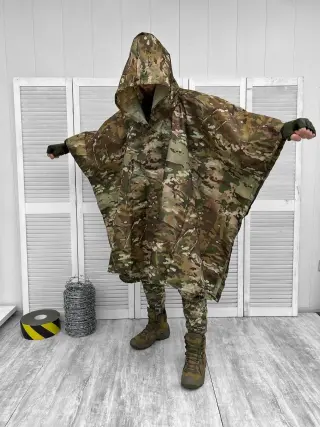
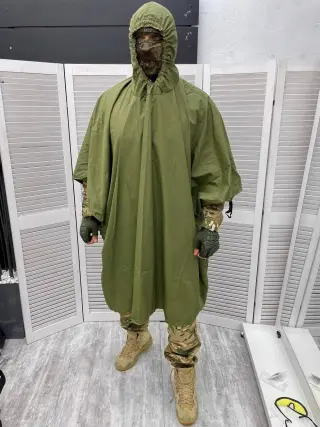
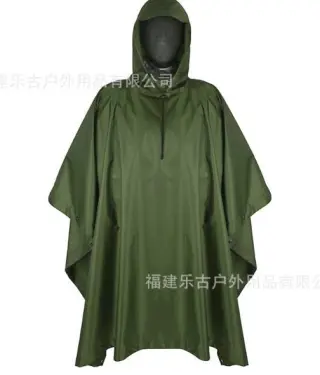
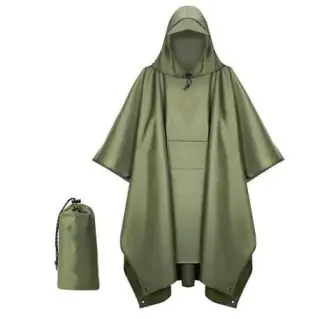
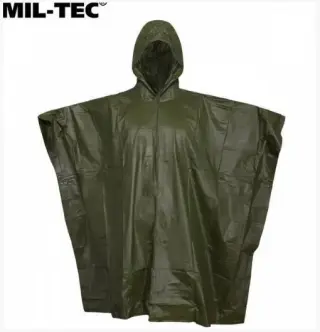
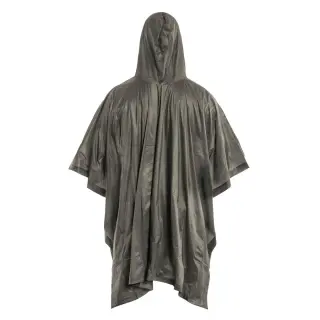
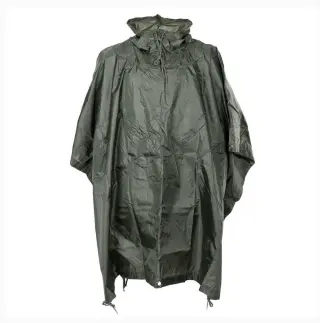
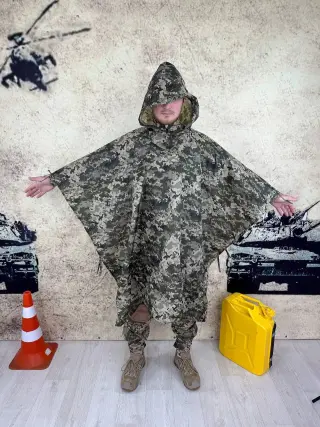
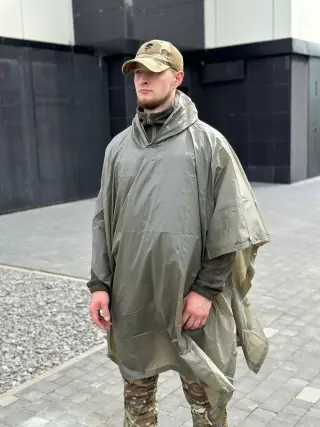
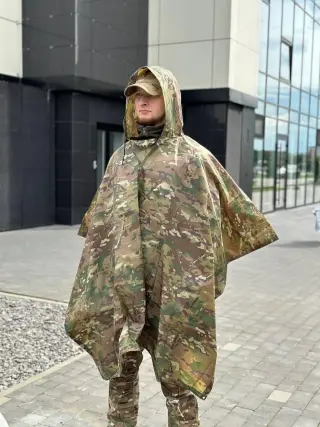
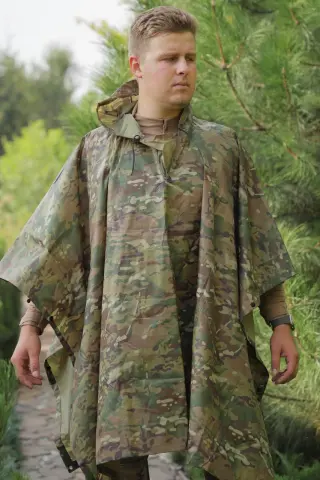
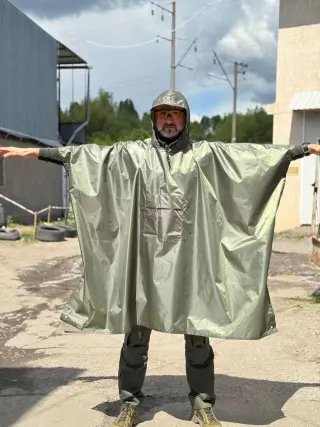
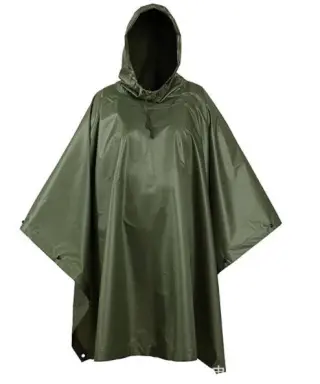
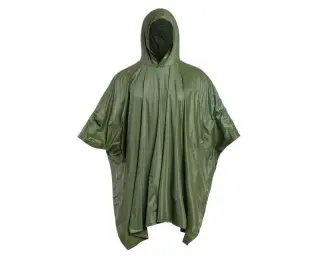
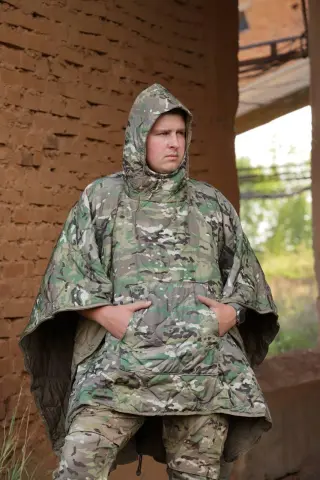
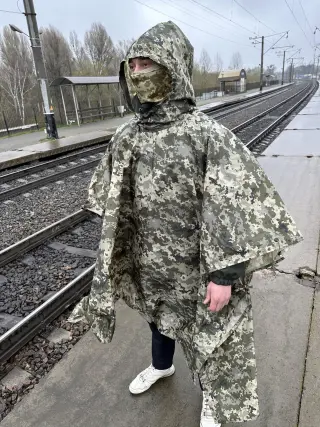
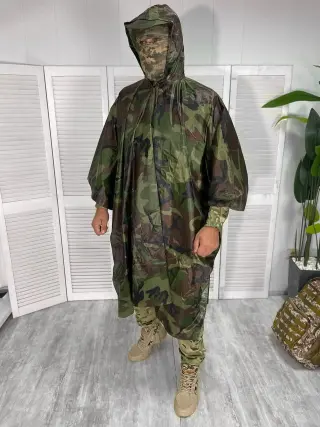
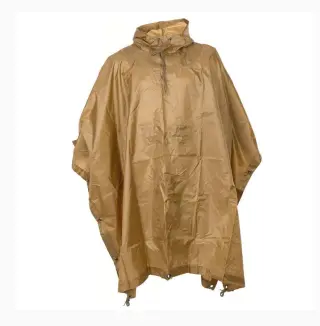
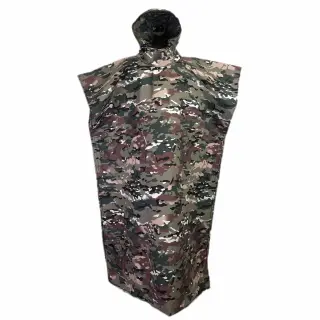


Military poncho: rain protection over all your gear
A poncho raincoat is thrown on over your uniform, body armor and backpack in a few seconds and taken off even faster. That is why it is kept on a backpack or in a pouch by those who spend a long time in the field: at a position, on duty, on the road or hunting. Unlike a jacket, a poncho does not cling to the body: your hands work freely underneath, and your gear stays dry. Prices range from 450 to 1 520 UAH, and the difference is explained first of all by the material and the hardware.
Oxford, ripstop or PVC: which poncho material to choose
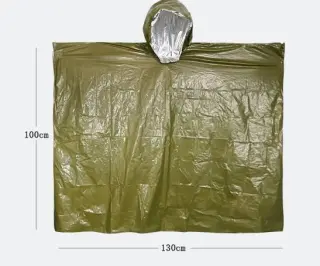
Oxford is a synthetic fabric with a water-repellent coating. An Oxford poncho is light and packs into a small stuff sack. For example, a model with a fabric density of 110 weighs so little that you can carry it "just in case" and not feel it. However, thin fabric copes worse with sharp branches and prolonged downpours than thicker materials.
Ripstop is reinforced with a grid of strengthened thread, so an accidental tear does not spread beyond a single cell. A tactical poncho like the one from MFH withstands intensive use: it is stretched out as a tarp, spread on the ground, and when packed in its sack it is put under your head instead of a pillow.
PVC and rubberized ponchos do not let water through at all. The MIL-TEC PVC poncho is rated at 1600 mm/m² waterproofing, and in rubberized models the seams are taped, so water does not leak through even on the shoulders. The downside is that air does not pass through either, and when walking fast condensation builds up inside. If you have to stand or sit in the rain for hours, take a PVC or rubberized poncho. For moving around, a lighter Oxford or ripstop poncho is better.
Will the poncho cover a backpack and a chest rig
The poncho size is universal, but the sheets differ, so check the dimensions. An MFH ripstop sheet of about 144 × 223 cm is enough to cover an adult together with a backpack. The MIL-TEC PVC model is likewise designed to be worn over a rucksack. A compact Oxford poncho measuring 138 × 106 cm is noticeably shorter: it protects the torso and shoulders, but covers a large backpack only partially.
Fit matters too. Snaps on the sides hold the flaps in the wind and keep the poncho from billowing. Fasteners on the sleeves adjust the width to the wearer, so the edges do not get in the way of working with your hands. Tighten the hood with its drawcord and cord lock so that it does not fall over your eyes. If you wear a helmet, try the hood on over it.
How to turn a poncho into a tent or shelter
Grommets along the edges turn the poncho into a tarp. Stretch it on a cord between trees or secure it with stakes, and you get a roof against rain or sun. Ponchos with fasteners around the perimeter can be joined together, which makes a shelter for several people. Descriptions of some models also mention carrying a wounded person on the sheet. This requires a strong material, so it is better to take a ripstop or a thick rubberized poncho.
After rain, the poncho is dried unfolded. Wet in its sack, it quickly starts to smell, and stains appear on the coating. PVC and rubberized models should not be dried near a fire or stove, because the coating deforms from the heat.
FAQ
Which poncho color should I choose for the Armed Forces of Ukraine?
For camouflage in the field, choose a camo pattern: pixel or multicam. Olive is a universal solid-color option that does not stand out either in the forest or in the city. Rarer colors also exist: woodland and coyote. If you also need an anti-thermal-imaging poncho, it has a separate mark in its name.
Does an Oxford poncho get wet through?
Not in ordinary rain: the coating sheds water. In a prolonged downpour, thin Oxford may start to let moisture through at the seams and at friction points. For such conditions, PVC or rubberized models with taped seams are more reliable.
Is it comfortable to walk in a poncho on a march?
Short walks, yes, especially in a light Oxford or ripstop poncho. On a long march in the rain, it is more comfortable to put on a suit with pants, because a poncho does not protect the legs and sails in the wind. Look for such options among other models in the raincoats section.