Tactical Fleece Balaclava






















Tactical Fleece Balaclava: How to Choose Yours
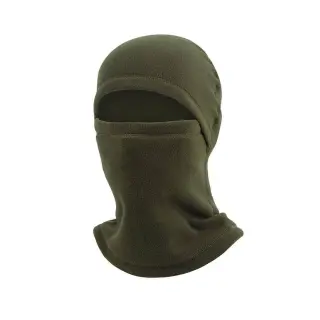
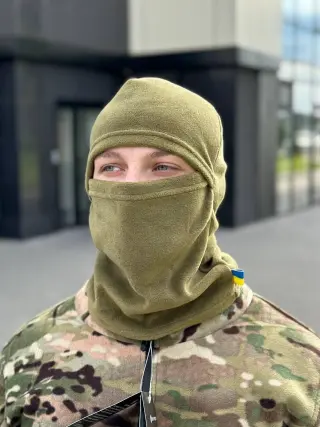
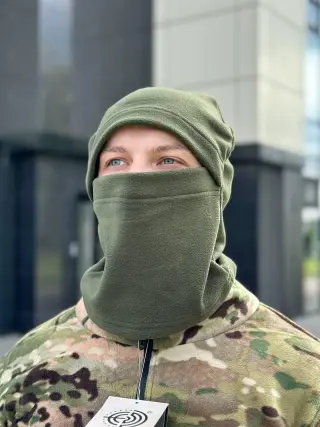
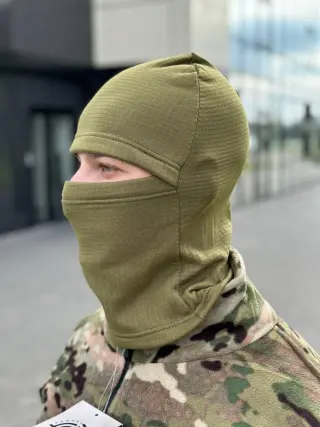
A fleece balaclava is for those who spend a long time outdoors in cold weather: on guard duty, in the field, on a march or on a winter hike. Fleece is soft, light and keeps heat in well even under a helmet. However, fleece balaclavas differ noticeably in fabric, eye opening shape and breathing features, and these determine whether you will be comfortable all day. Prices range from 240 to 430 UAH.
Polar Fleece or Heavy Fleece: What's the Difference
Polar fleece is the most common option. It is soft, fuzzy, dries quickly and does not restrict movement. The descriptions of polar fleece balaclavas state a density of 250 g/m² and elastic seams that adapt the fit to the head.
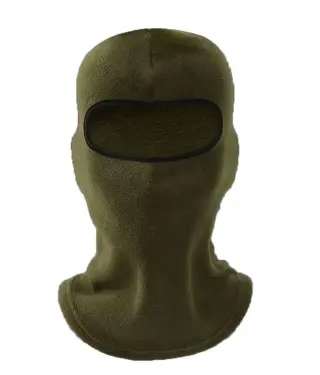
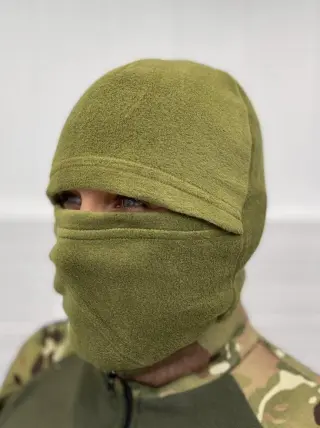
Heavy fleece is chosen for long periods in the cold and wind without movement. For some models the density is given in the description: for some of the balaclavas with a coat of arms it is 320 g/m², and the fabric also has an anti-pilling finish, meaning it pills less. The heavy fleece model in olive has a density of 260 g/m². If the density is not stated, go by the name: the label "heavy fleece" or "polar fleece" will tell you which fabric it is.
A typical mistake is to take the heaviest model "just in case" for active work. During exertion in thick fleece your face sweats, and damp fabric keeps you less warm. If you move a lot, a model with a mesh insert or breathing slits is more practical.
Eye Opening, Mesh and Breathing Slits
A narrow eye opening covers most of the face and protects the bridge of the nose and the cheekbones, so it suits static tasks in frost. A wide oval opening gives a wider field of view and is more convenient for those who wear glasses or protective goggles over the balaclava.
A mesh insert or breathing slits in front of the mouth make breathing easier and reduce the amount of condensation settling on the fabric. This matters when moving and talking, and also if you wear tactical glasses: less warm air rises upward, and the lenses fog up less.
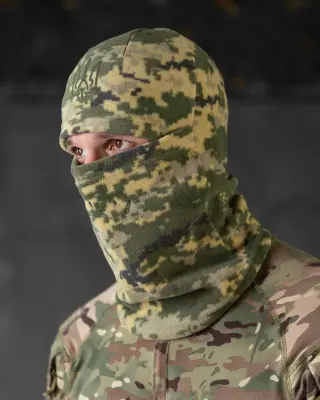
A half-balaclava mask covers only the lower part of the face and the neck, so it is worn together with a hat or under a helmet. Some full balaclavas can also be pulled down onto the chin and worn as a half mask or a neck tube — the descriptions of some models with a coat of arms mention this.
Coat of Arms, Color and CoolMax on Fleece
A coat of arms with a trident is decoration that has no effect on warmth. Choose the color to match your uniform so that the balaclava does not stand out from the camouflage. A separate option is the winter CoolMax balaclava on fleece: in its description the outer fabric is called water-repellent, and the fleece lining provides the warmth. Keep in mind that water-repellent fabric is not waterproof and soaks through under prolonged rain.
Some models come in two sizes — 55–57 and 58–61; if a size is given, measure your head circumference, because a balaclava that is too big slides down over the eyes.
How to Care for Fleece
Wash fleece on a delicate cycle, turned inside out, without bleach, preferably together with similar synthetic items — this reduces pilling. Do not dry a fleece balaclava on a radiator or near an open flame: strong heat deforms synthetics. Wring it out gently, without twisting, and dry it on a flat surface.
Looking for other materials — knit, CoolMax or knitted models? Browse all tactical balaclavas.
Frequently Asked Questions
Which fleece balaclava should I choose to wear under a helmet?
Under a helmet, models without extra details on the crown are more comfortable, such as the polar fleece balaclava helmet liner. Try it on with your own helmet: denser fleece adds bulk and can feel tight.
Which is better: a mesh insert or solid fabric?
For movement and active work, a mesh insert or breathing slits are more convenient. Solid fabric covers the face better when you stand in one place for a long time.
Does fleece pill over time?
Any fleece can pill from friction, especially where it touches the helmet or collar. Washing it inside out on a delicate cycle significantly slows this process.