Tactical Insulated Vests with Synthetic Fill
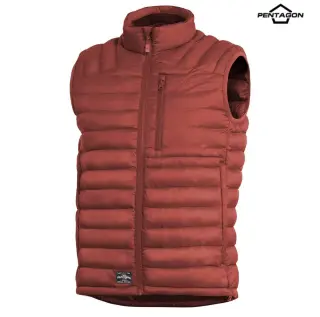
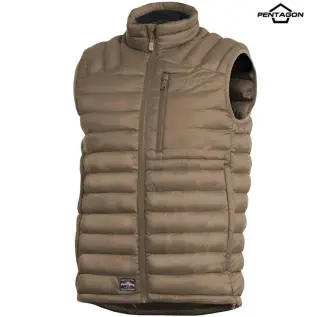
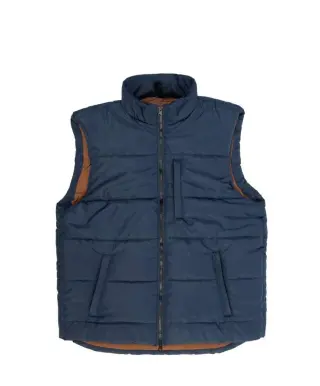
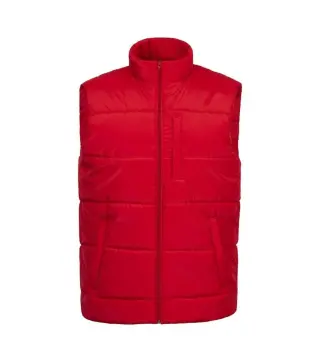
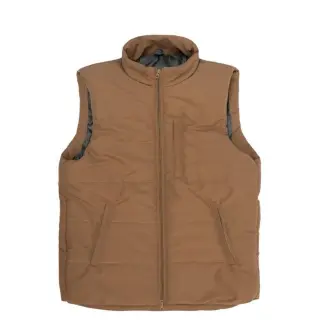
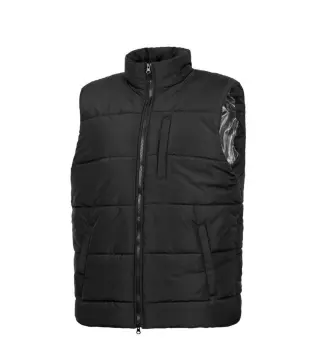
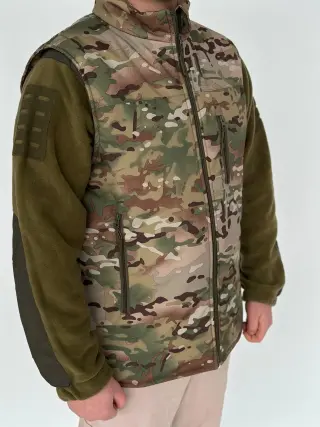
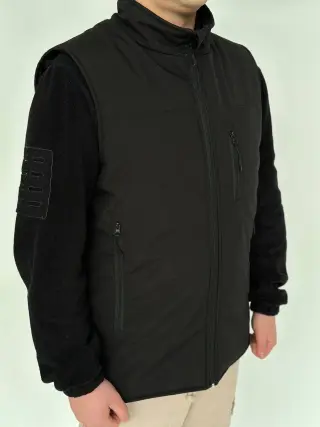
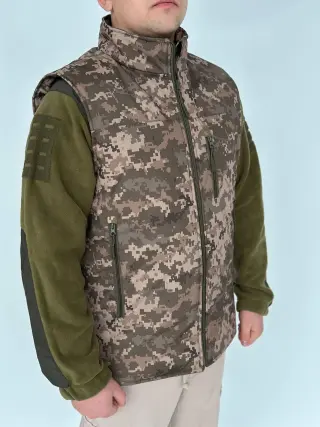
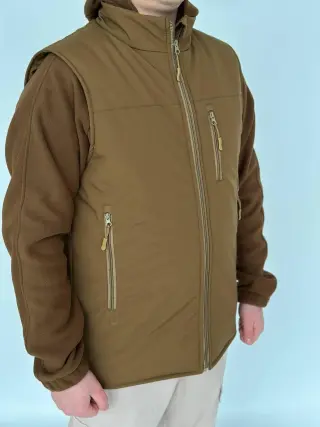

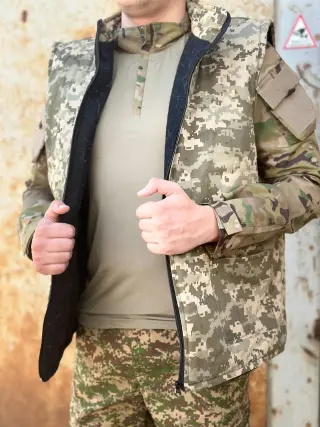
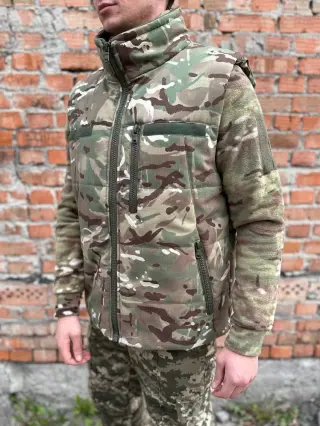
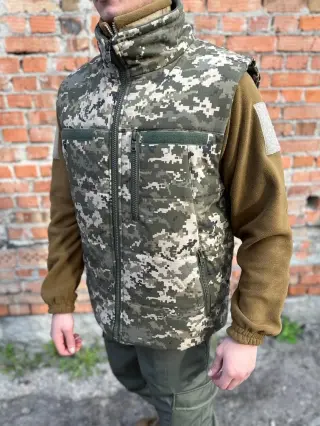
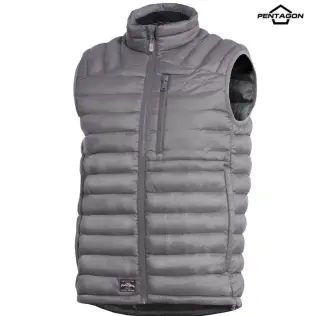
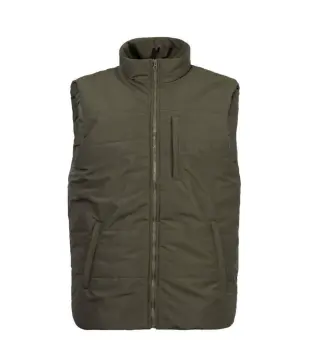
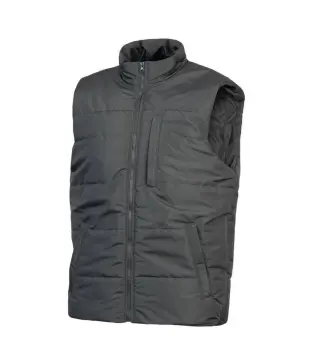
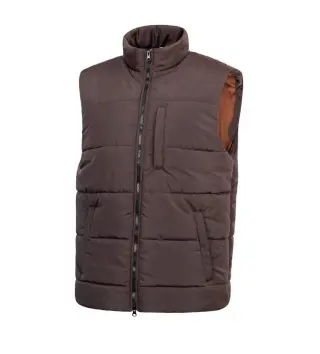
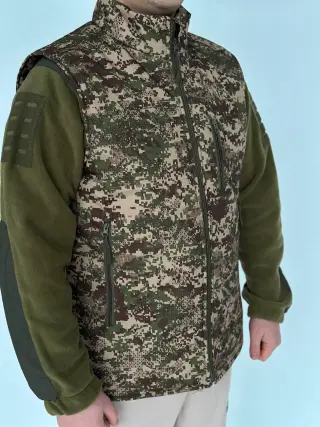






Tactical Synthetic Insulated Vest: Warmth for Your Core Without Extra Weight
An insulated sleeveless vest covers the chest, back and lower back while leaving your arms free. That is why it is chosen by people who move a lot: on field outings, at the shooting range, while fishing, on the road or working outdoors. Synthetic fill is the most practical insulation choice: it is not afraid of moisture, dries quickly and does not require delicate care. This page is about the insulating layer of clothing, not about load-bearing vests or plate carriers.
Where Synthetic Fill Beats Down or Fleece and Where It Falls Short
Unlike down, synthetic insulation barely loses warmth when it gets wet from drizzle or sweat, and it dries much faster. The vest can be machine-washed without special detergents, and a stray spark from a campfire or a snag on a branch will not turn it into a cloud of feathers. On the other hand, synthetic fill is heavier than down of the same warmth and compresses worse, so it will not pack down into a backpack pocket.
Compared with fleece, synthetic fill under a dense fabric blocks wind better and gives more warmth for the same thickness. If you need a thinner layer closer to a mid-season sweater, look at ripstop vests with a fleece lining: they are less bulky and breathe better while you move.
Warmth is indicated by the insulation density. For example, the G1 Nord Face uses 200 synthetic fill, which is noticeable insulation: this vest is worn as a standalone outer layer in cool weather or put on under a jacket when it gets colder.
What to Look for in the Construction
Start with the outer fabric. The Nord Face shell fabric with a water-repellent finish and a membrane is designed for wind and light rain. Polyester in simpler insulated vests also protects against wind, while the 100% nylon in the Pentagon Homer Vest stands out for abrasion resistance and is complemented by a YKK zipper. Next come the details you feel when wearing it:
- A drawcord hem keeps heat in and stops the vest from riding up under a belt or gear.
- A two-way zipper lets you open it from the bottom when sitting behind the wheel or squatting.
- Zipper pulls on the sliders are easy to grab with gloves on.
- Horizontal stitching holds the insulation in place so it does not clump after washing.
- A built-in hood shields your neck from the wind, but it is not detachable, which is worth considering if you wear a helmet or a jacket collar.
As for color: multicam, pixel and predator patterns are for the field, coyote and olive go with most kits, and a blue, burgundy, red or gray vest is perfectly fine to wear in the city.
How to Choose a Size and What to Wear It With
Sizes are labeled in two ways: letters from S to 3XL for Pentagon and numbers from 42 to 60 for other models. An insulated sleeveless vest is bulkier than a regular one, so first decide how you will wear it. Under a jacket, choose a snug fit with no extra room, otherwise the jacket sleeves will bunch up in the armpits. As an outer layer, allow a little room for a fleece top or sweater. The armholes should let your arm pass freely with the elbow raised and not chafe.
Prices range from 760 to 3 930 UAH: simple unbranded insulated vests cost the least, while Pentagon models sit in the upper segment. For sleeveless vests with other fill or without insulation, browse all tactical vests.
Frequently Asked Questions
Can a synthetic insulated vest be machine-washed?
Yes, synthetic fill handles machine washing well. Choose a delicate cycle and moderate temperature, and fasten the zippers. Dry it laid out flat, not on a radiator, and do not iron it with a hot iron, as synthetics clump from that.
Does an insulated vest keep you warm in winter?
As standalone clothing, it works in cool weather, and in winter it serves as an insulating layer. It is best worn over thermal underwear and a sweater, under a winter jacket. That keeps your core warm while your arms move freely.
Can you wear this kind of vest under a plate carrier?
You can, but a thinner fleece-lined version is better. A bulky synthetic-fill vest under plates gets compressed and interferes with fit, so it is more convenient to put it on over the carrier or during a rest stop.