Tactical Fleece Jackets
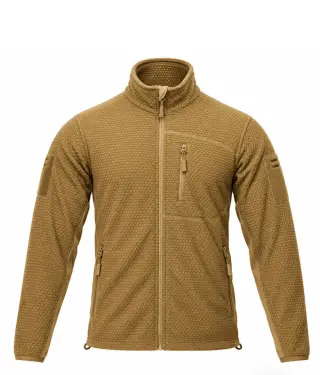
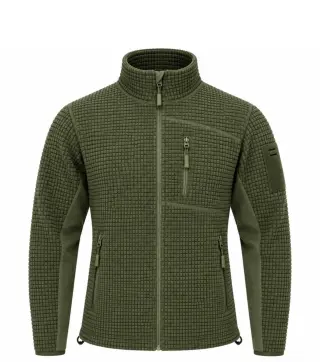
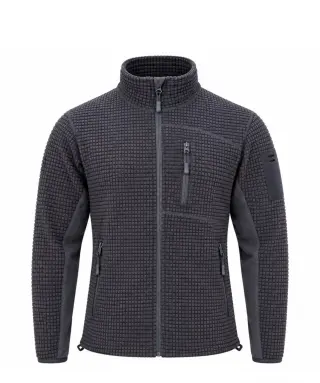
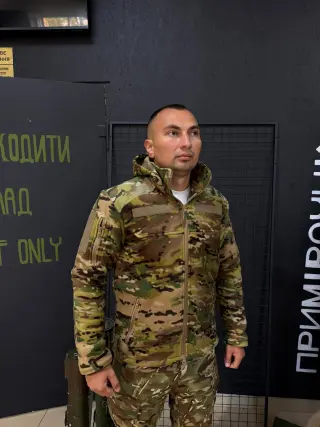
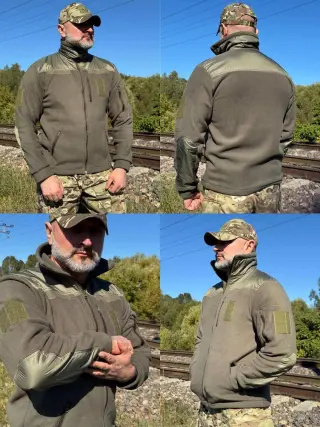
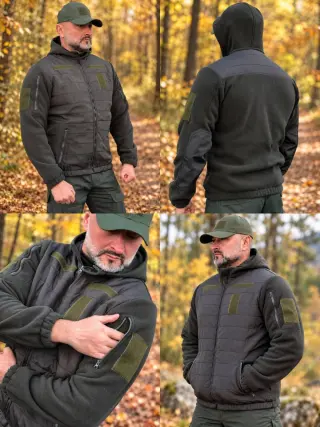
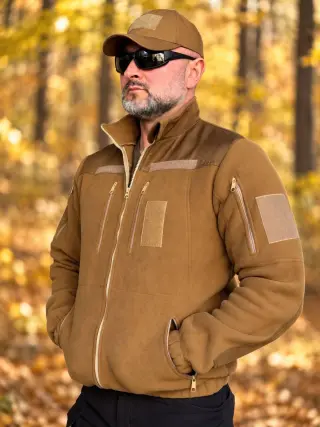
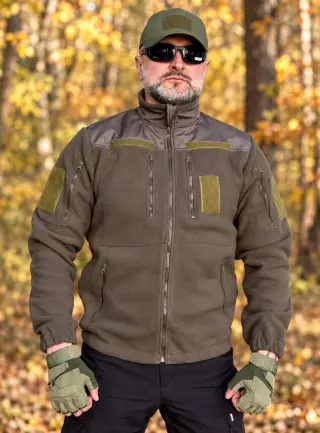




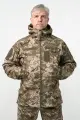



Fleece jacket: how to choose a warm layer under your uniform
A fleece jacket is a mid-layer that holds heat between your base layer and your outer jacket, and in dry, windless weather it works on its own as an outer layer. Fleece is light, dries fast and keeps its warmth even when slightly damp, so a military fleece has long been a staple item in any backpack. The choice comes down to a few questions: what type of fabric, how dense, whether you need a hood, which color suits your uniform and how much room to leave in the size.
Which fleece to choose: classic, grid, microfleece or Polartec
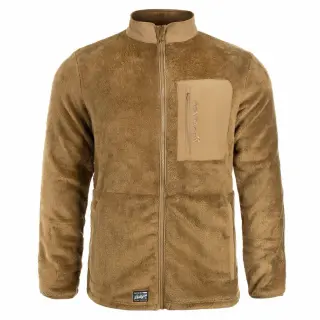
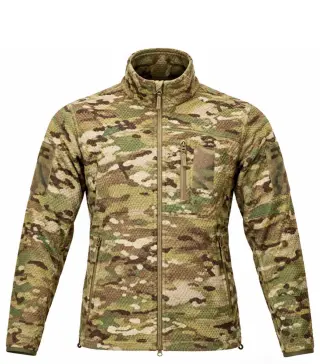
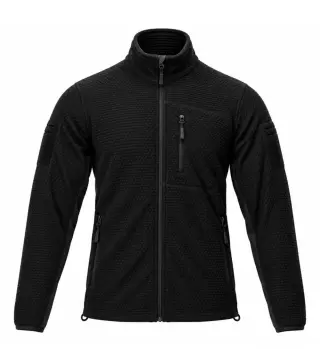
Classic fleece is a smooth, fluffy fabric, the most versatile option for cool weather and for life at a position or in a field camp. Its downside is that it insulates the same everywhere, so it is easy to overheat in it on a fast march. If you move a lot, look at a grid fleece jacket: the mesh structure, as in the 4.5.0 or the Helikon-Tex Alpha Tactical, traps air in its cells while also moving excess heat and moisture out to the outer layers. Under body armor and a backpack, such a jacket overheats noticeably less.
Thin microfleece jackets are less warm, but they take up minimal space and work well as a second layer in winter or as an outer layer in the off-season. A Polartec fleece jacket is made from the branded fabric: for example, the R Military Polartec 340 is built on Polartec High Loft 237 g/m², which gives more warmth for its weight than ordinary fleece.
Hybrids are a category of their own. In the Helikon-Tex Patriot Mk2 Hybrid and in Esdy hybrid models, the chest and shoulders are covered with windproof Soft Shell-type fabric, while breathable fleece stays under the arms. Models with a membrane and jackets like the ones offered among M-Tac fleece jackets (Windblock Division Gen.II) block wind better but let less vapor out, so they run hotter during intense movement.
What density in grams means
Density shows the weight of one square meter of fabric and roughly indicates thickness and warmth. Light jackets like the Pentagon Elk at 180 g/m² are a layer under a jacket or an outer layer for a cool evening. Around 300 g/m², as in the Pentagon Hercules 2.0 or the hooded Esdy, is the golden mean: a warm jacket for autumn and spring that still does not restrict movement.
Heavy models at 380 g/m², like the Helikon-Tex Patriot, are the warmest but weigh noticeably more and are bulkier under outerwear. Compare grams only within the same type: Polartec and grid fleece at lower density can be just as warm as thick classic fleece. The full range from this brand is on the Helikon fleece jackets page.
Hood, pockets and reinforcements
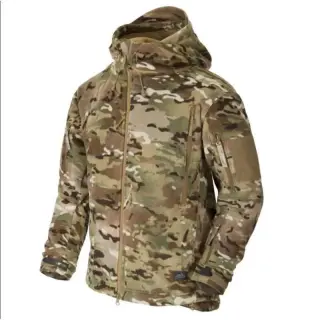
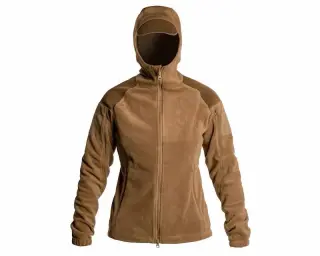
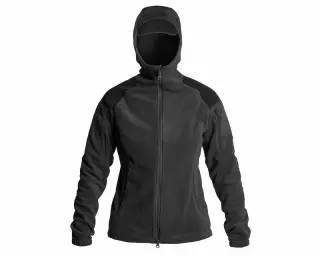
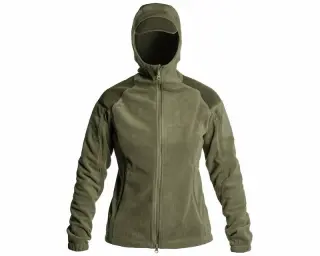
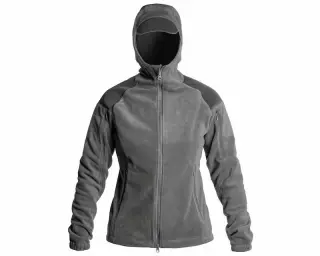
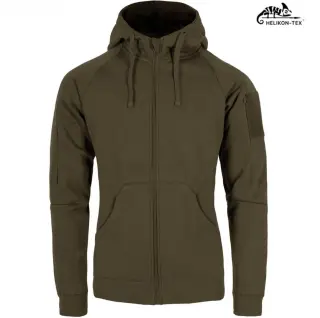
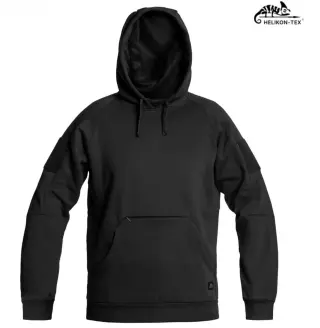
A hooded fleece jacket covers the head and neck when you have no hat or the wind blows from the side, and it is handy for sleeping in a cold room. But under a helmet and a jacket with its own hood, it bunches up on the back, so for wearing under armor people more often choose a model with a high stand-up collar.
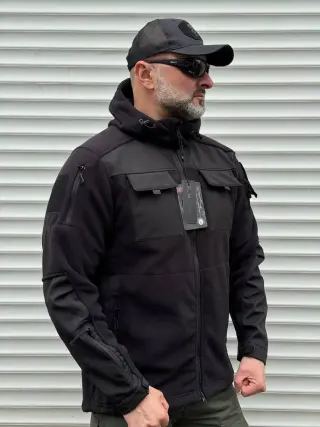
A tactical fleece jacket usually has pockets on the sleeves and chest and hook-and-loop panels for patches — check that the pockets sit above the waist, otherwise your chest rig will cover them. Reinforcements made of dense fabric on the shoulders and elbows, as in the Pentagon Tac Maven Elk, protect the fleece from abrasion by straps and while crawling. A full-length zipper with chin protection lets you vent quickly without taking the jacket off.
Color for your uniform and service
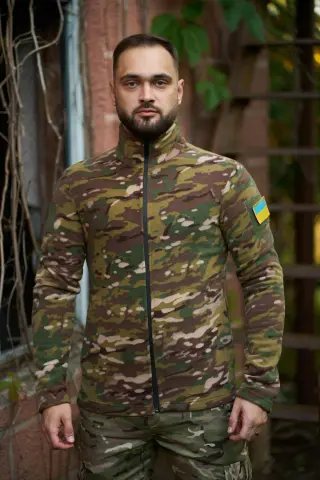
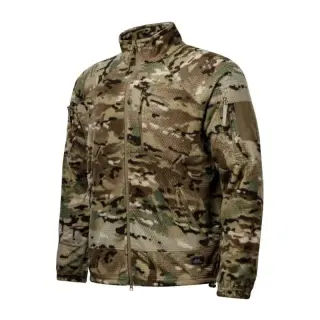
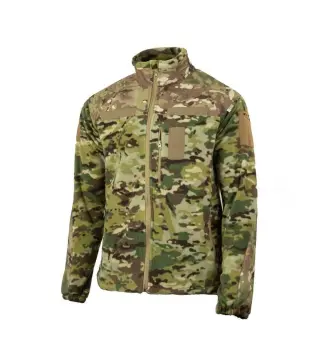
A fleece for the Armed Forces of Ukraine is most often needed in field colors: an olive fleece jacket goes with almost any uniform, a coyote fleece jacket suits the steppe and the dry season, and a Multicam fleece jacket matches the corresponding camouflage. For an older uniform, look for MM-14 pixel fleece jackets.
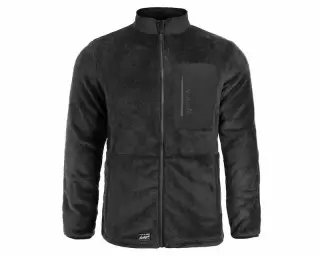
For the police, a black fleece jacket fits, including models with attachments for shoulder straps and a badge, and for the State Emergency Service — a blue fleece jacket. If you need the jacket for everyday wear, the city or hiking, a gray fleece jacket is more practical.
How to pick a size for your layers
A men's fleece jacket is worn over a T-shirt or base layer, so try it on with exactly what will be under it, and check that there is room left for a jacket on top. Raise your arms: if the hem exposes your lower back and the cuffs ride up your forearms, take a larger size.
Size charts differ: some manufacturers label jackets with letters from XS to 6XL, others with numbers from 42 to 64. Pay attention to the European marking with the letter R: for example, M/R corresponds to 50 and L/R to 52/54, so your usual size may be labeled differently. For a stocky build there are big-size versions.
Frequently asked questions
Does wind go through a fleece jacket?
Yes, ordinary fleece lets wind through, especially grid fleece. So in windy weather people wear a windbreaker or softshell over it, or choose a hybrid with windproof inserts.
How do I wash fleece so it does not pill?
Wash on a delicate cycle in cool water, turned inside out and with all the hook-and-loop fasteners closed. Do not add fabric softener — it clogs the pile and worsens thermal insulation. Dry it laid flat, away from radiators and hot dryers.
Is there a women's fleece jacket with an anatomical cut?
Yes, there are women's models, for example the Military Polartec and the microfleece R Military. They are narrower at the waist and wider at the hips, so they fit neater than a men's jacket in a smaller size.
Which fleece to wear under body armor?
Best is grid fleece or microfleece without a hood. They are thinner, do not bunch up under the plates and release heat better, so your back under the armor gets less sweaty.
Can I wear a military fleece jacket instead of a jacket?
In dry, cool weather — yes, especially dense models with reinforcements. But fleece does not protect against rain and strong wind, so in wet weather it is only an insulating layer.
If you need another insulating layer, browse all jackets and sweaters or turtlenecks and sweaters — they work well under fleece as a thin base layer with a covered neck.