Tactical Plate Carriers with Pouches and Quick Release
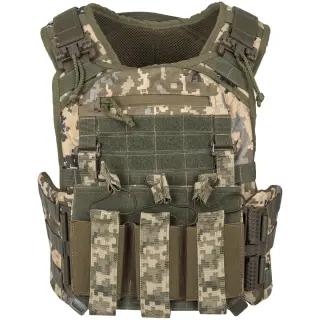
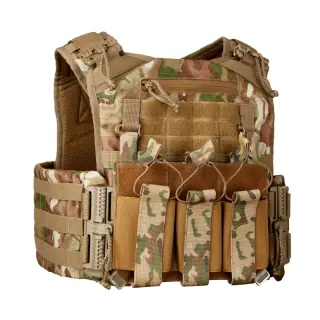
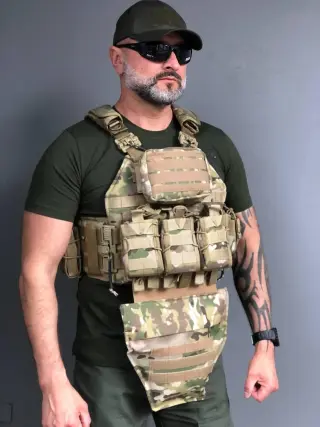
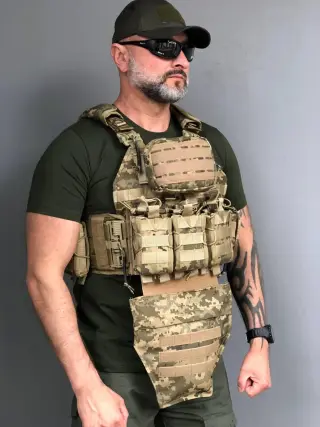
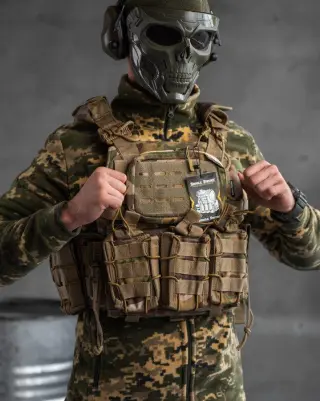
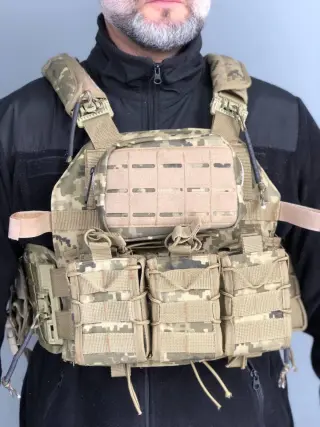
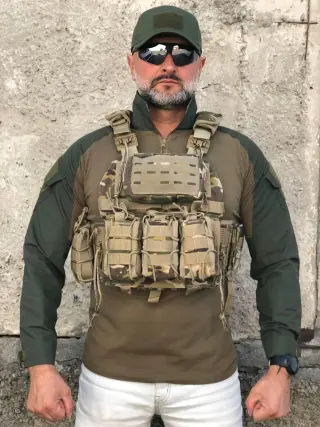
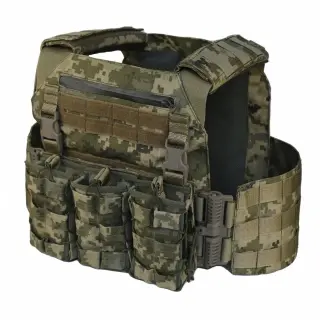
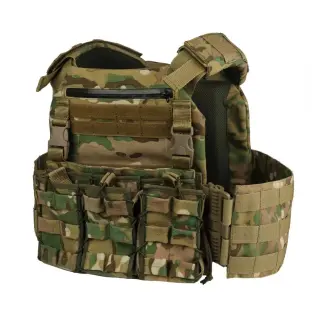
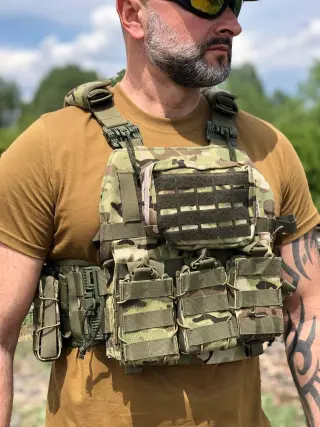
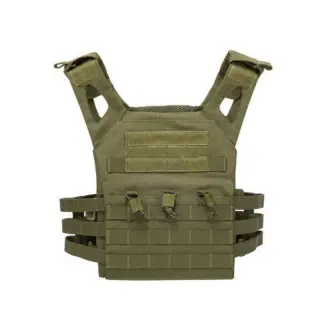
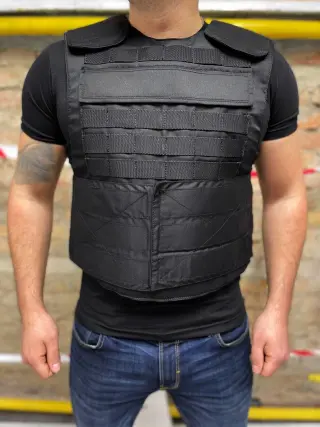
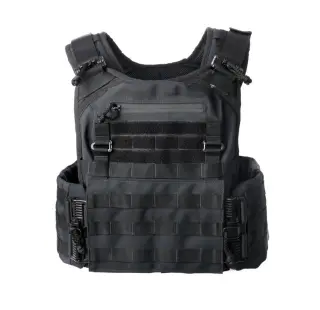
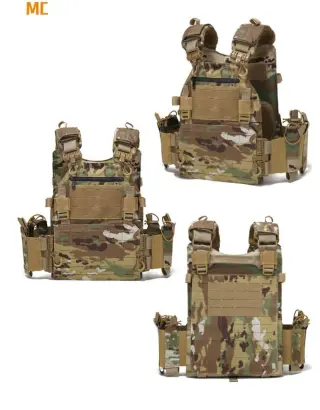
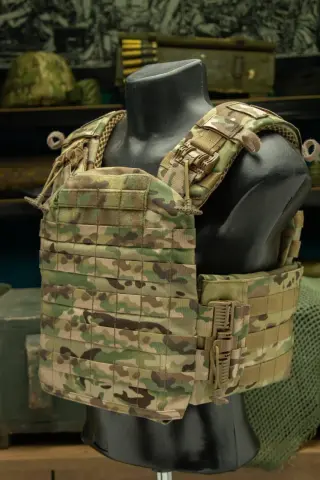
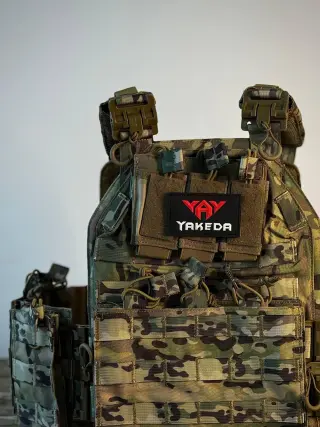
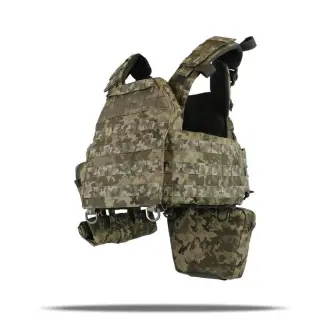
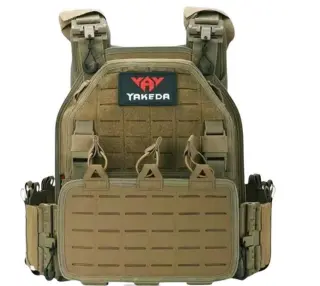
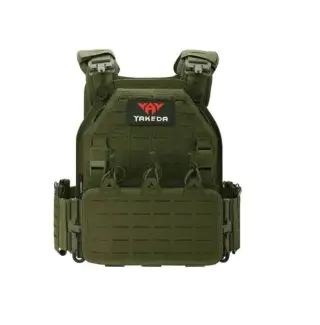
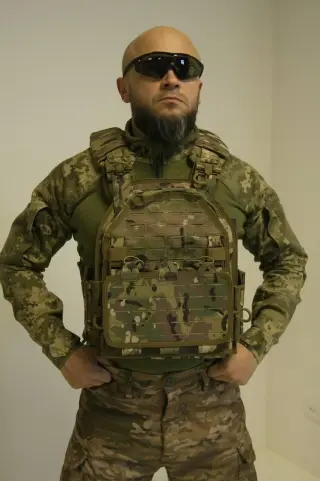
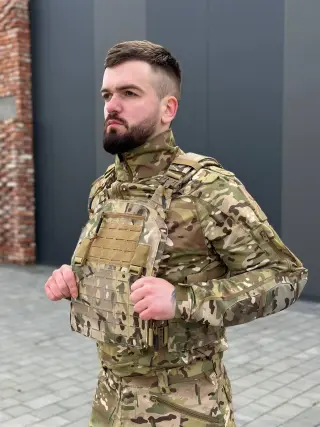
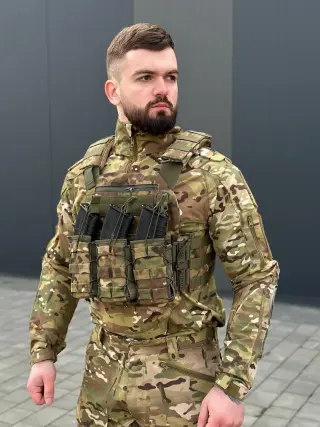
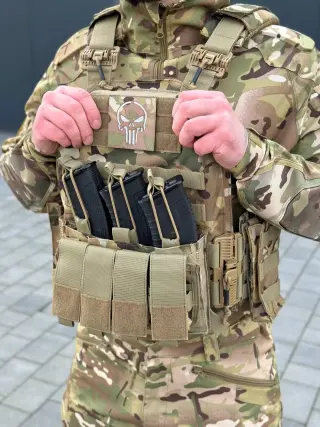
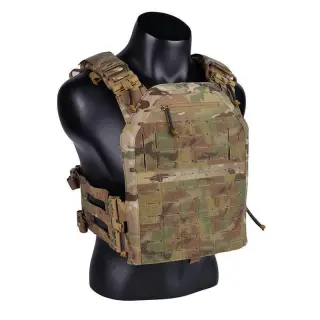

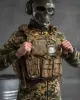



Plate carrier: how to choose a tactical carrier for armor plates
A plate carrier is a vest with pockets for armor plates, with pouches attached to its outer side. In everyday speech it is often called a "load-bearing vest", although a classic load-bearing system does not hold plates. Plate carriers are sold without armor plates and do not protect on their own, so plates are selected separately and their size is checked against the pockets of a specific model. Below we explain what to pay attention to so that a tactical plate carrier fits comfortably and does not get in the way of work.
Configuration: with pouches, with a groin protector, or your own setup
The fastest way to get kitted out is a plate carrier with pouches: everything you need is already attached and color-matched. Compact sets have several magazine pouches, extended ones add a first-aid pouch, a radio pouch or a pistol pouch. Before choosing, count what you will really carry: extra pouches add weight and width.
A groin protector attaches below the front panel over the groin. It only protects with a ballistic insert, if the model allows one, and it slightly hinders squatting and getting into a vehicle. Check the model specifications to see whether it has a protective insert. Options with it are collected on the page plate carrier with groin protector. If you already have proven pouches or need a special configuration, save on the set and pick separate tactical pouches.
Quick-release system: why you need it and how to check it
A quick release lets you take off the plate carrier in one motion. This matters when a wounded person's chest needs to be freed or when gear drags you down in water. Schemes vary: the ISIK plate carrier with a groin protector has four release points, and there are also models with a two-point release. The more points, the more completely the vest falls apart and the easier it is to remove from a person lying down.
Be sure to practice reassembling the plate carrier after release: in the field there will be no time to study instructions. Also check that the release handle does not catch on a rifle sling or backpack straps.
MOLLE: laser-cut or classic webbing
Laser-cut panels are dense fabric with cut slots instead of sewn-on webbing. They are lighter, thinner and snag less, so they are chosen for mobile tasks. Such a solution is found, for example, in SABADO models and YAKEDA plate carriers with laser-cut. Classic webbing holds heavy pouches more securely and is compatible with any attachments.
Pay attention to the fabric: ISIK and YORK plate carriers, for example, are made of Cordura, which resists abrasion well.
Light ALPC or full-size plate carrier
A light ALPC plate carrier has a minimalist frame and barely restricts movement. It is convenient on long marches, when working with vehicles, and as a base over which a chest load-bearing system is worn. A full-size plate carrier, including an assault one, carries more pouches and additional elements, but is heavier and warmer.
Camouflage and color
Color is chosen to match the terrain and the unit's uniform. A Multicam plate carrier suits mixed terrain, while MM-14 pixel matches the standard field uniform of the Armed Forces of Ukraine. Olive and coyote are good for forest and steppe, black for work in the city. See ready-made options among the Multicam plate carriers and MM-14 pixel plate carriers.
Looking for other gear for carrying ammunition? Go back to the load carriage category. You can buy a plate carrier with delivery across Ukraine.
Frequently asked questions
Is a plate carrier sold with armor plates?
No, a plate carrier is sold without plates. Armor plates are bought separately and checked for fit with the pockets of the chosen model by size and shape.
Which plate carrier should I choose for service in the Armed Forces of Ukraine?
Go by the camouflage of your uniform — MM-14 pixel or Multicam — and choose a model with pouches and quick release. Determine the number of pouches and the need for a groin protector by your task. Assault actions require a fuller set, while duty and movement call for a lighter one.
How does a plate carrier differ from a body armor cover?
A body armor cover, such as SMPP, is designed for soft ballistic panels and covers the torso more broadly. A plate carrier holds rigid armor plates and is lighter in construction.
How do I care for a plate carrier?
Before washing, remove the plates and detach the pouches, and wash by hand with a gentle detergent. Dry it laid out flat, away from heating appliances. Regularly inspect the buckles and webbing to spot damage in time.