Winter Tactical Suits: Parka and Pants
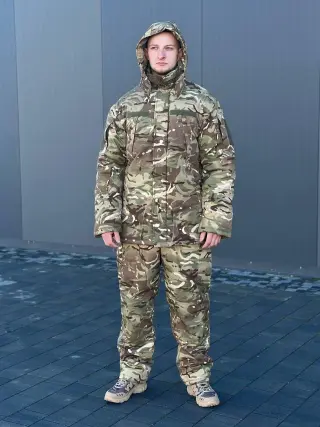
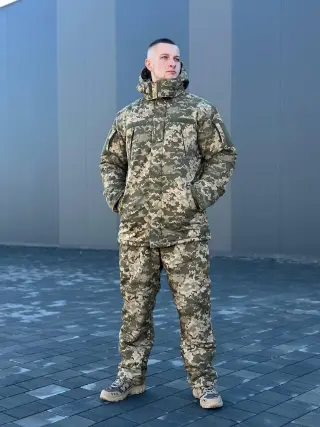
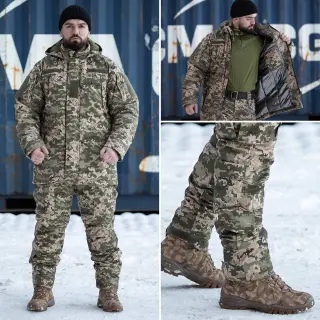
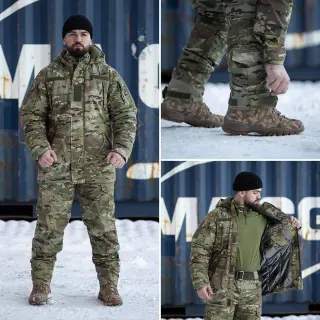
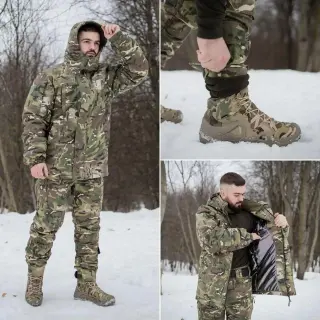
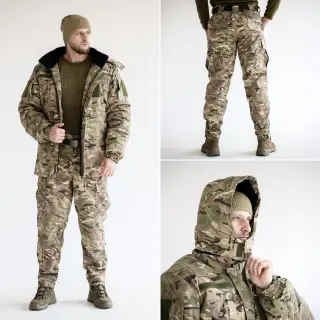
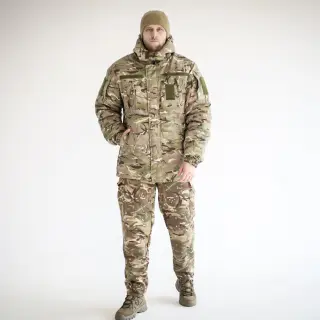
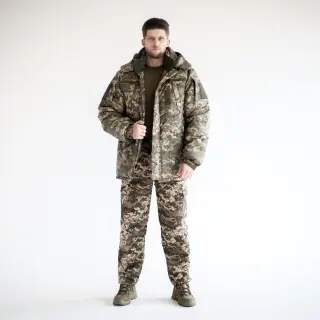
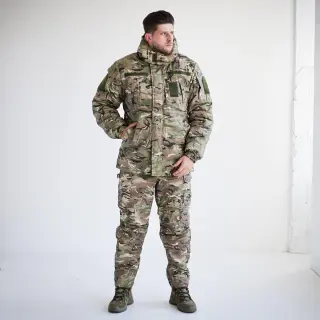
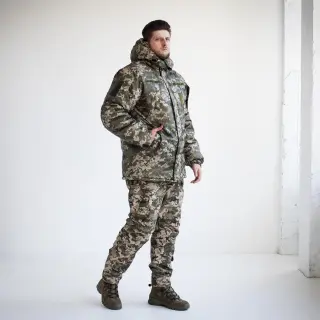
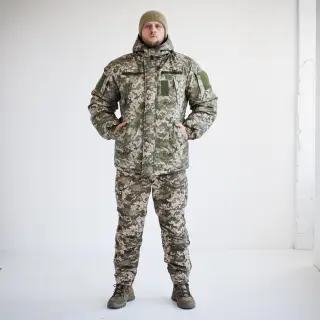
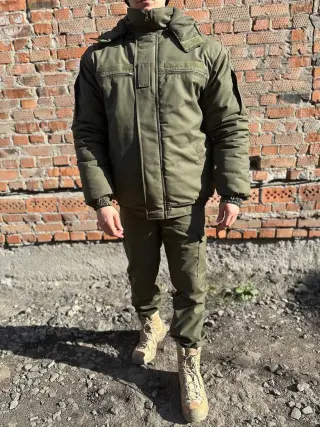
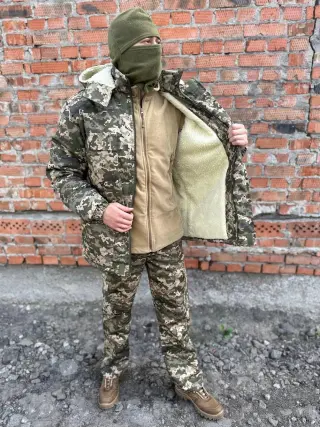
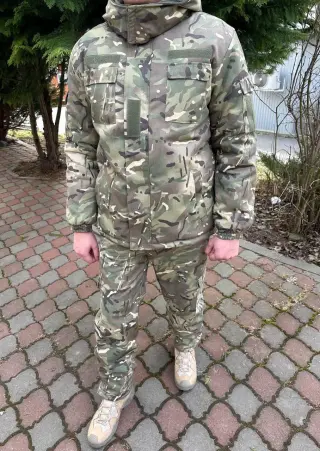
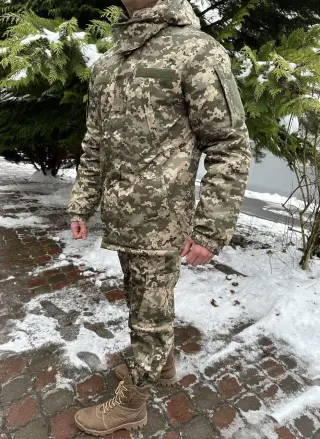
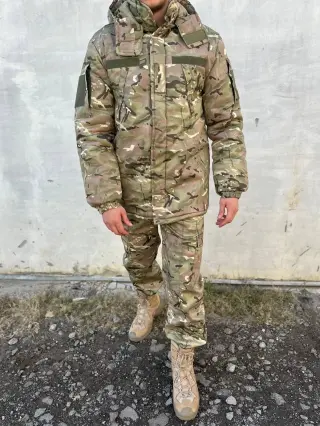
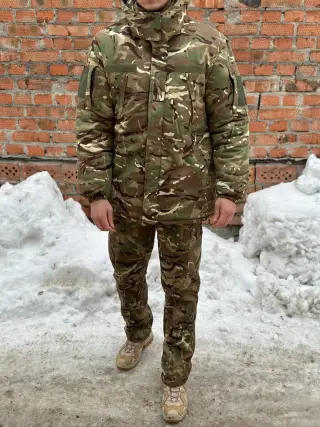




Winter Parka and Pants: A Set for Long Hours in the Cold
A parka-and-pants set is chosen by those who in winter don't just dash from a car to a building, but stand on guard duty, sit in a trench, lie in ambush or wait by an ice-fishing hole. What's needed here is warmth that holds up when you move little, and a lower half that doesn't let the wind through. That is why the top and the pants in such a set are made in the same camouflage and for the same conditions. You don't have to pick a pair separately and wonder whether the colors and the level of insulation will match.
How a Parka Differs from a Jacket
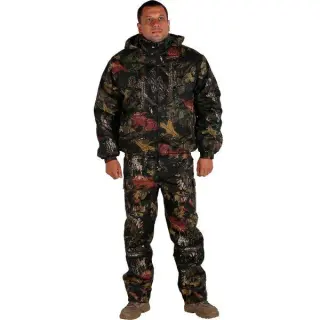
A parka is longer than a regular tactical jacket: it covers the lower back and the upper thighs, so when you squat or work bent over, your back isn't exposed and the cold doesn't creep in under your waistband. The insulation in it is usually denser, and the hood can be detachable, as in the Kordon-6, where it attaches with buttons and comes off on calm days.
The downside is bulk and weight. For active movement, long marches or work in a plate carrier, a short jacket is more convenient, because it doesn't restrict the legs and doesn't bunch up above the waist. If you stand more than you walk, a parka keeps you noticeably warmer. For other options, including those with a jacket or coverall, browse all winter tactical suits.
Which Insulation to Choose for the Top and the Pants
The most common option is a parka with synthetic insulation. It is easy to care for and not afraid of moisture, so it suits service where clothing rarely has time to dry. If lightness at the same level of warmth matters, look at suits with Omni-Heat lining. For example, B&L rated down to -25 °C, or Viking, where the Omni-Heat parka comes with a pair of softshell pants. A fur-lined parka is a rarer choice for those who hardly move in the cold.
With pants the logic is different. Insulated pants, like those in the Kordon-6, are designed for stationary watch duty, while a fleece parka and pants are more convenient when you have to walk a lot: your legs sweat less and your knees bend more freely. In the Grifon set, the Goverla parka is paired with Apex Gen 3 pants — an option for those who want a warm top and a mobile bottom.
Size and Color: What to Consider Specifically in a Set
A set is usually sold in a single size for both the top and the bottom. If you have broad shoulders and narrow hips or the other way around, go by the parka: it's easier to tighten pants with a belt than to loosen up a tight jacket. Plus-size models are available for larger sizes, such as the B&L Kordon-6.
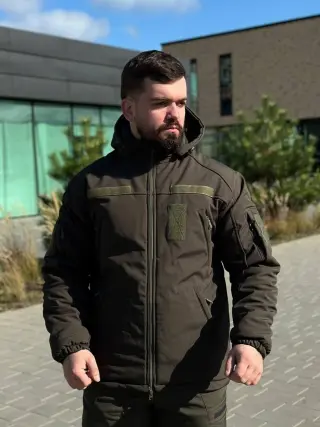
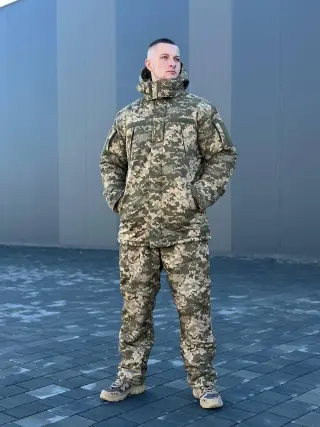
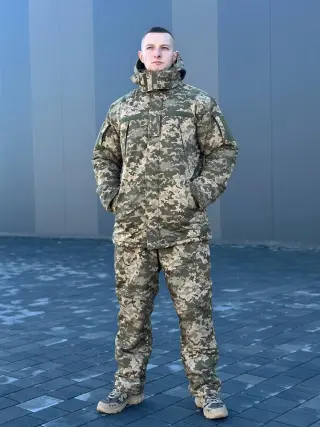
Color is simpler: pixel, multicam, olive and "Dubok" (oak). The "Dubok" camouflage with large leaves is appropriate for hunting in the forest, while olive sets look more understated for everyday wear outside of service.
Frequently Asked Questions
Is this the regulation winter uniform of the Ukrainian Armed Forces?
No, these are tactical sets, not regulation uniform. Their pixel pattern matches the Ukrainian Armed Forces camouflage, so a pixel parka with pants is suitable for service. However, uniform requirements are set by the unit, so check them in advance.
Does a "down to -35 °C" rating guarantee warmth?
No, it is the manufacturer's guideline, not a guarantee. Actual warmth depends on wind, humidity, what you wear underneath and how much you move. Treat the rating as an upper limit in the best conditions and choose a set with some margin.
Can the parka and pants be worn separately?
Yes, the items in the set are independent. Fleece pants work well under a regular jacket in the off-season, and the parka can be worn over summer pants when it is cold only in the morning.